An Icon of the 1992 Olympic Games
Calatrava Tower Barcelona: Architecture and Tour
The Calatrava Tower, or Torre de Comunicacions de Montjuïc, is one of the major landmarks on Montjuïc hill. Designed by Santiago Calatrava for the Barcelona Olympic Games, it stands out with its inclined white silhouette that evokes the body of an athlete carrying the Olympic flame.

At a Glance
The Calatrava Tower at a Glance
| Official Name | Montjuïc Communications Tower |
|---|---|
| Architect | Santiago Calatrava |
| Type | Telecommunications Tower |
| Neighborhood | Montjuïc |
| Height | 136 meters |
| Completion | 1992 |
| Context | Barcelona 1992 Olympic Games |
| Must-See Attractions | Silhouette, inclined structure, trencadís base, Olympic complex |
| Access | Freely visible from the Olympic Ring |
| Interior Tour | No |
| Duration | 10 to 20 minutes |
| Metro | L1 L3 Espanya, then bus or walk up |
| Good to Know | The tower also functions as a sundial |
Not to be missed
What to See at the Calatrava Tower?
© Enric, CC BY-SA 4.0, via Wikimedia Commons
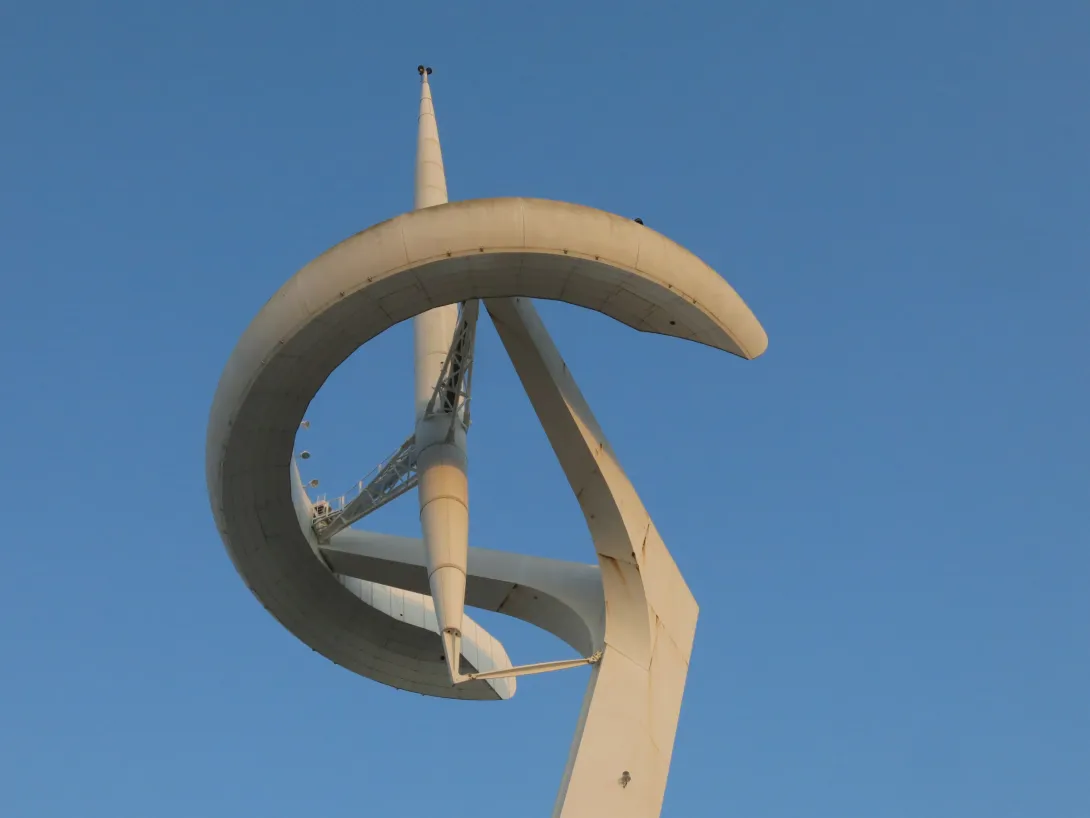
The Athlete's Silhouette
The slanted shape of the tower evokes an ancient Greek athlete, with a long white shaft and two large arms supporting the upper part.
© Enric, CC BY-SA 4.0, via Wikimedia Commons
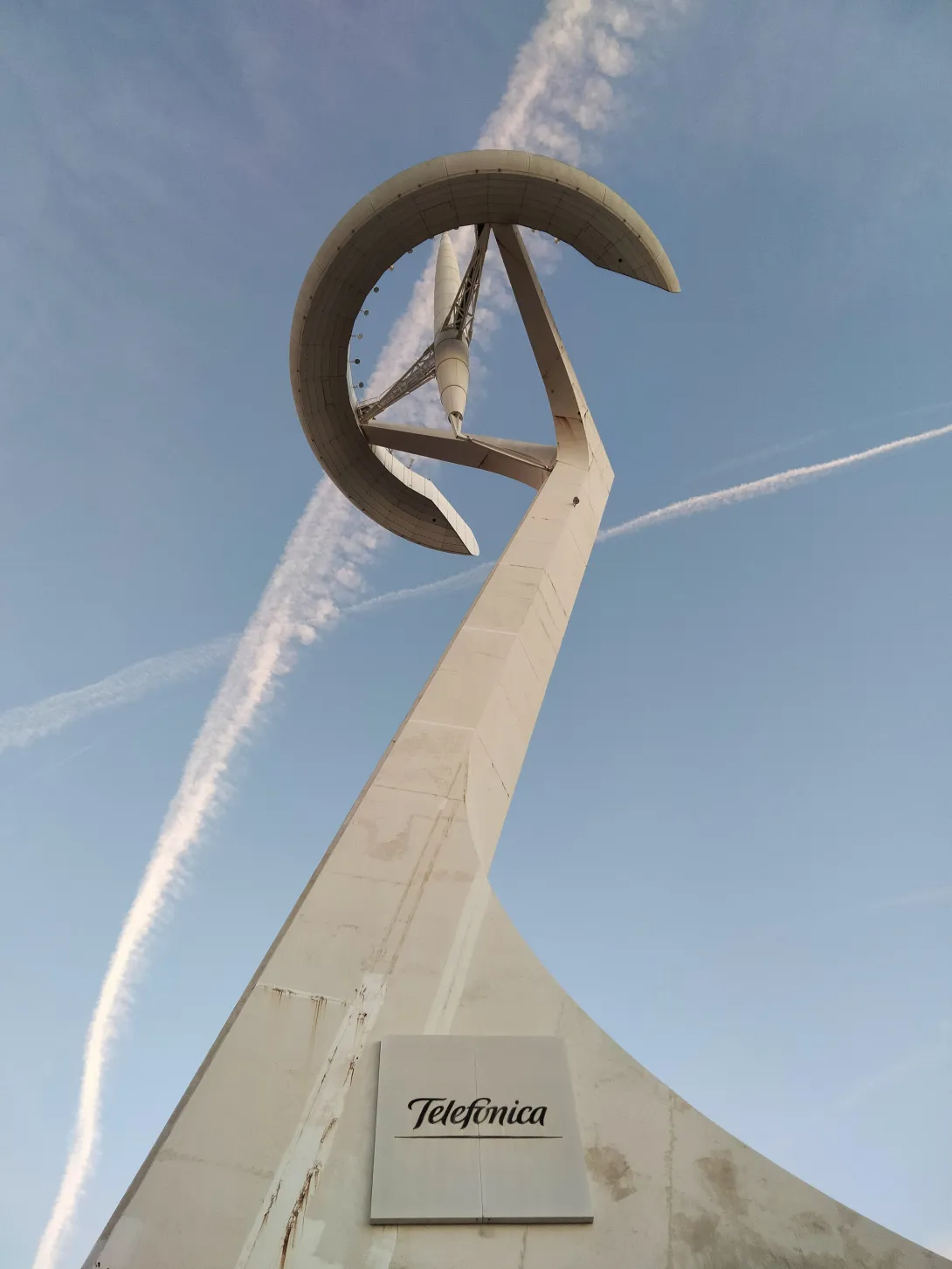
The Leaning Structure
Unlike a traditional tower, the structure is not vertical. This steep incline gives the whole a very sculptural appearance.
© Enric, CC BY-SA 4.0, via Wikimedia Commons
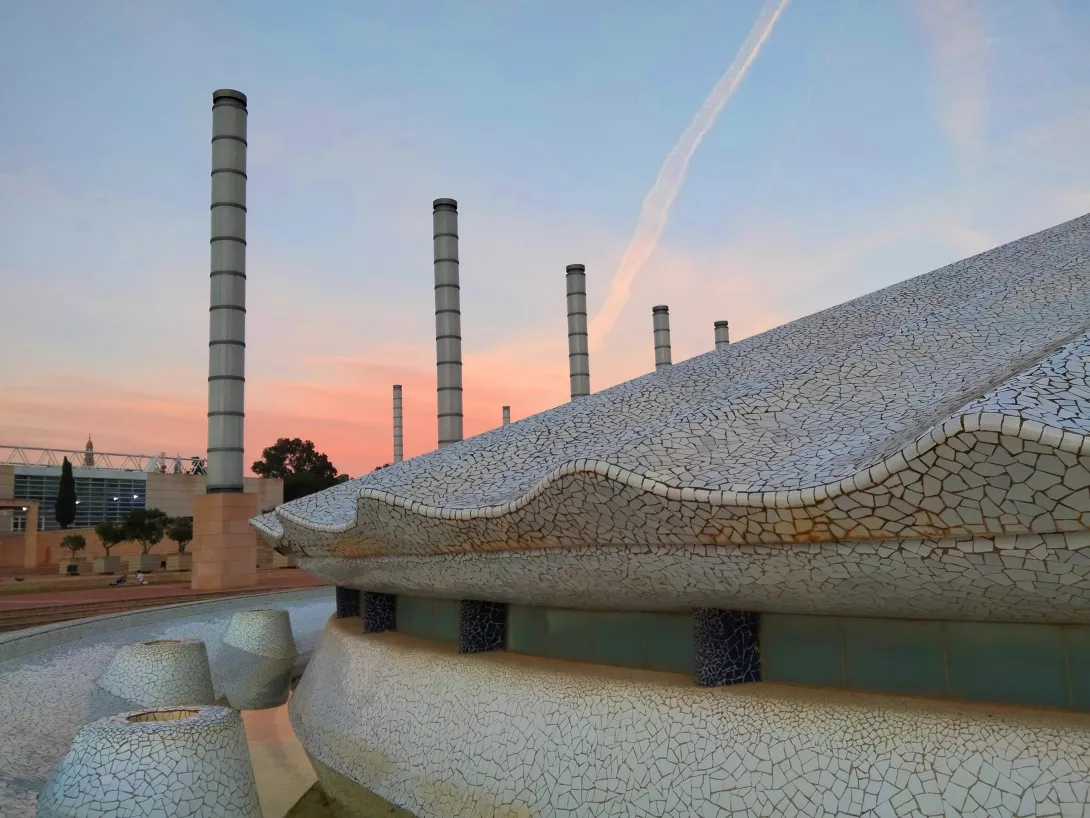
The Trencadís Base
The base is covered with white trencadís, a nod by Calatrava to Gaudí's architecture.
© Txllxt TxllxT, CC BY-SA 4.0, via Wikimedia Commons
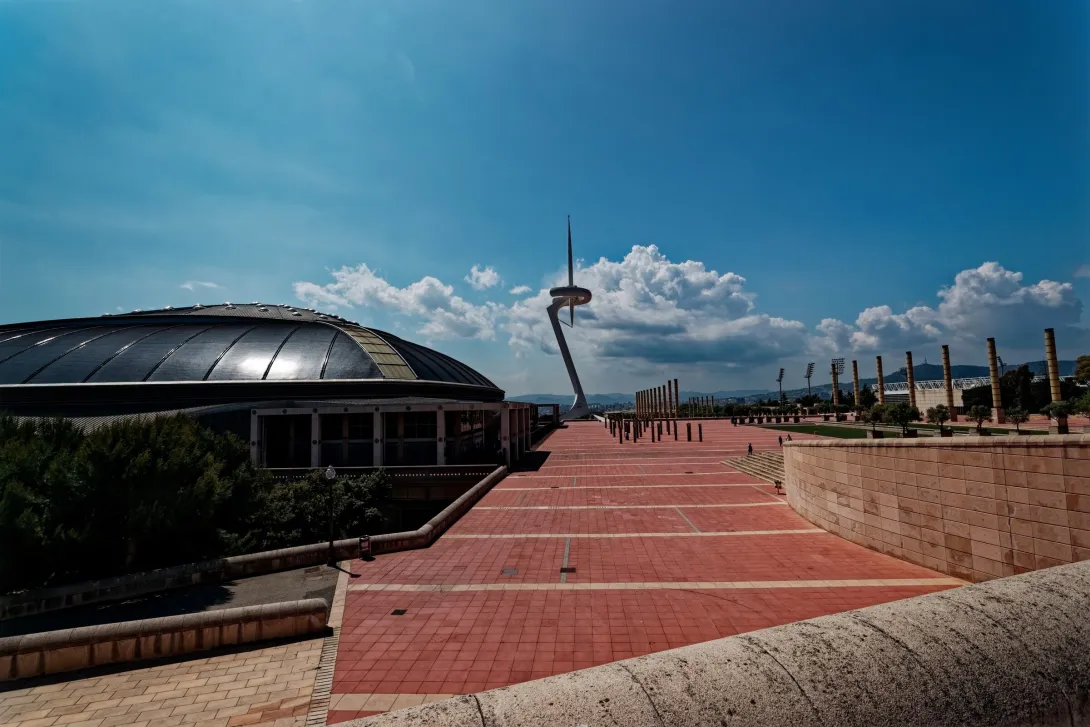
The Tower in the Anella Olímpica
The tower truly comes to life when discovered alongside the Palau Sant Jordi, the Olympic Stadium, and the expansive esplanades of the Olympic Ring.
Don't go to Montjuïc just for the tower: include it in a stroll through the Olympic Ring with the Palau Sant Jordi and the Olympic Stadium.
Step back a bit on the esplanade: its silhouette is most spectacular from a distance.
A sculpture as much as an antenna
Why is the Calatrava Tower unique?
Calatrava transformed a simple telecommunications infrastructure into a true monumental sculpture.
The tower is aligned so that its shadow casts onto the nearby square, allowing it to function as a sundial.
Its white color, curves, and references to the movement of the human body are characteristic of Santiago Calatrava's architecture.
Olympic Legacy
Calatrava Tower and the 1992 Games
The tower was completed in 1992 as part of the major projects undertaken for the Barcelona Olympic Games.
It is part of the Anella Olímpica de Montjuïc, alongside the Lluís Companys Olympic Stadium and the Palau Sant Jordi, and remains today one of the most recognizable architectural symbols of this transformation of the city.
On Montjuïc
The Calatrava Tower in the Heart of Montjuïc
The Calatrava Tower is located at the center of the Olympic Ring, in close proximity to the Palau Sant Jordi, the Olympic Stadium Lluís Companys, the Olympic Museum, and the Botanical Garden.
It's an area that's easy to include in a day dedicated to Montjuïc Hill.

Things to See Nearby
What Other Monuments to Visit?
To continue exploring the city, check out our selection of Barcelona's monuments, from Gaudí's masterpieces to Gothic, Modernist, and Olympic landmarks.

© Enric, CC BY-SA 4.0, via Wikimedia Commons
The Palau Sant Jordi
The Palau Sant Jordi, designed by Arata Isozaki, is the main concert and event venue of the Olympic Ring.

© Enfo, CC BY-SA 3.0, via Wikimedia Commons
The Lluís Companys Olympic Stadium
The Olympic Stadium is another major sports symbol of the area and, along with the tower and the Palau Sant Jordi, forms the heart of Montjuïc's Olympic legacy.

© Barcelona.com
The Mies van der Rohe Pavilion
Further down the hill, the Mies van der Rohe Pavilion is one of the great monuments of modern architecture in Barcelona.
FAQ
FAQ: Calatrava Tower Barcelona
No. The Calatrava Tower is primarily viewed from the outside from the Anella Olímpica.
The tower measures 136 meters.
It was designed by the Spanish architect and engineer Santiago Calatrava.
Its inclination is part of the sculptural design envisioned by Calatrava and also allows the tower to function as a sundial.