The iconic market of the Ramblas
La Boqueria Market Barcelona: Hours and Visit
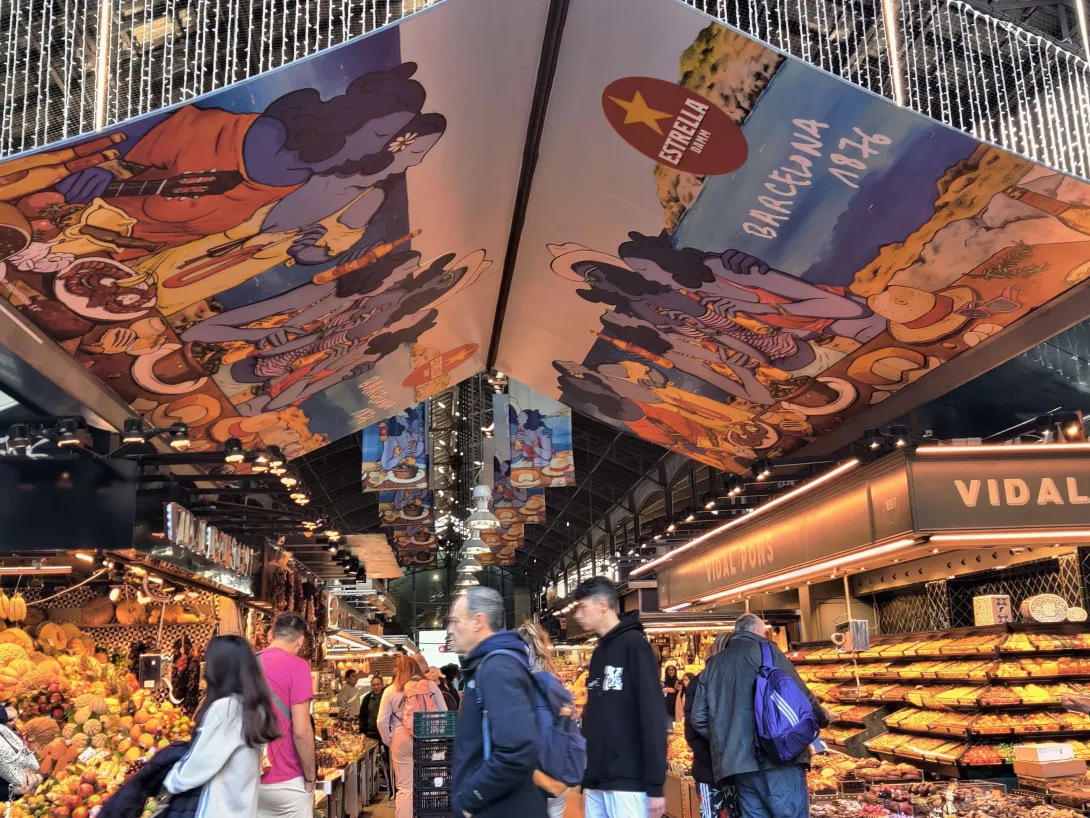
La Boqueria market, officially Mercat de Sant Josep, is the best known market in Barcelona. Set right on the Ramblas, it gathers more than 200 traders under a large iron hall: fruit and vegetables, fish, seafood, cured meats, olives, spices, Catalan produce and counters where you can eat on the spot. Busy and sometimes dismissed as too touristy, la Boqueria is still a genuine food market. To see it at its most authentic, come in the morning, walk past the first stalls near the Rambla and head into the aisles used by locals and restaurant cooks.
La Boqueria is the iconic market on the Ramblas, featuring over 200 vendors, fresh produce, and gourmet counters.
- Free entry
- Over 200 vendors
- On the Ramblas
- Perfect in the morning

At a Glance
La Boqueria Market at a Glance
| Official Name | Mercat de Sant Josep de la Boqueria |
|---|---|
| Common Name | La Boqueria |
| Type of place | Covered food market, gastronomy, bars, and counters |
| Neighborhood | El Raval – Ciutat Vella |
| Address | La Rambla, 91, 08001 Barcelona |
| Opening Hours | Monday to Saturday, generally from 8 AM to 8:30 PM |
| Sunday | Closed |
| Public Holidays | Special closures or hours according to the calendar |
| Visit Duration | Approximately 45 minutes to 1 hour and 30 minutes with a gourmet break |
| Entry | Free, no ticket or reservation required |
| Must-See Attractions | The modernist gate, the central fish area, the delicatessens, the fruits and vegetables, the olives, and the bars |
| Best Time | On weekday mornings, ideally before 10 AM |
| Metro | L3 Liceu |
| Official Site | https://www.boqueria.barcelona/ |
| Good to Know | The stalls near the entrance are the most touristy, head towards the center and the back of the market. |
The opening hours of some shops and bars may be shorter than those of the market. Also, check the specific holiday hours on the official website.
La Boqueria During Construction
La Boqueria is undergoing a major renovation program aimed at modernizing the roof, access points, ventilation, facilities, and the central fish area.
The market remains open during the work, which is organized in several phases. However, some entrances, aisles, or commercial areas may be temporarily altered.
La Boqueria is always worth a visit, but don't limit it to the colorful fruit juices and takeaway trays at the entrance. Its true charm reveals itself when you venture past the first rows to reach the fishmongers, butchers, delicatessens, olive vendors, and counters frequented by regulars.
Insider tip: Visit between 8:30 AM and 10 AM, preferably from Monday to Friday. The stalls are well-stocked, the aisles are easier to navigate, and the atmosphere feels more like a market than a tourist attraction.
If possible, avoid Saturday midday. Allow about 45 minutes for a leisurely exploration and up to 1.5 hours if you plan to eat on-site.
Why Go
Why Visit the Boqueria Market?
La Boqueria offers a glimpse into a large part of Barcelona's gastronomic culture all in one place. Visitors come to admire the stalls, purchase some products, taste a Catalan specialty, or simply enjoy the atmosphere of a historic market located in the heart of the city.
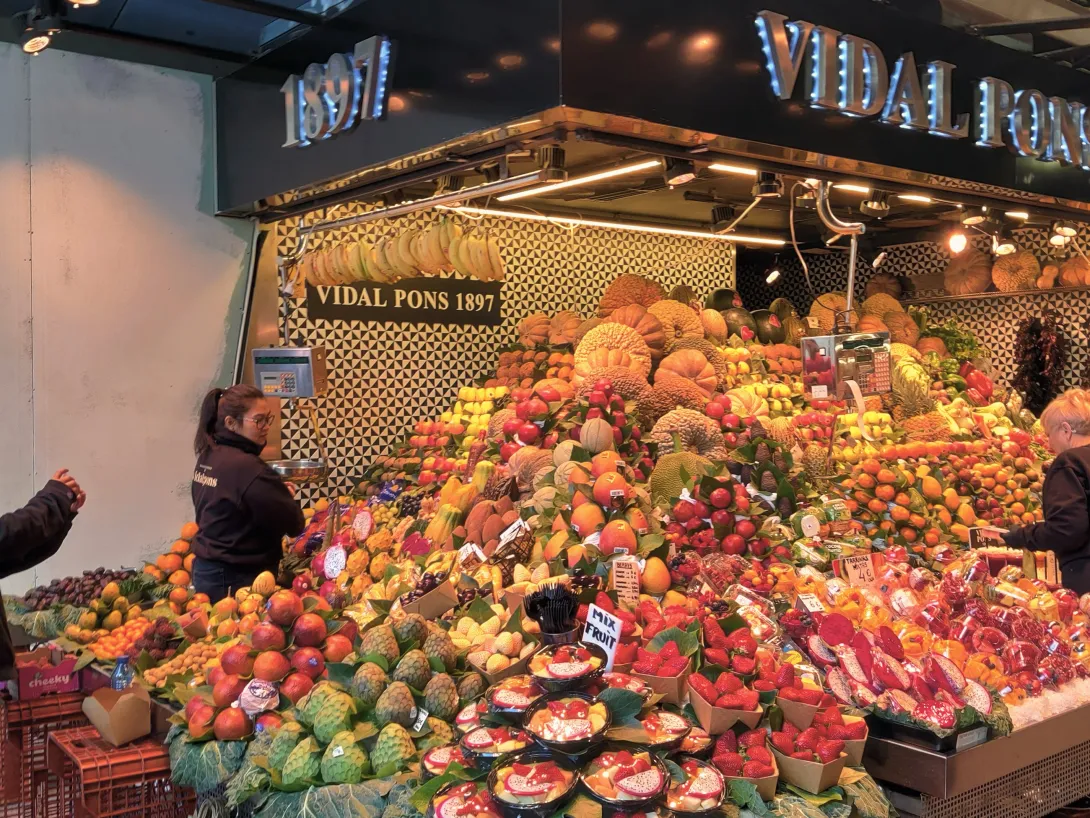
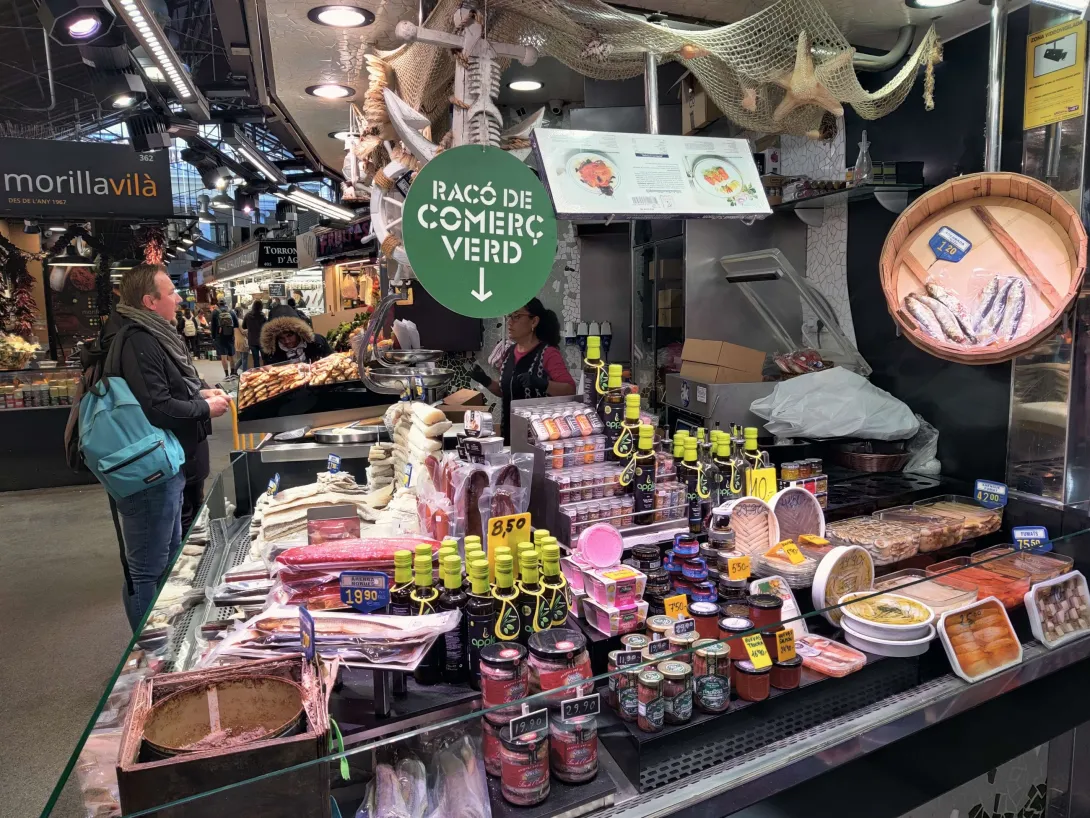
It is also one of the most photogenic spots in Barcelona: arrangements of fruits, fish on ice, hanging hams, peppers, spices, mushrooms, dried fruits, and jars of olives create an extraordinary gourmet setting.
However, La Boqueria is primarily a place of work. Avoid blocking the aisles to take photos and ask for permission before photographing a vendor up close.
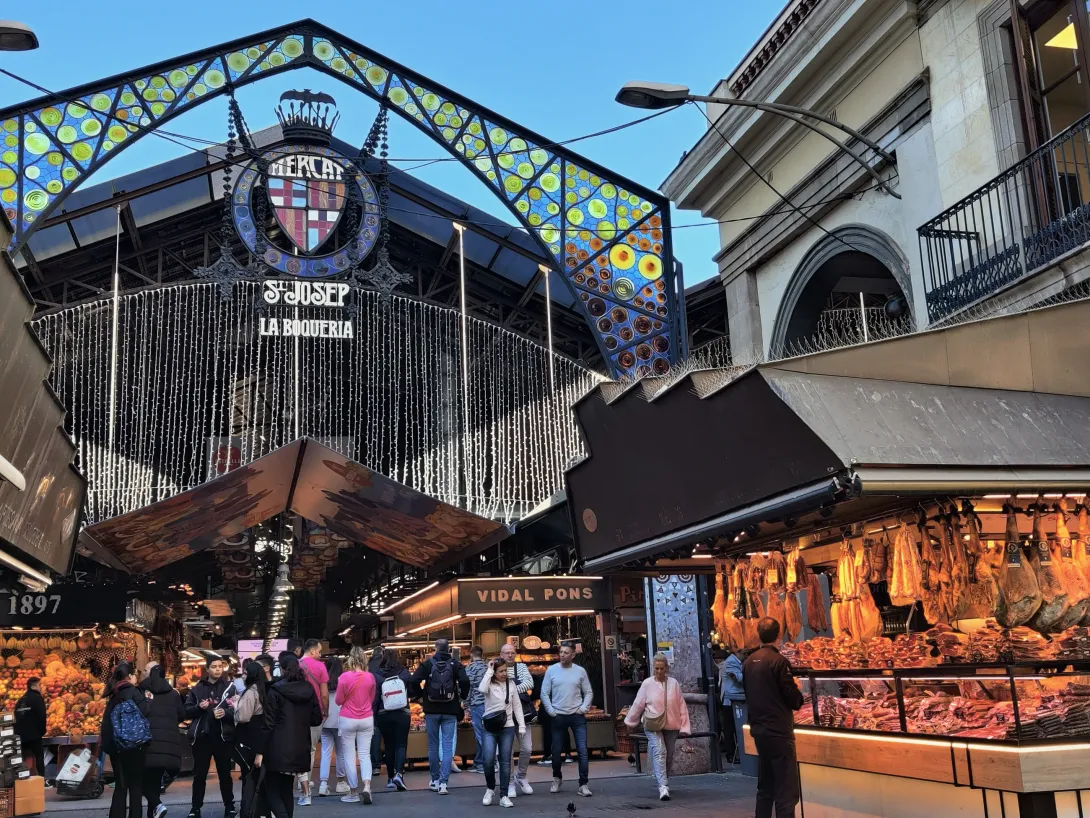
© Barcelona.com
La Boqueria from Las Ramblas
Must-See
What to See at La Boqueria Market?
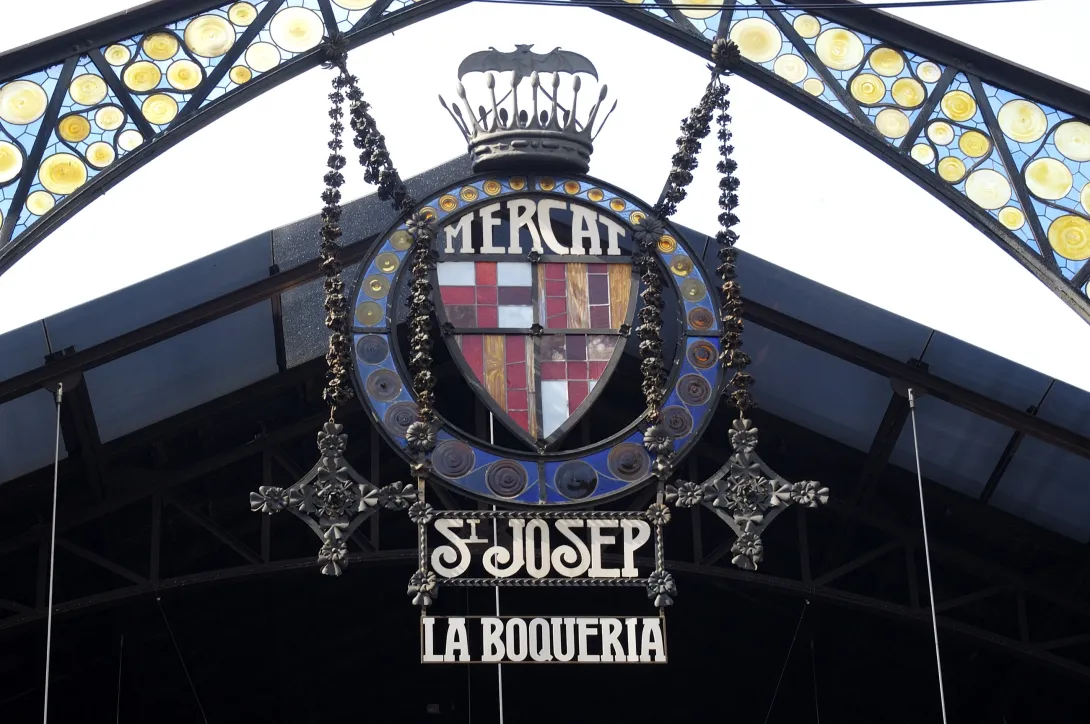
© Barcelona.com
The Modernist Gateway of La Boqueria
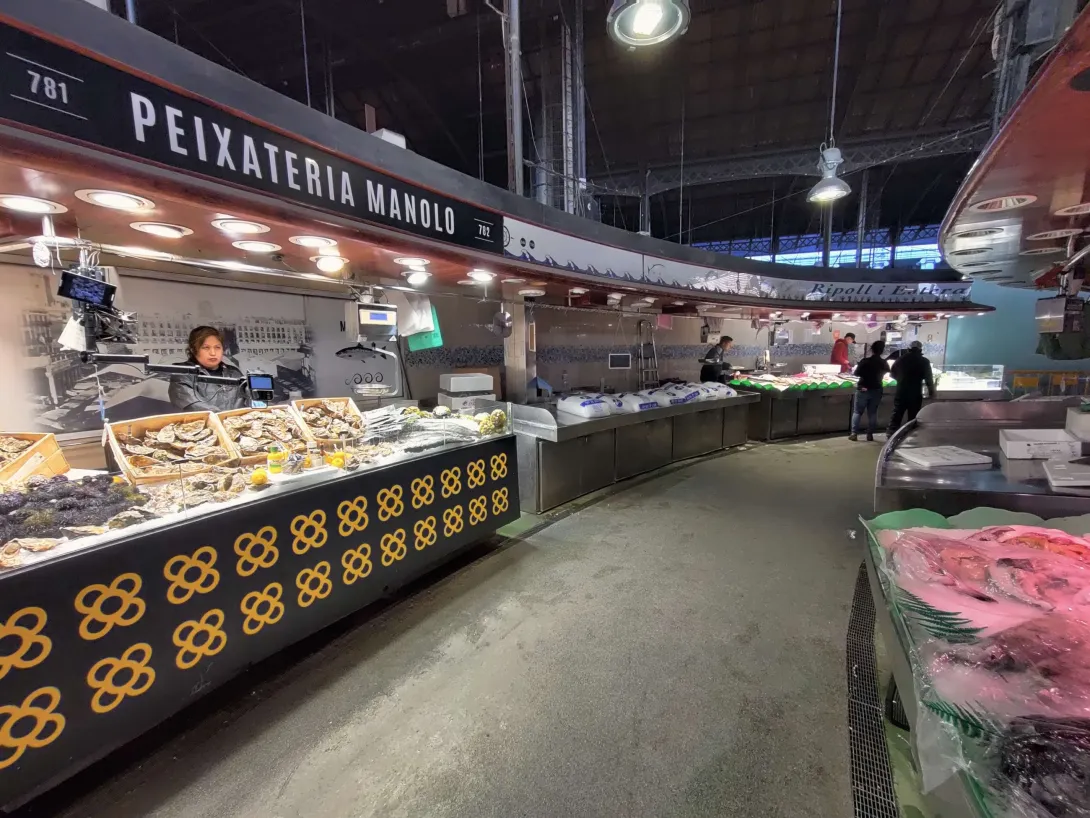
© Barcelona.com
The Central Fish Area
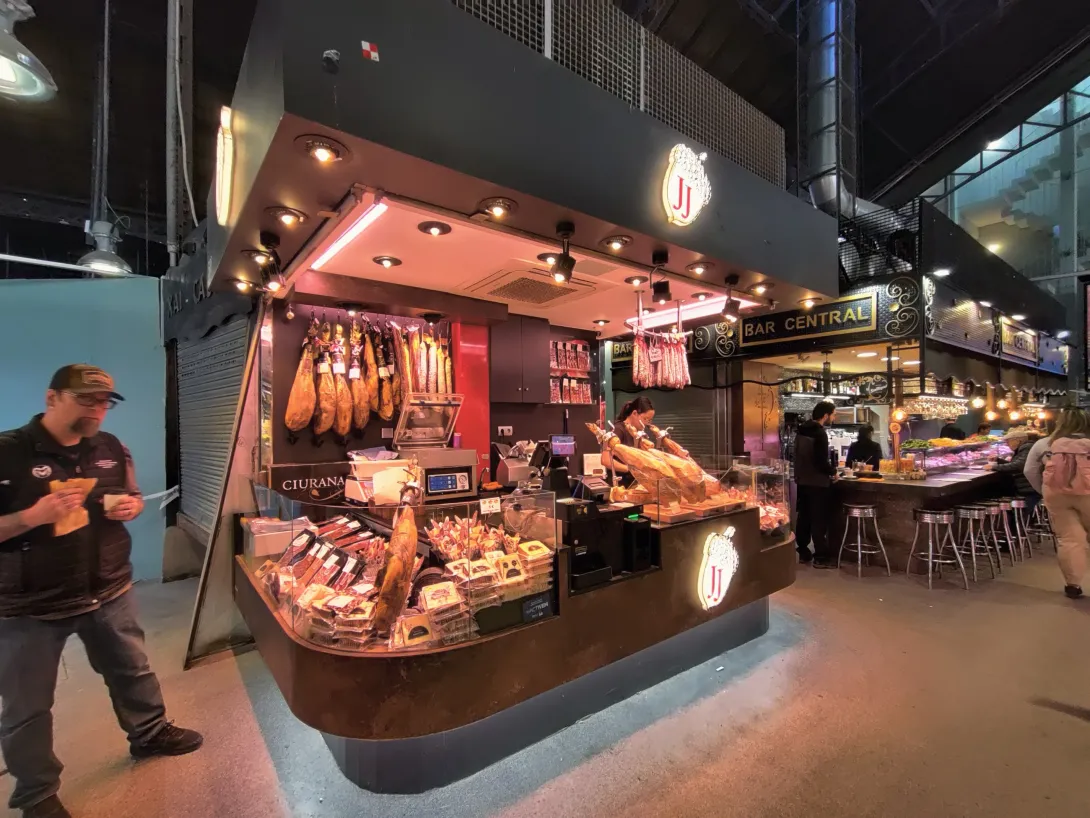
© Barcelona.com
Cured Meats and Hams
© Barcelona.com
Fruits and Vegetables
© Barcelona.com
Olives, Preserves, and Savory Products
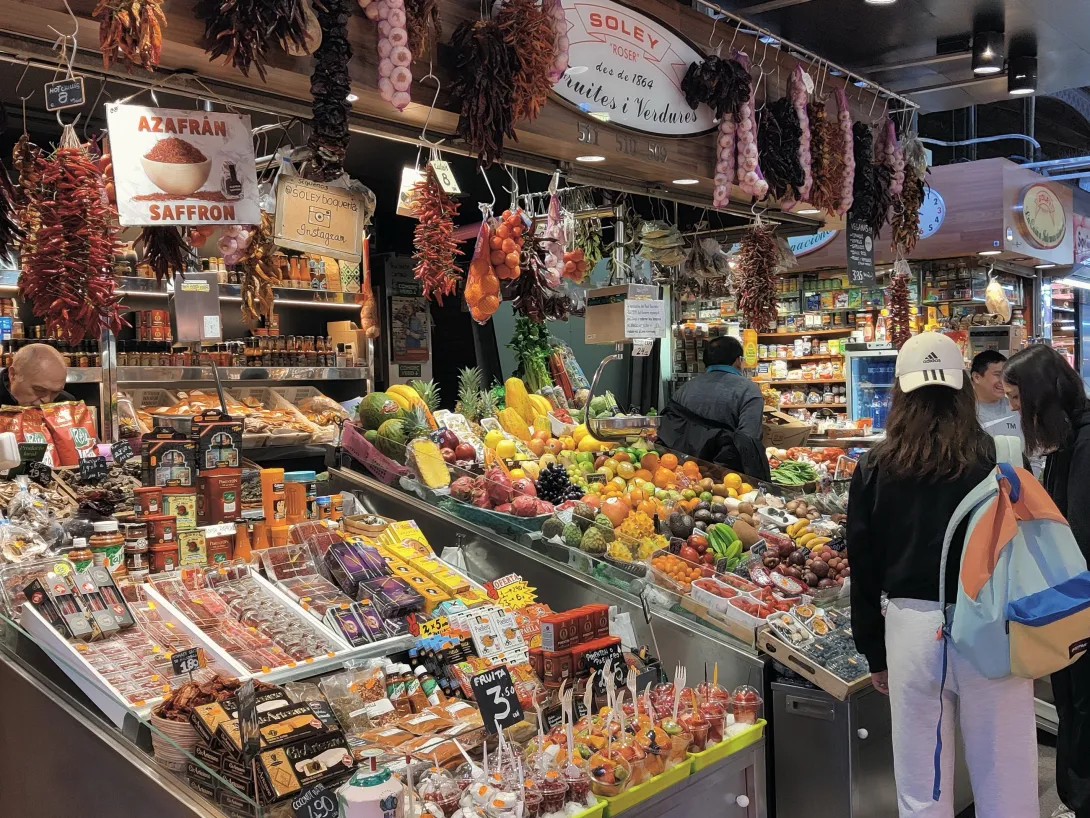
© Barcelona.com
Spices and Products from Around the World
Gourmet Experience
What to Eat at La Boqueria?
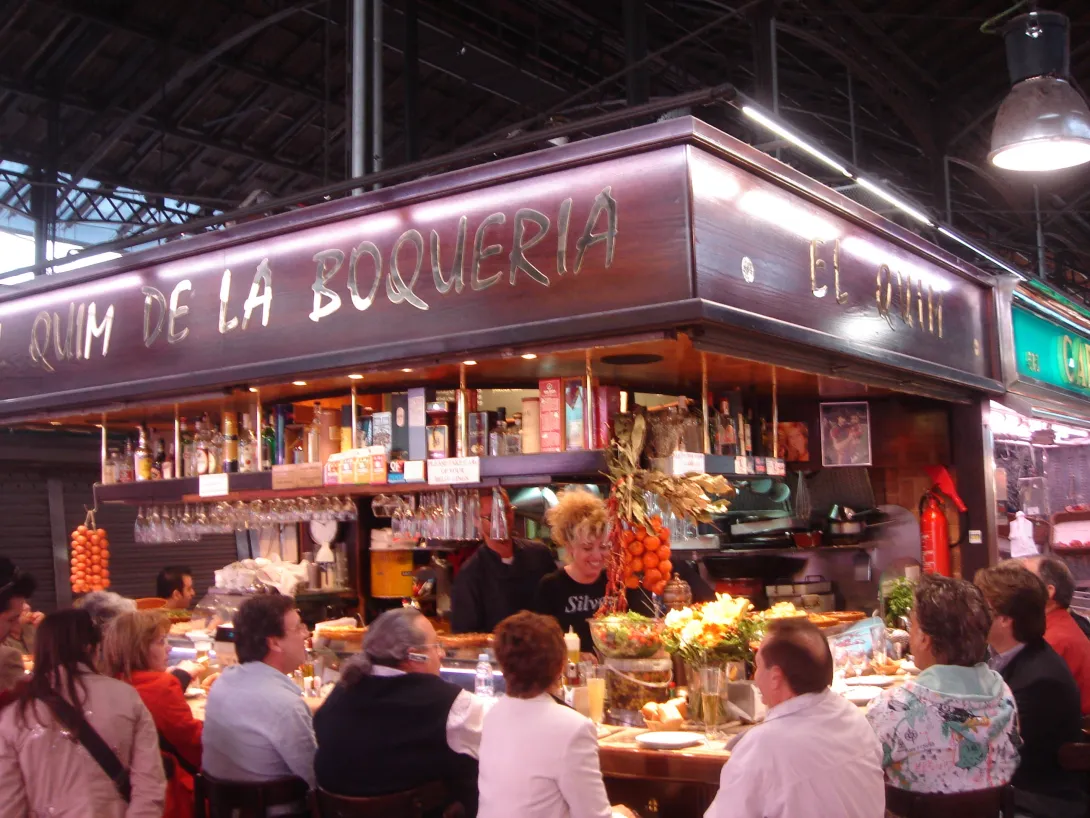
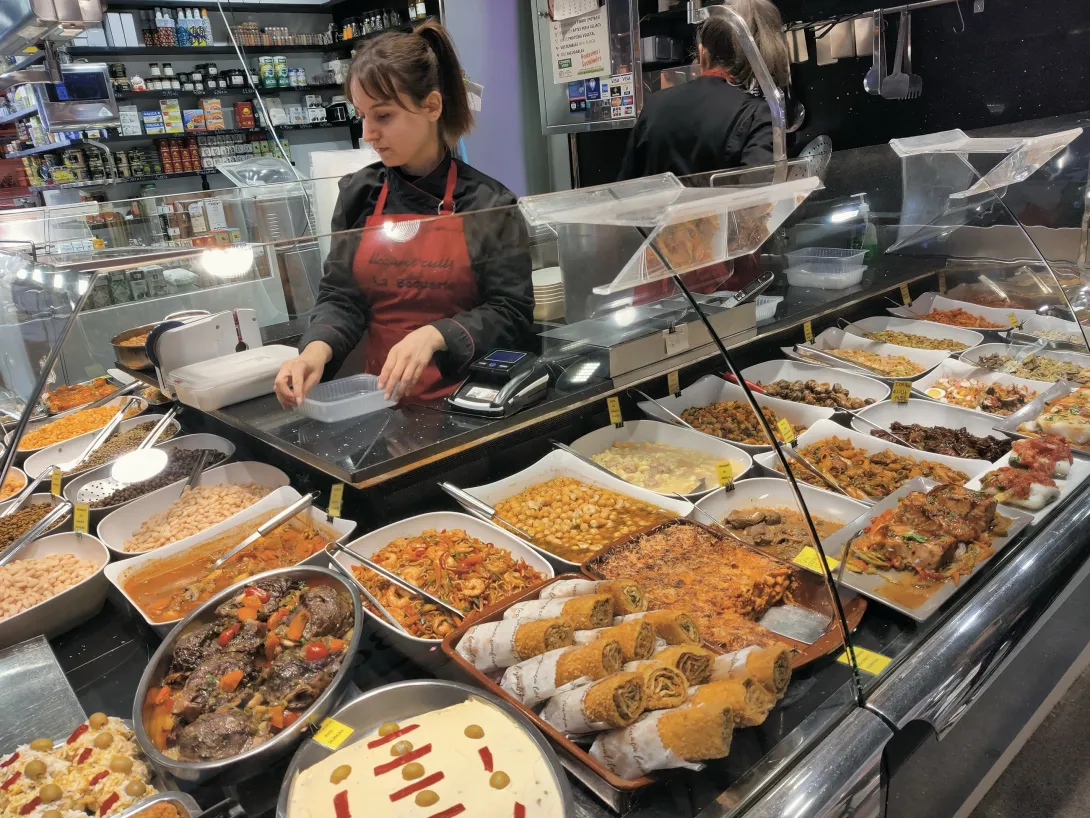
La Boqueria is not just a place to shop. Several bars and small counters serve tapas, fish, seafood, Catalan dishes, and savory breakfasts.
Here, you can taste:
- grilled calamari or prawns,
- fish and seafood depending on the catch,
- croquettes and hot tapas,
- chickpeas, beans, and stews,
- Iberian ham and cold cuts,
- traditional Catalan dishes served directly at the counter.
Among our favorite spots is El Quim de la Boqueria, which has been in the market since 1987, cooking with products from the stalls. Its small counter is very popular, and the wait can be long at lunchtime.
The bars at La Boqueria are not necessarily cheap. Check the prices before ordering and compare with our selection of restaurants in Barcelona.
© Barcelona.com
Bars and Tapas Counters
From Market to Plate
Visit La Boqueria and Learn to Cook a Paella

Barcelona Paella Cooking Class & Market Tour
A Bit of History
From Medieval Market to Symbol of Barcelona
The first documents mentioning meat sales tables on the Pla de la Boqueria date back to 1217. These were temporary stalls set up outside the old city walls, where local farmers came to sell their products.
After the destruction of the Sant Josep convent in 1835, the merchants from the Rambla settled on its former grounds in 1836. The first stone of the current market was laid on March 19, 1840, according to the project by architect Josep Mas i Vila.
The fish market joined the central part of the market in 1911. Between 1913 and 1914, the construction of the large metal roof definitively transformed the appearance of La Boqueria.
The market was subsequently modernized several times. The renovation carried out between 1998 and 2001 restored its look as a bright, covered plaza. In 2015, a new façade facing Plaça de la Gardunya expanded its area and improved its facilities.
© Barcelona.com
The History of La Boqueria in Key Dates
Neighborhood Hotspot
La Boqueria with Las Ramblas and El Raval
The market visit naturally pairs with a stroll along the Ramblas of Barcelona. La Boqueria is located roughly in the middle of this avenue that connects Plaça de Catalunya to the port.
Almost opposite the market, the Gran Teatre del Liceu is Barcelona's historic grand opera house. It hosts operas, concerts, ballets, and dance performances.
Exiting through the back of La Boqueria, Plaça de la Gardunya provides direct access to the Raval. You can continue towards the gardens of the old Hospital de la Santa Creu, the Library of Catalonia, or the MACBA.
© Barcelona.com
Between the Ramblas and the Raval
Different Atmospheres
What Other Markets to Visit in Barcelona?
La Boqueria is the city's most famous market, but it is not necessarily the most representative of the daily life of Barcelonians. Discover our complete selection in the guide to Barcelona's markets.

Bigger, More Local
Mercat de Sant Antoni
The Mercat de Sant Antoni is larger and very popular with the locals in the neighborhood.

The Ceramic Roof
Mercat de Santa Caterina
The Mercat Santa Caterina stands out with its spectacular undulating roof covered in colorful ceramics.

The Most Peaceful
Mercat del Ninot
The Mercat del Ninot is quieter and particularly pleasant for doing some shopping or having lunch.
Getting there
Getting to La Boqueria
La Boqueria is located in Barcelona's historic centre, between El Raval and the Gothic Quarter. It is easy to reach by public transport, on foot from central Barcelona or by taxi.
Getting there
Nearby

Gothic Quarter
Cross La Rambla from the market to enter the Gothic Quarter, with its medieval streets, Roman remains and historic squares.

Museu d'Art Contemporani de Barcelona (MACBA)
MACBA brings contemporary art into the route and shows another side of the nearby Raval district.

Palau Güell
Gaudí designed Palau Güell for the Güell family, adding a major early work of his architecture close to the market.

Cathedral of Barcelona
Barcelona Cathedral anchors the historic centre with its Gothic architecture and medieval cloister.

Old monastery of Sant Pau del Camp
Sant Pau del Camp is one of Barcelona's oldest surviving churches, known for its Romanesque cloister.
FAQ
FAQ, La Boqueria Market Barcelona
La Boqueria is generally open from Monday to Saturday, 8 AM to 8:30 PM, and closed on Sundays. However, some stalls and restaurants may close earlier.
Visit in the morning on weekdays, ideally before 10 AM. The stalls are well-stocked, and you'll avoid the busiest period around noon.
Opt for the products that still uphold the market's reputation: Iberian ham, Catalan cured meats, olives, fish, and seafood. To dine on-site, explore the counters located in the center and at the back rather than the first stalls on the Rambla.
Yes, as long as you venture beyond the initial tourist-heavy aisles. The central fishmongers' area, specialized shops, and the counters at the back still offer a glimpse into the workings of an authentic Barcelona market.