The grand performance hall of Montjuïc
Palau Sant Jordi Barcelona: concerts, events, and tour
The Palau Sant Jordi is one of Barcelona's premier concert and event venues. Built for the 1992 Olympic Games on Montjuïc hill, it now hosts major international tours, shows, and sports competitions. Beyond the events, visitors come mainly to admire its architecture and the surrounding Olympic complex.

At a Glance
The Palau Sant Jordi at a Glance
| Type of place | Concert halls, shows, and sporting events |
|---|---|
| Neighborhood | Montjuïc |
| Address | Passeig Olímpic, 5-7, 08038 Barcelona |
| Architect | Arata Isozaki |
| Opening | 1990 |
| Olympic Games | Barcelona 1992 |
| Capacity | Variable depending on the configurations, up to approximately 18,000 spectators |
| Access | According to the scheduled events |
| Must-See Attractions | Architecture, dome, Olympic ring, events |
| Metro | L1 L3 Espanya, then bus or walk up |
| Official Site | palausantjordi.barcelona |
| Good to Know | The building is generally not open like a typical tourist monument. |
Must-See
What to See at the Palau Sant Jordi?
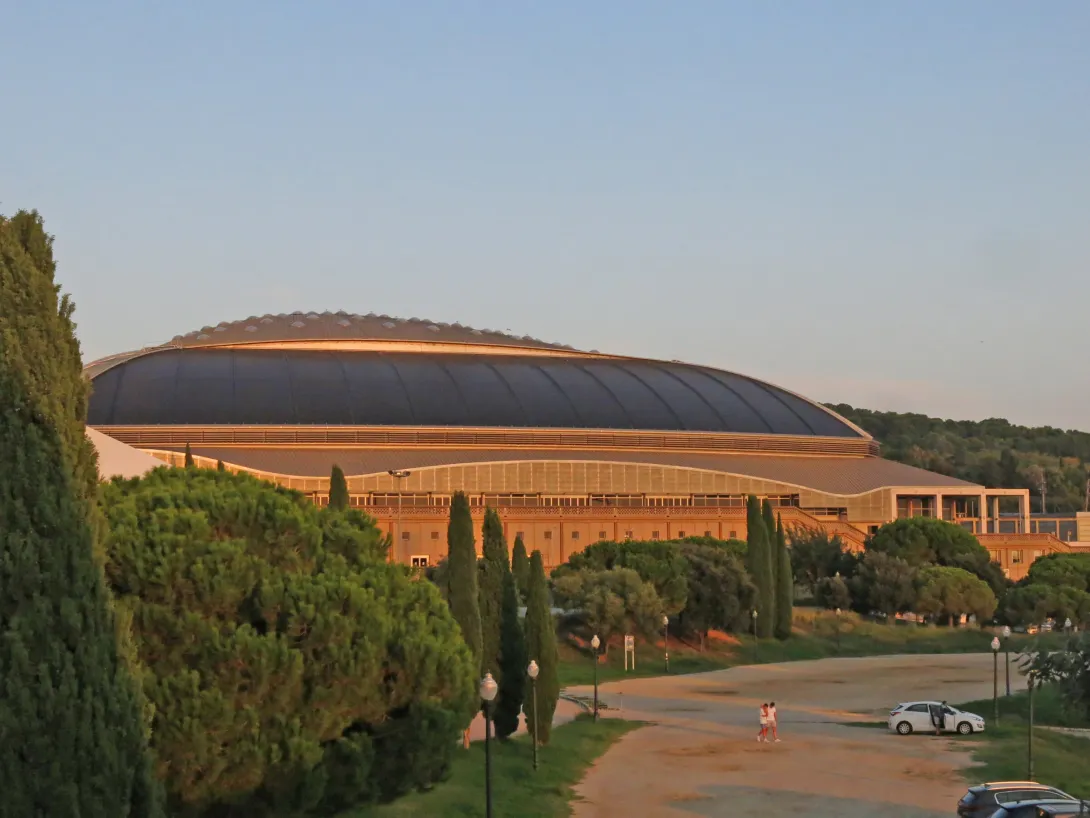
© Enric, CC BY-SA 4.0, via Wikimedia Commons
The Architecture of Arata Isozaki
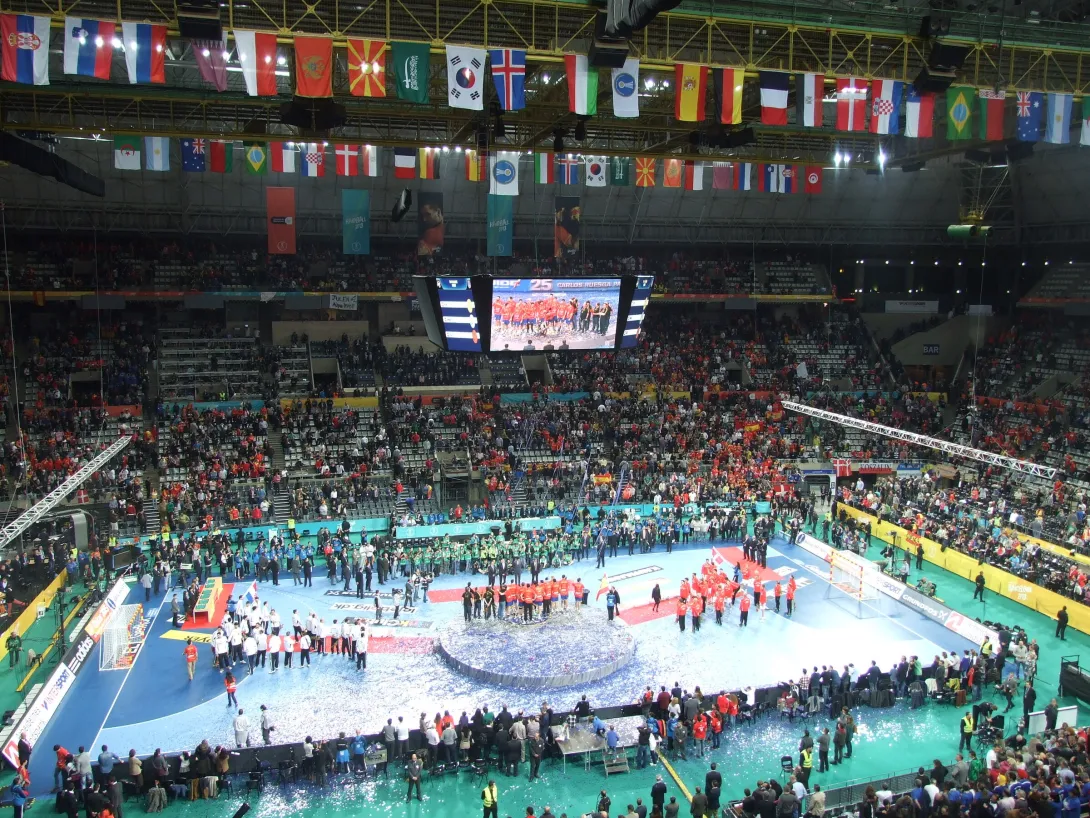
© Vanbasten 23, CC BY-SA 4.0, via Wikimedia Commons
The Grand Hall
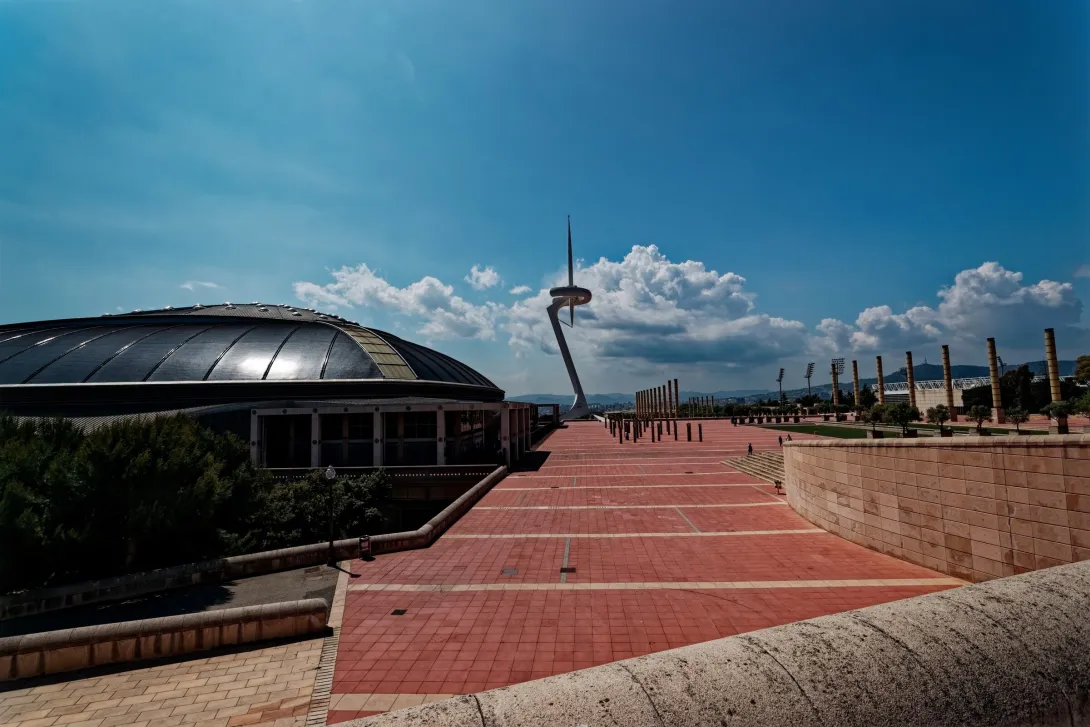
© Txllxt TxllxT, CC BY-SA 4.0, via Wikimedia Commons
The Olympic Ring
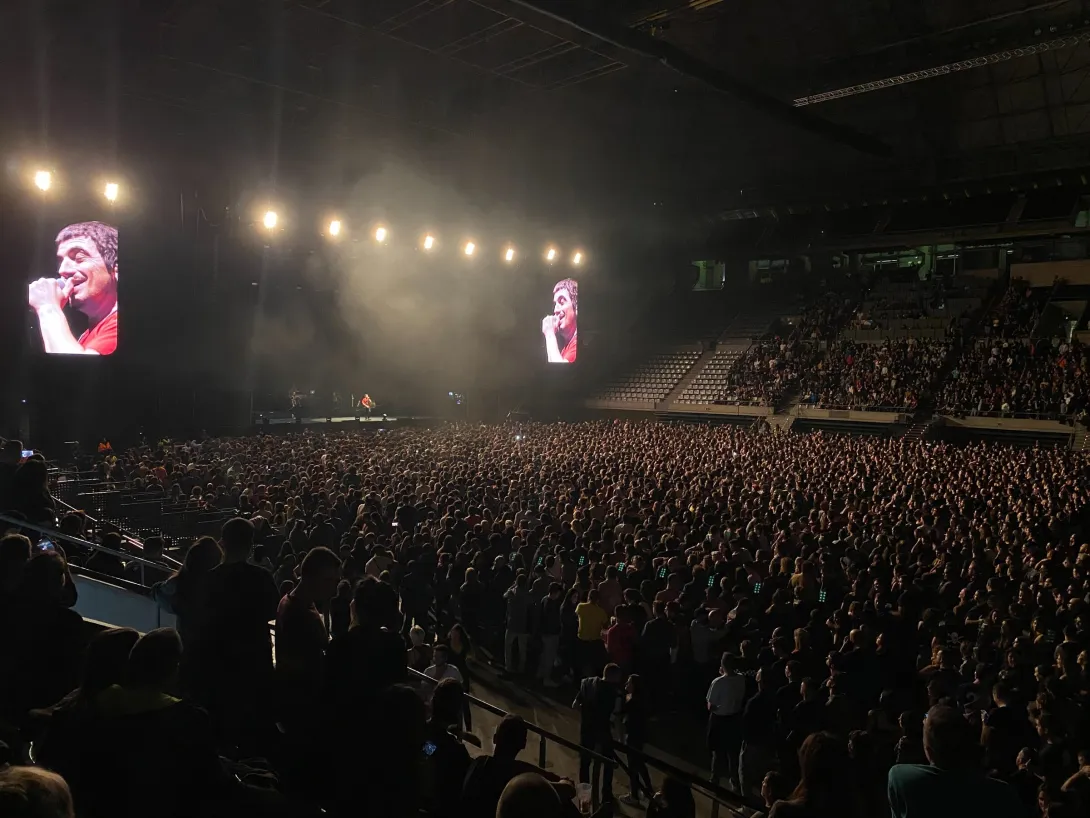
© Davidpar, CC BY-SA 4.0, via Wikimedia Commons
Concert Nights
Don't go up to Montjuïc just to see the interior: the Palau Sant Jordi is most interesting when a concert or event is scheduled there.
During the day, take advantage of its location to explore the entire Olympic Ring and other Montjuïc sites.
Why Go
Why is the Palau Sant Jordi Famous?
The Palau Sant Jordi was built as part of the major developments for the 1992 Barcelona Olympic Games.
Designed by Arata Isozaki, it was inaugurated in 1990 and hosted several competitions during the Games, including gymnastics and volleyball.
Since then, it has become one of Barcelona's main venues for performances, regularly hosting major international stars, sporting events, and large-scale productions.
A Major Barcelona Venue
Attend a Concert at Palau Sant Jordi
Today, the best way to experience the Palau Sant Jordi is by attending a concert or show there.
Its large capacity makes it a key stop for many international tours in Barcelona. The venue's configuration varies depending on the event and can host concerts, sports competitions, or grand performances.
Check the official schedule if your visit to Barcelona coincides with an event that interests you.
Olympic Legacy
Palau Sant Jordi and the 1992 Games
The Palau Sant Jordi is one of the main features of the Anella Olímpica de Montjuïc.
Nearby, you'll find the Stadium Olímpic Lluís Companys, the telecommunications tower by Santiago Calatrava, and the large esplanades developed for the 1992 Games.
This complex remains one of the most visible testaments to Barcelona's transformation during the Olympic Games.
On Montjuïc
The Palau Sant Jordi at the Heart of Montjuïc
The Palau Sant Jordi is located on the upper part of Montjuïc, near the Olympic Stadium, the Olympic Museum, the Botanical Garden, and several major cultural facilities.
A visit to the area also allows you to reach the MNAC, the Joan Miró Foundation, or the Montjuïc Castle.

Things to See Nearby
What Other Monuments to Visit?
Discover our selection of Barcelona's monuments.

© Enfo, CC BY-SA 3.0, via Wikimedia Commons
The Lluís Companys Olympic Stadium
The stadium built on Montjuïc is part of the same Olympic complex and stands as one of the main symbols of the 1992 Games.

© Barcelona.com
The Mies van der Rohe Pavilion
The Mies van der Rohe Pavilion is one of the great masterpieces of modern architecture, located further down Montjuïc near Plaça d'Espanya.

© Barcelona.com
Montjuïc Castle
Montjuïc Castle overlooks Barcelona from the top of the hill and offers beautiful views of the port and the city.
FAQ
FAQ: Palau Sant Jordi Barcelona
The Palau Sant Jordi is not typically open like a traditional tourist attraction. Access mainly depends on the concerts, shows, and events scheduled.
You can mainly explore its exterior architecture, the Olympic ring, and, when an event is scheduled, its large indoor hall.
It is located on the hill of Montjuïc, in the Olympic Ring, near the Olympic Stadium.
The most common route is to take the metro to Plaça d’Espanya, then continue by bus or on foot to the Olympic Ring.