In the heart of the Gothic Quarter
Barcelona Cathedral: tickets, hours, and visit
Discover the Gothic vaults, the Cloister of the Thirteen Geese, and the cathedral terraces. Compare tickets and plan your visit.
Discover the Gothic vaults, the Cloister of the Thirteen Geese, and the cathedral terraces.
- Gothic Architecture
- Cloister of the Thirteen Geese
- Panoramic Terraces

Tickets and Tours
Which ticket should you choose to visit the cathedral?
Explore at your own pace with an audio guide in English, or discover the cathedral with an English-speaking guide. Both options include rooftop access and a virtual reality experience.

At your own pace
Entry ticket with audio guide and rooftop access
Explore the cathedral at your own pace with an audio guide available in English.
- Audio guide in English
- Rooftop and Chapter Hall access
- Virtual reality experience

With an English-speaking guide
Guided tour in English with rooftop access
A 1-hour 15-minute guided tour for groups of up to 20 people. Select English when booking.
- English-speaking guide
- Skip-the-line entry and rooftop access
- Virtual reality experience with VR glasses
Good to Know
A Quick Look at Barcelona Cathedral
The Cathedral of the Holy Cross and Saint Eulalia is located in the heart of the Gothic Quarter. Often mistaken for the Sagrada Família, Gaudí's basilica, it is the historic cathedral of Barcelona.
| Full name | Cathedral of the Holy Cross and Saint Eulalia |
|---|---|
| Catalan name | Catedral de la Santa Creu i Santa Eulàlia |
| Neighborhood | Gothic Quarter |
| Address | Pla de la Seu, 08002 Barcelona |
| Nearest metro | L4 Jaume I |
| Recommended Duration | Approximately 1 to 1.5 hours |
| Ticket with Audioguide | Starting from 19.00 € |
| Must-see | Naves, choir, crypt, chapels, cloister, and terraces |
| Feature | The Thirteen White Geese of the Cloister |
| Official Website | catedralbcn.org |
Behind the façade
What to see inside the Barcelona Cathedral?
The tour unveils a vast Gothic interior filled with chapels, tombs, and artworks. Take the time to admire the vaults, stained glass windows, and sculptures: much of the monument's allure lies in these details.
© Didier Descouens, CC BY-SA 4.0, via Wikimedia Commons
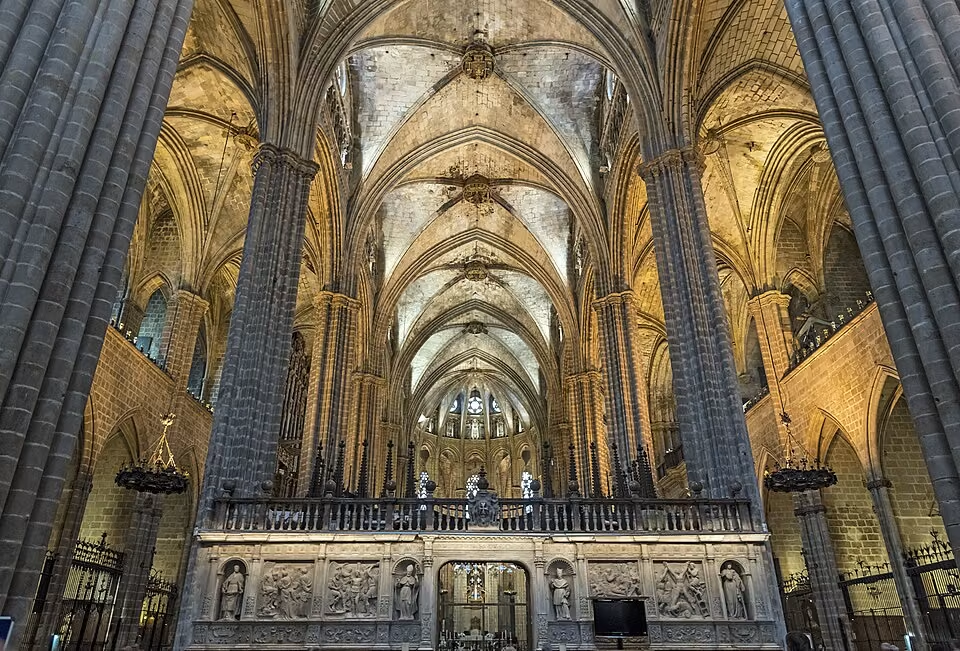
The naves, vaults, and stained glass windows
The interior of the cathedral is composed of three naves, with chapels on the sides and a passage around the choir. The pillars and vaults draw the eye upward, where the stained glass windows add splashes of color.
Some date back to the 14th century. Also, take a look at the keystones: these carved stones, at the intersection of the ribs, depict religious figures and scenes.
© Didier Descouens, CC BY-SA 4.0, via Wikimedia Commons
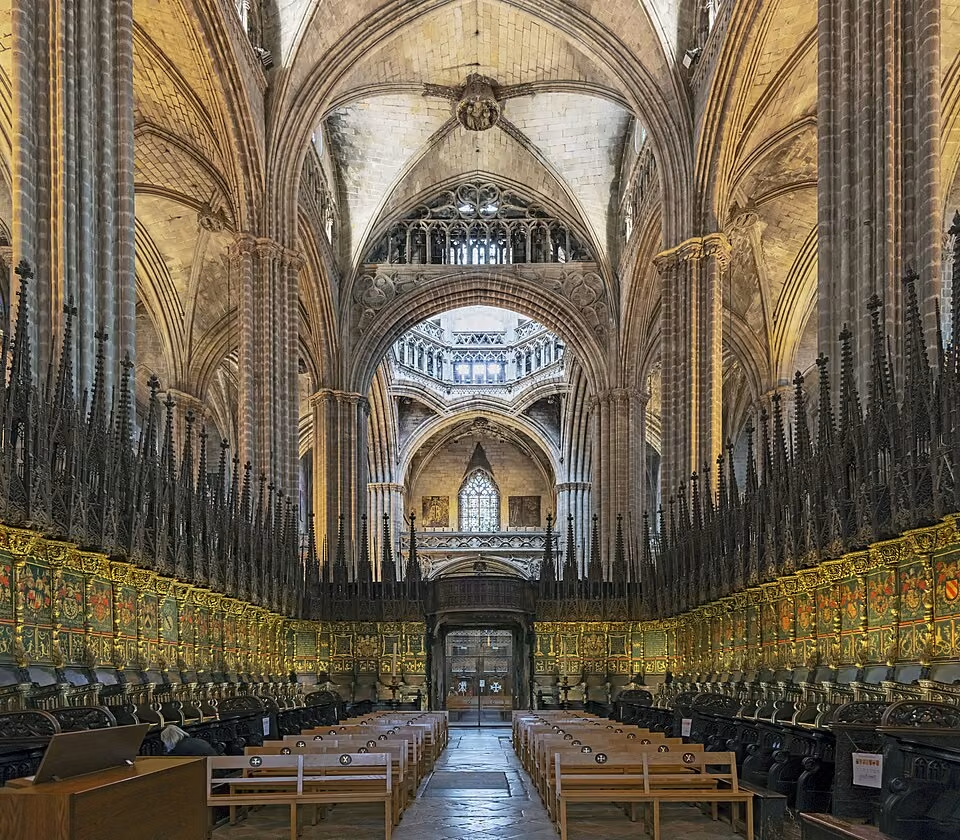
The choir and its carved stalls
The choir features wooden stalls, canopies, and intricately carved pinnacles. The backs display the coats of arms of the Knights of the Golden Fleece, who gathered in Barcelona in 1519 under Charles V.
Also, take a look at the marble enclosure: its reliefs depict episodes from the life of Saint Eulalia.
© Didier Descouens, CC BY-SA 4.0, via Wikimedia Commons
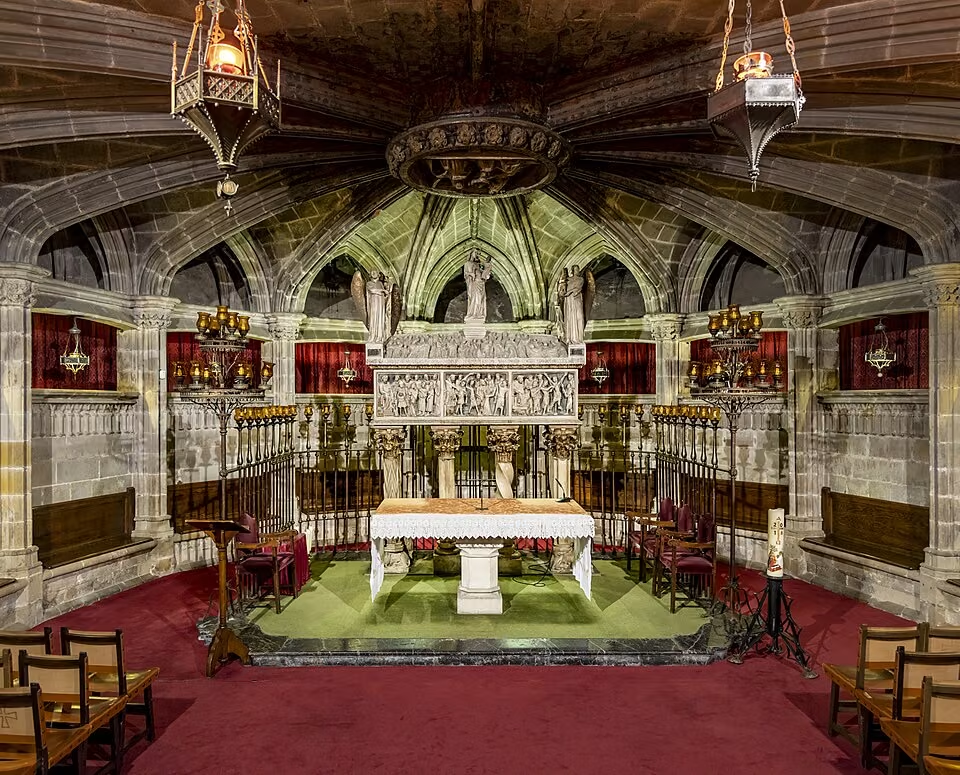
The Crypt of Saint Eulalia
The crypt houses the Gothic tomb of Saint Eulalia, inaugurated in 1339. The reliefs on the sarcophagus depict her martyrdom and the journey of her relics.
Take the time to observe this sculpted monument: it is one of the most significant ensembles dedicated to the saint in the cathedral.
© Didier Descouens, CC BY-SA 4.0, via Wikimedia Commons
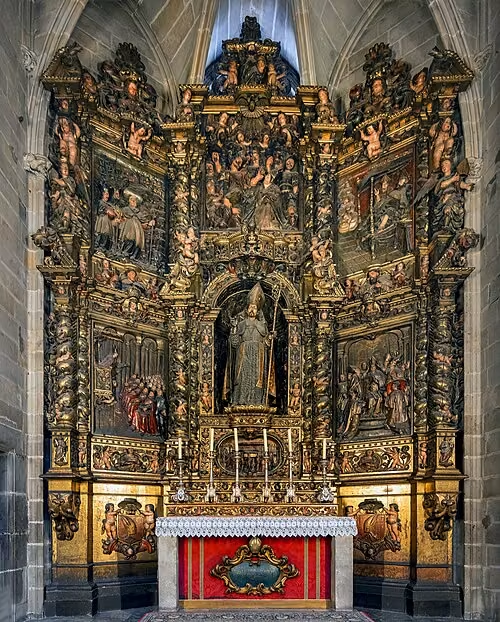
The chapels and artworks
The chapels invite you to explore the cathedral on a different scale, in front of an altarpiece, an altar, or a tomb. Their decorations reflect the artistic commissions accumulated over the centuries.
The chapter house enhances this exploration with works such as the Pietà by Bartolomé Bermejo, painted in 1490.
Mutari — domaine public, via Wikimedia Commons
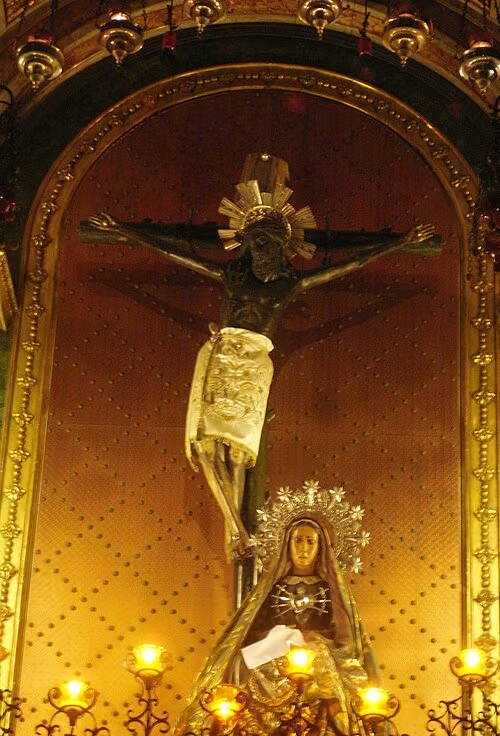
The Christ of Lepanto
The Chapel of the Blessed Sacrament houses the Christ of Lepanto, a Gothic sculpture whose restoration has unveiled its ancient polychromy. You can also see the tomb of Saint Oleguer there.
This space is dedicated to prayer: photography is prohibited, and access is not allowed during Eucharistic celebrations.
© Jnolan14, CC BY-SA 3.0, via Wikimedia Commons
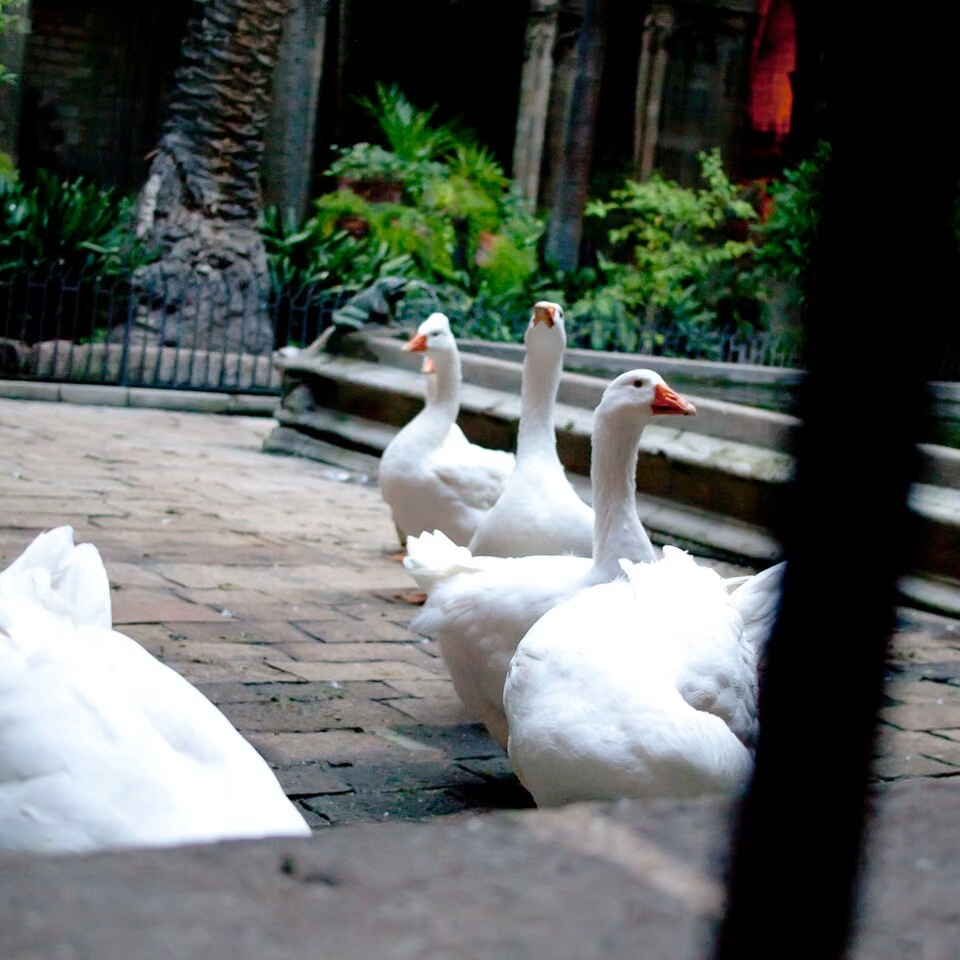
The Cloister and Its Thirteen Geese
The Gothic galleries of the cloister surround a garden filled with palm trees, magnolias, and an orange tree. Fountain, greenery, and pond create a unique stop on the interior tour.
The thirteen white geese are said to represent the age of Saint Eulalia at the time of her martyrdom. Their presence in the cloister has been documented since the 16th century.
From the Forecourt to the Terraces
What to See Outside and on the Rooftops?
The cathedral can also be admired from the square, the surrounding streets, and the terraces. These vantage points allow you to appreciate the façade, the structure, and the architectural details.
© Barcelona.com
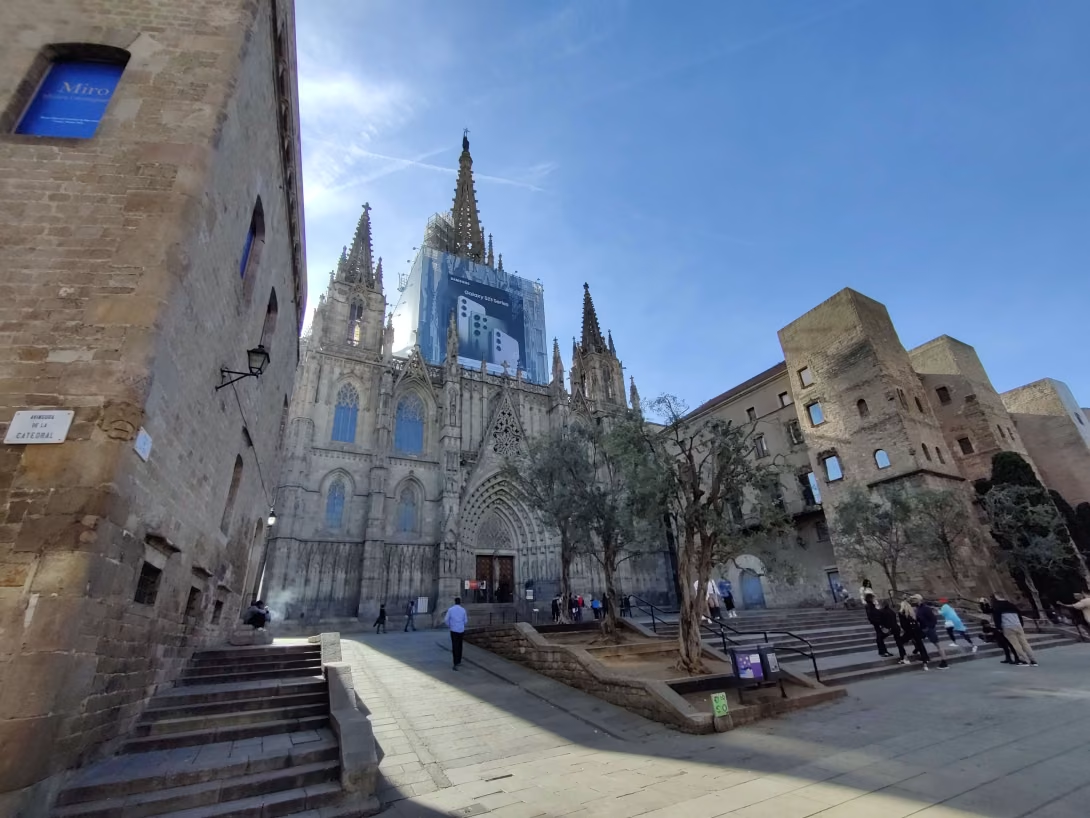
The Neo-Gothic façade
From the Pla de la Seu, step back to admire the portal, sculptures, and spires.
Despite its medieval appearance, the current façade was completed at the end of the 19th century. The central crowning was finished in 1913, several centuries after the Gothic body of the building.
© Barcelona.com
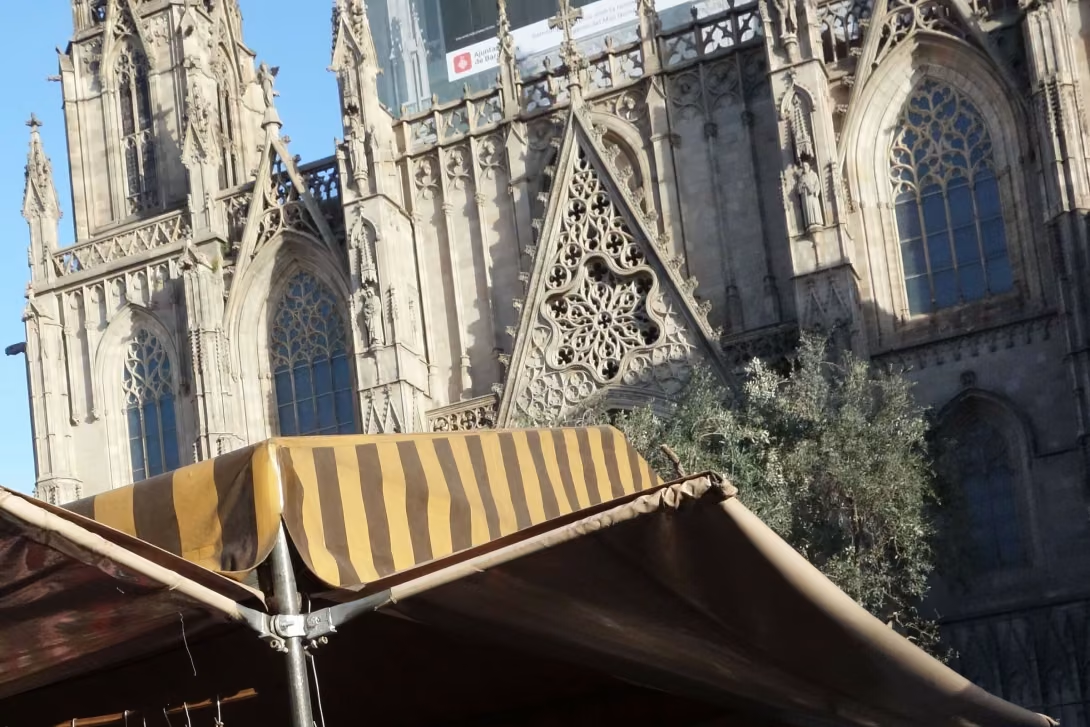
The forecourt and surrounding streets
The Pla de la Seu offers a wide view of the cathedral. Nearby, the Mercat Gòtic, the Gothic market of Barcelona, is regularly held, featuring antiques, second-hand goods, and collectibles.
After admiring the façade, continue along the monument to discover its sides and secondary doors. Carrer del Bisbe, Plaça de Sant Jaume, and Plaça del Rei allow you to extend your stroll through the Gothic Quarter.
© Barcelona.com
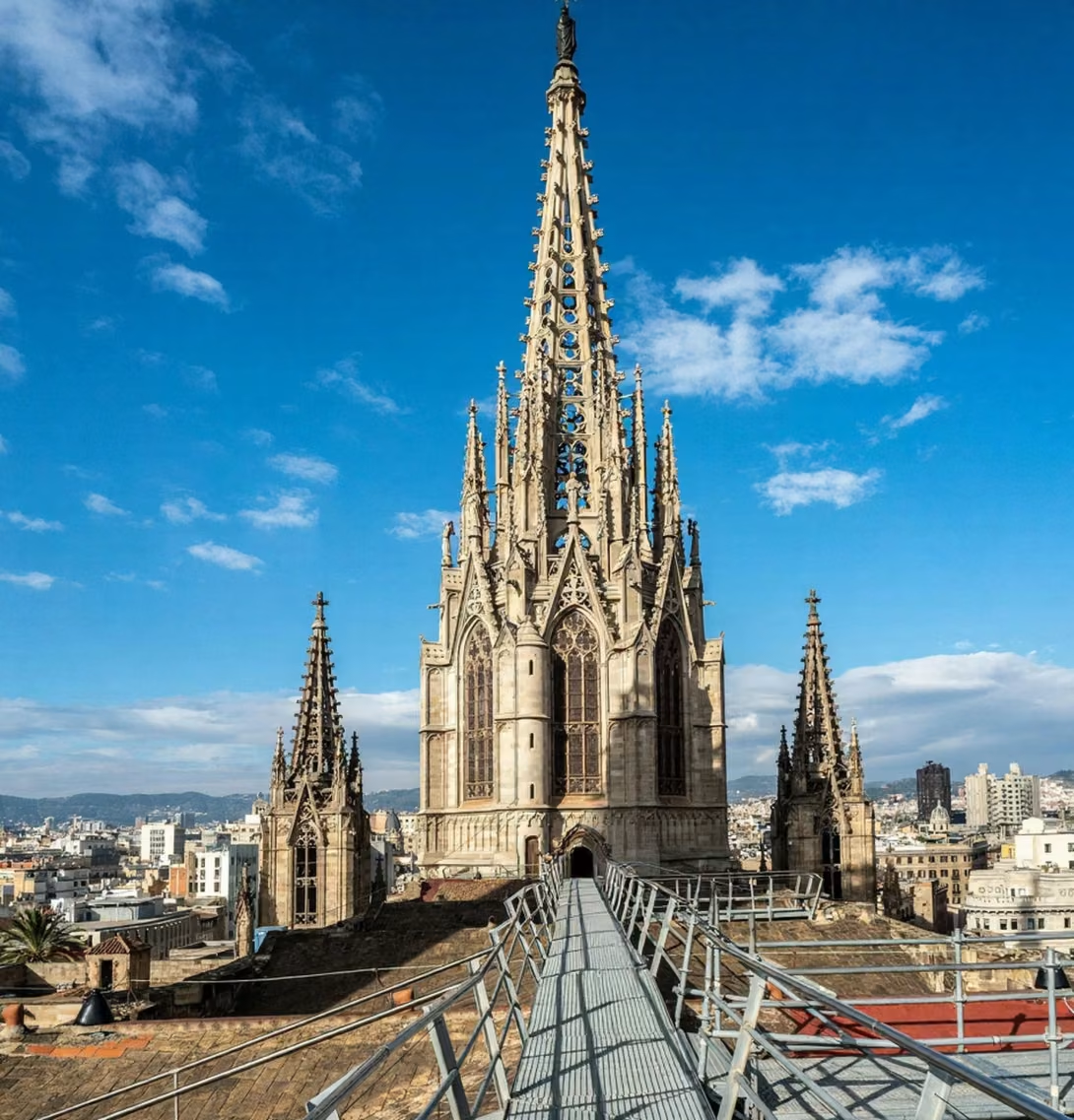
The Terraces and the Bell Towers
From the terraces, you can see the two bell towers, the cathedral's crowning glory, and a view of Barcelona.
The appeal also lies in the close proximity to the architecture: certain elements that are hard to distinguish from the square become visible at eye level. Access to the terraces is via an elevator from the Chapel of the Holy Innocents.
Plan for about an hour and a half to explore the cathedral at a leisurely pace. Take the time to admire the stained glass windows and sculptures, then make sure to visit the cloister and terraces. Afterwards, extend your visit with a walk through the streets of the Gothic Quarter.
Plan Your Visit
Barcelona Cathedral Opening Hours
The hours below pertain to the cultural and tourist visit. Access closes before the monument's closing time.
| Weekdays | 9:30 AM to 6:30 PM |
|---|---|
| Last access on weekdays | 5:45 PM |
| Saturdays and the eves of religious holidays | 9:30 AM to 5:15 PM |
| Last entry on Saturdays and the day before holidays | 4:30 PM |
| Sundays and Religious Holidays | 2 PM to 5 PM |
| Last entry on Sundays and holidays | 4:30 PM |
Source: Barcelona Cathedral. Hours verified on October 20, 2026. Celebrations may alter access conditions: check the slot corresponding to your visit date.
Prices and Access to Worship
Can you visit the cathedral for free?
The tour is ticketed. Free admission is available for individuals with a recognized disability rate of at least 33% and holders of an ICOM card.
Discounted rates are offered for students up to 25 years old, as well as for large and single-parent families, with proof required at the ticket office.
Attending a Mass
Participation in worship follows a different schedule from the tourist visit. A service does not allow for the complete cultural tour.
To attend a service, please check the mass times published by the cathedral.
Understanding the monument
A cathedral built over the centuries
The construction of the Gothic cathedral began in 1298 on the site of a Paleo-Christian basilica and later a Romanesque cathedral. The work continued until the mid-15th century, with the cloister completed in 1448.
The main façade remained unfinished for a long time. At the end of the 19th century, funding from Manuel Girona allowed for the creation of a Neo-Gothic façade, following the plans of architect Josep Oriol Mestres. His children continued the project with the central crowning, completed in 1913.
These stages explain why the monument combines a medieval interior with a much more recent façade.
Discover the history of the cathedral on its official website.
Getting there
Transport and nearby places
The stations, stops and places to visit around Barcelona Cathedral, in the heart of the Gothic Quarter.
Getting there
Nearby

Gothic Quarter
The medieval lanes around the cathedral, from Plaça del Rei to the Call, the old Jewish quarter.

Museu d'Història de Barcelona
On Plaça del Rei, the city history museum takes you underground through the streets of Roman Barcino.

Museu Frederic Marès
Sculptor Frederic Marès’s collection, from Romanesque carvings to everyday objects, in a wing of the old royal palace.

Plaça Sant Jaume
The Catalan government and the City Hall face each other here, on the site of the Roman forum.

Basílica de Santa Maria del Mar
The great Catalan Gothic basilica of the Ribera district, built in just over fifty years in the 14th century.
Your Questions
FAQ: Visiting the Barcelona Cathedral
We recommend spending about an hour for the main areas, and an hour and a half to observe the artworks and explore the cloister and terraces. The guided tour offered on this page lasts 1 hour and 15 minutes.
Booking in advance lets you choose a time slot before you arrive. For the guided tour, select English in the ticket options. The audio guide ticket is non-refundable; the guided tour featured here offers free cancellation up to 24 hours before your visit.
Cover your shoulders and wear a skirt, dress, or shorts that reach at least mid-thigh, in accordance with the guided tour offer guidelines. Bring a scarf or a light shirt if you're dressed in summer attire.
An adapted access is indicated at the Santa Eulàlia gate, carrer del Bisbe. Inquire with the cathedral about accessible areas according to your needs, especially for the terraces: the presence of an elevator does not guarantee accessibility throughout the entire route.
Follow the guidelines specific to each area. Photography is particularly prohibited in the Chapel of the Holy Sacrament and the Christ of Lepanto, which is dedicated to prayer. Check the signs before photographing a work of art.
Yes: we suggest offering them a few simple observations, such as spotting the coats of arms in the choir, admiring the sculptures, and discovering the geese in the cloister. For a family visit, the audio guide allows you to proceed at your own pace. Check the ages and children's rates in the options of the selected ticket.
No for the tourist route: the announced hours for Sundays and religious holidays start at 2 PM, with the last entry at 4:30 PM. Religious celebrations follow a separate schedule.
We recommend focusing on the nave, the choir, and the cloister. If a view of Barcelona is your priority, save some time for the terraces, which are accessible by elevator from the Chapel of the Holy Innocents.