From the Gothic Quarter to Poblenou
Neighborhoods of Barcelona: Which Ones to Visit?
Barcelona completely changes its atmosphere from one neighborhood to another. Medieval alleys, modernist architecture, lively squares, beaches, or former industrial areas: this guide helps you choose where to stroll based on your interests.

For a first visit, start with the Gothic Quarter and El Born, then explore the Eixample for modernist architecture.
For a more local vibe, choose Gràcia or Poblenou. And if the sea is your priority, head to Barceloneta and the waterfront.
The Great Atmospheres
The Must-Visit Neighborhoods of Barcelona
Six neighborhoods offer a quick glimpse into the diverse atmospheres of Barcelona, from the historic center to the waterfront.

© Naval S, CC BY 2.0, via Wikimedia Commons
Gothic Quarter
The oldest heart of Barcelona, nestled between the Cathedral, medieval alleys, Plaça del Rei, and remnants of the Roman city.

© Barcelona.com
El Born
Santa Maria del Mar, the Picasso Museum, small boutiques, and terraces make up one of the most delightful areas to explore on foot.

© Enric, CC BY-SA 4.0, via Wikimedia Commons
Eixample
The grid plan of Cerdà, the wide avenues, and several masterpieces of modernist architecture give the Eixample its unique character.

© thierrytutin, CC BY 2.0, via Wikimedia Commons
Gràcia
Small squares, shopping streets, terraces, and old houses give this former village a very different atmosphere from the historic center.

© dronepicr, CC BY 2.0, via Wikimedia Commons
Barceloneta
Once a maritime district nestled between Port Vell and the Mediterranean, Barceloneta offers an easy transition from quaint streets to sandy beaches.

© CésarOP, CC BY-SA 3.0, via Wikimedia Commons
Poblenou
Old factories, a lively Rambla, the architecture of 22@, and proximity to the beaches tell the story of Barcelona's recent transformation.
According to Your Desires
Which Neighborhood to Choose in Barcelona?
| Ancient Alleyways and Heritage | Gothic Quarter |
|---|---|
| Museums and Narrow Streets | El Born |
| Gaudí and Modernist Architecture | Eixample |
| Squares and Local Atmosphere | Gràcia |
| Sea and Beach | Barceloneta |
| Creation and Contemporary Barcelona | Poblenou |
| Museums, Gardens, and Open Spaces | Montjuïc |
| A cosmopolitan atmosphere | Raval |
The Old Town
Understanding Ciutat Vella
The historic center is easy to spot on a map: El Raval is located to the west of Las Ramblas, the Gothic Quarter to the east, and then El Born extends the old city towards the Ciutadella Park.
To the south, the area connects with Port Vell and Barceloneta.
These areas are close enough to explore in a single day.
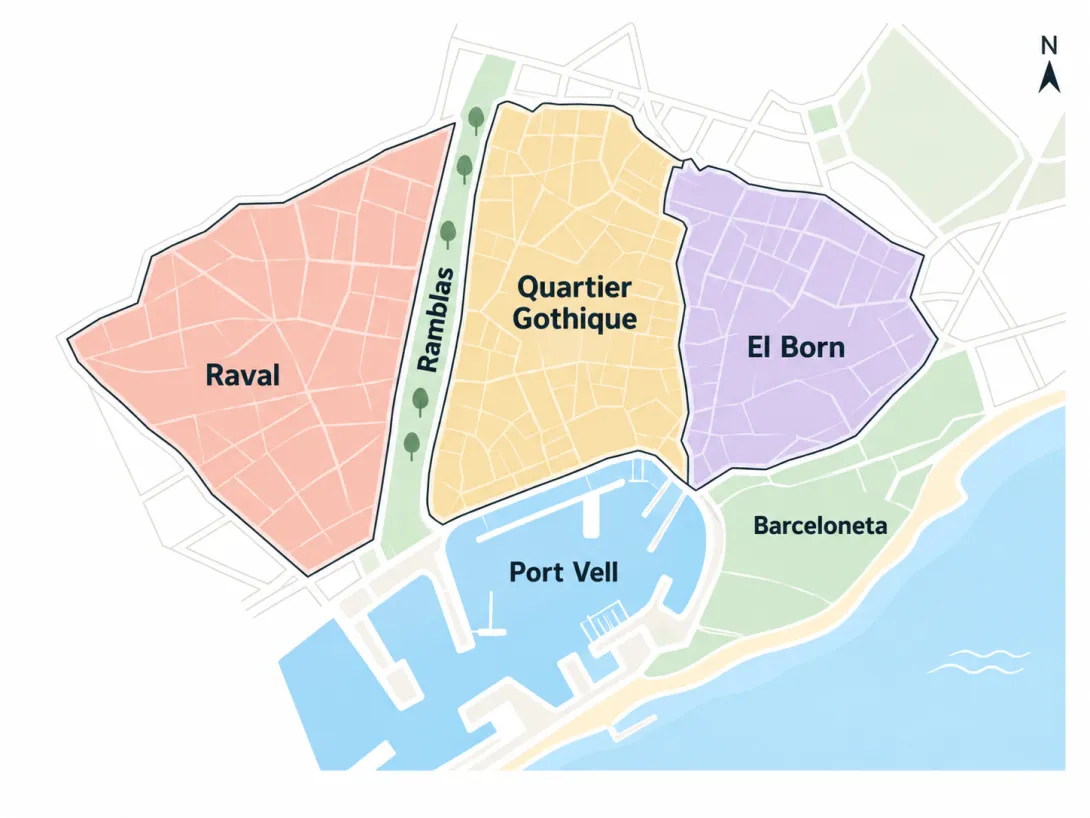
Map of Barcelona's historic center
Architecture
Where to See Gaudí and Modernism?
The best route starts on Passeig de Gràcia, between Casa Batlló, Casa Amatller, and La Pedrera, then crosses the Eixample towards the Sagrada Família.
Further north, Gràcia offers the opportunity to continue with Casa Vicens and Parc Güell.
This part of Barcelona is best explored as an architectural walk rather than neighborhood by neighborhood.
To understand the styles, architects, and main buildings, check out our guide to modernism in Barcelona.
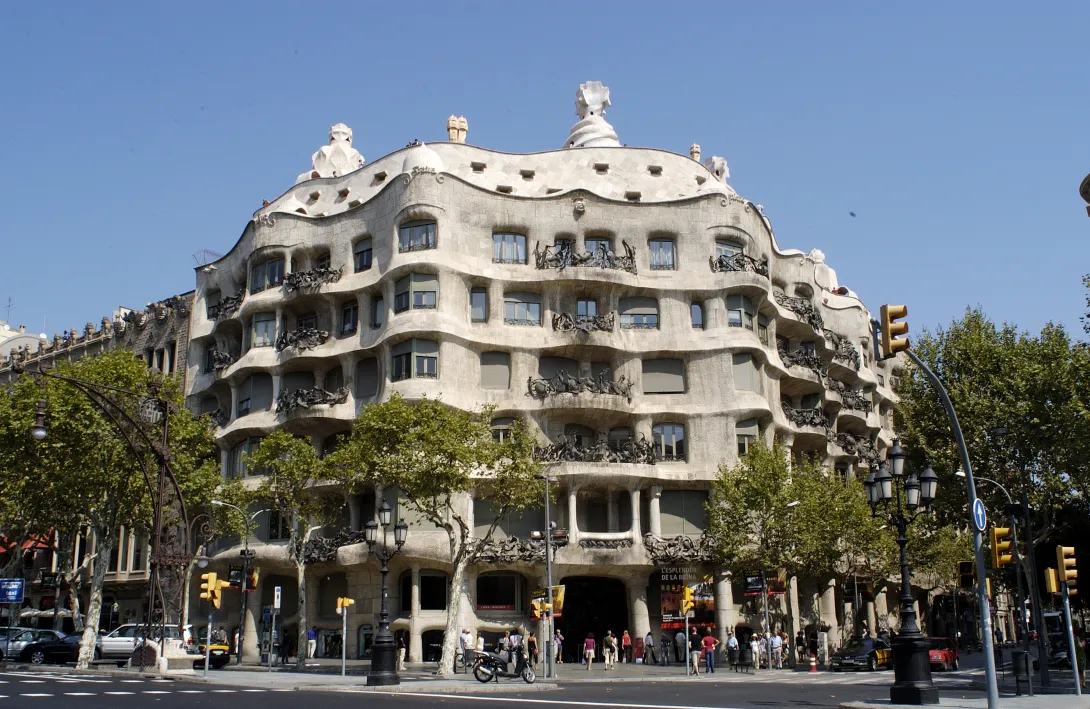
© Barcelona.com
The Modernist Eixample
From the Old Town to the Beaches
Barcelona by the Sea
From the bottom of the Ramblas, the waterfront forms almost a continuous route.
Port Vell serves as the transition between the historic center and the Mediterranean. Further along are Barceloneta, the beaches, the Olympic Port, and then Poblenou.
It's a great way to discover several facets of Barcelona without returning to the center between each stop.
Port Vell
Rambla de Mar, Maremagnum, Aquarium, and docks make it the grand maritime promenade of the center.
Olympic Port
The renovated marina marks the transition between the central beaches and the northeastern districts of the city.
To choose where to swim, check out our guide to Barcelona's beaches.
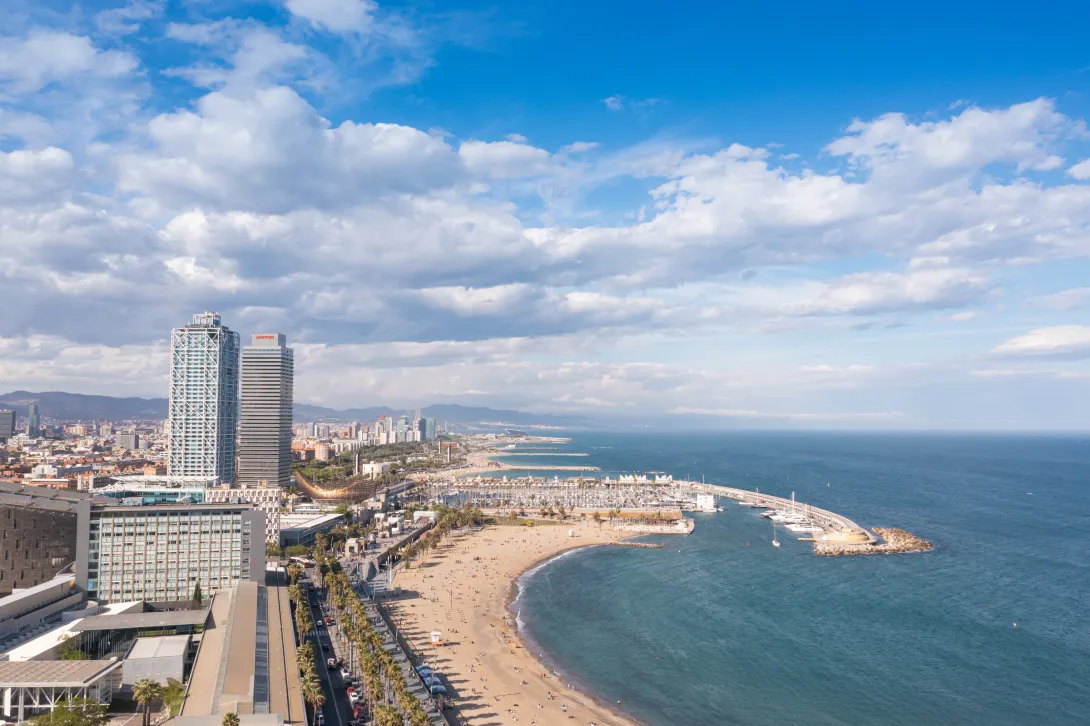
© dronepicr, CC BY 2.0, via Wikimedia Commons
Barcelona Facing the Mediterranean
Venture off the beaten path
To discover a more local Barcelona
Once you've visited the major must-sees, some areas allow you to discover a more everyday side of the city.
Gràcia remains the easiest choice for its squares and terraces, while Poblenou blends residential life with new creative spaces.
For a deeper exploration, Sant Antoni offers a lively atmosphere around its market, whereas Sarrià maintains a quieter character in the upper part of Barcelona.
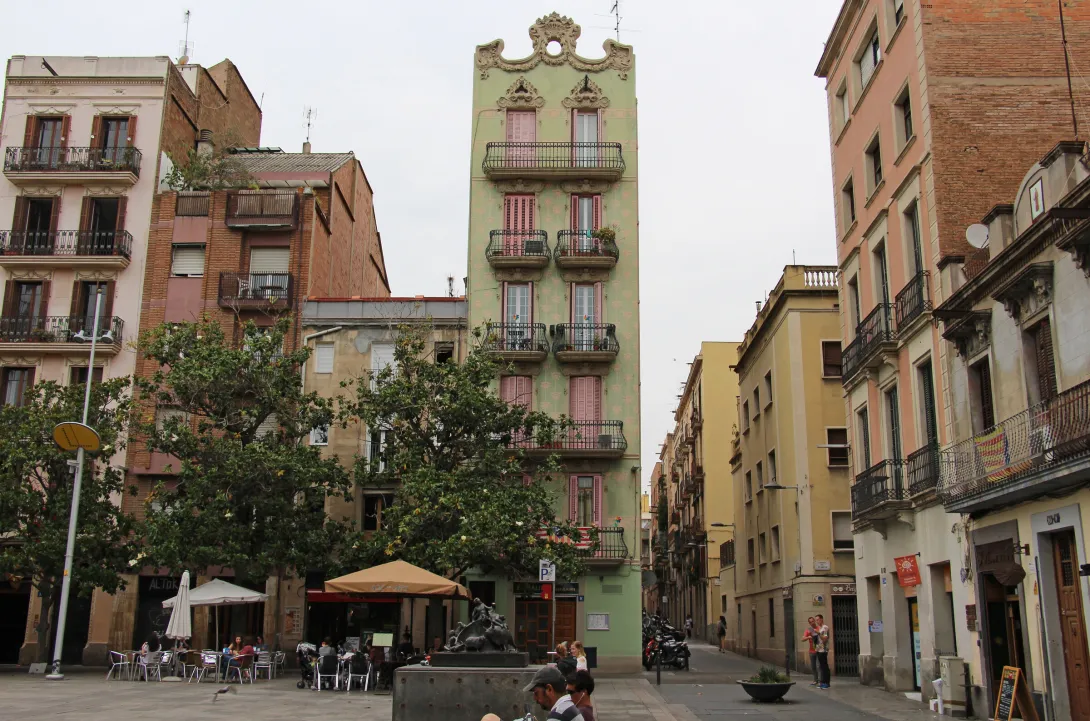
© Fred Romero, CC BY 2.0, via Wikimedia Commons
Barcelona Off the Beaten Path
Culture and Great Outdoors
Montjuïc: Museums, Gardens, and Open Spaces
Montjuïc deserves a special mention.
This large hill overlooking the port brings together the MNAC, the Fundació Joan Miró, CaixaForum, the Mies van der Rohe Pavilion, gardens, Olympic facilities, and Montjuïc Castle.
It's not your typical neighborhood stroll: plan for half a day and choose a few sites rather than trying to see everything.
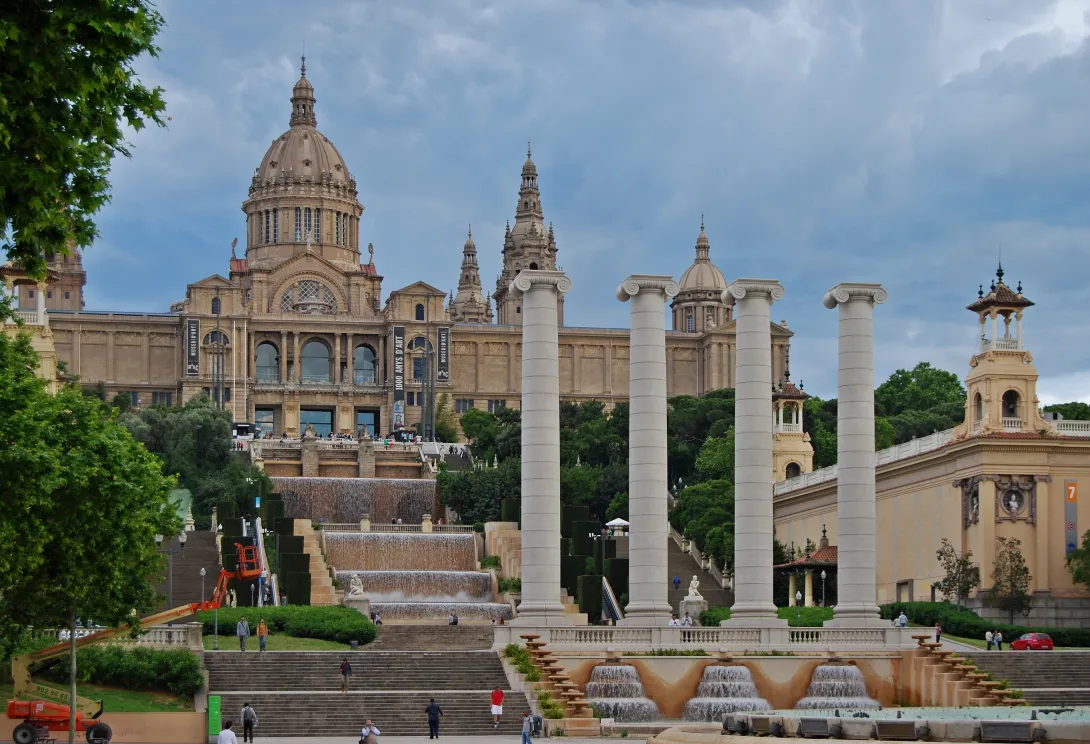
© Felix König / Wikimedia Commons, CC BY 3.0
Montjuïc: Culture and Views
Choose Your Area
Where to Stay in Barcelona Based on Your Preferences
| First Visit | Eixample, Gothic or Born |
|---|---|
| Gaudí and Shopping | Eixample / Passeig de Gràcia |
| Local Atmosphere | Gràcia |
| Beach | Poblenou |
| Residential neighborhood | Sarrià / Sant Gervasi |
Plan your stay
Find a hotel in the right neighborhood
L'Eixample is particularly convenient for exploring the entire city, while the other areas cater more to a specific atmosphere or type of stay.

Districts and Neighborhoods
How are the neighborhoods of Barcelona organized?
Barcelona is officially divided into 10 districts, each made up of several neighborhoods.
However, these administrative boundaries don't always match the landmarks used by visitors. Passeig de Gràcia, Las Ramblas, or Port Vell, for example, are mainly seen as destinations and walking areas.
When planning a visit, it's easier to think in terms of proximity and points of interest rather than administrative borders.
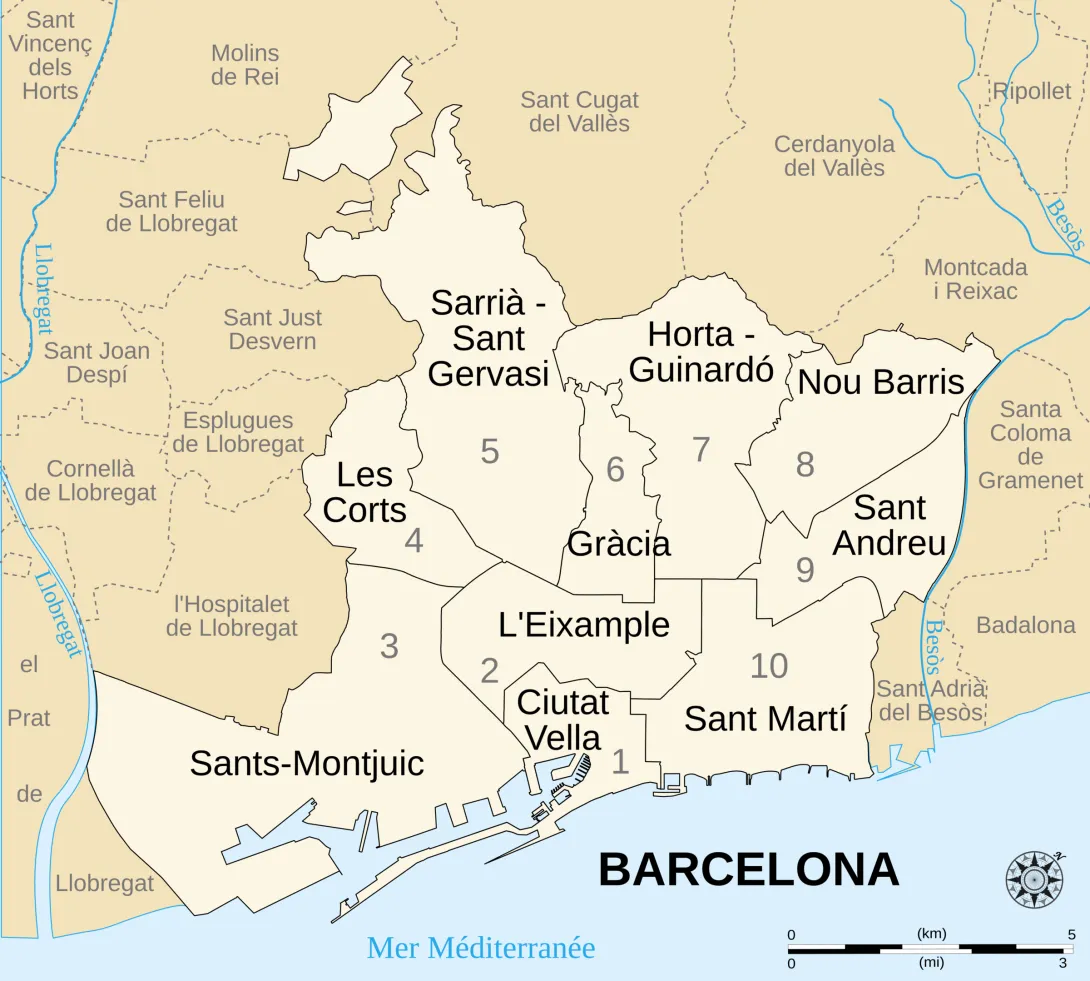
© Sémhur, CC BY-SA 4.0, via Wikimedia Commons
The Districts of Barcelona
FAQ
FAQ: Neighborhoods of Barcelona
Start with the Gothic Quarter and El Born for the old town, then dedicate another walk to the Eixample and Passeig de Gràcia.
It depends on what you're looking for. The Gothic Quarter showcases historic Barcelona, while Gràcia offers a lively and residential neighborhood vibe.
The Eixample district is home to the Sagrada Família, Casa Batlló, and La Pedrera. Gràcia perfectly complements this exploration with Casa Vicens and Park Güell.
Barceloneta is the most central. Poblenou is better suited if you want to combine the sea with a residential environment.
For a first visit, the Eixample is particularly convenient. Gràcia offers a more local vibe, while Poblenou is ideal for a stay near the sea.
The Gothic Quarter, El Born, and Raval form a very compact area. Another beautiful walk connects Passeig de Gràcia to the main areas of the Eixample.
El Born and Raval offer numerous bars in the center. Gràcia is more distinguished by its squares and terraces.
Not in the administrative sense. But for a visitor, these are genuine walking areas with their own unique identity: Port Vell extends the old town, while the Olympic Port is more part of the waterfront and beaches.