The architecture that transformed Barcelona
Modernism in Barcelona: Monuments, Architects, and the Modernism Route
Casa Batlló, Casa Milà, Palau de la Música Catalana, Hospital de Sant Pau, Casa Amatller... At the end of the 19th and the beginning of the 20th century, Catalan Modernism profoundly transformed Barcelona. Antoni Gaudí is its most famous figure, but he shared this adventure with Lluís Domènech i Montaner, Josep Puig i Cadafalch, and an entire generation of architects, artists, and craftsmen. This page helps you understand Catalan Modernism, discover its essential monuments, and organize a tour through Barcelona.
Barcelona's must-see modernist monuments, the great architects, and the best routes to explore them.
- Passeig de Gràcia
- Antoni Gaudí
- Block of Discord
- Modernisme Route

For a first exploration, start with Passeig de Gràcia: within a few hundred meters, Casa Batlló, Casa Amatller, Casa Lleó Morera, and Casa Milà already showcase several facets of modernism. To delve deeper and discover architecture less focused on Gaudí, add the Palau de la Música Catalana or the Hospital de Sant Pau to your itinerary.
Understanding the Movement
What is Catalan Modernism?
Catalan Modernism is an artistic movement that developed primarily between the late 19th and early 20th centuries.
It is part of the broader European Art Nouveau movement, but in Catalonia, it takes on a very distinct personality. In Barcelona, it coincides with a period of significant economic, cultural, and urban growth, particularly in the new Eixample district.
One of its key features is the collaboration between architects and craftsmen. Sculpture, stained glass, ceramics, mosaics, ironwork, carpentry, and furniture all play a full role in the building.
Highly detailed façades, plant motifs, medieval references, nature-inspired forms, and a love for color are among the most visible signs of Barcelona's Modernism.
However, it does not correspond to a single style: Gaudí, Domènech i Montaner, and Puig i Cadafalch each developed very different architectures.
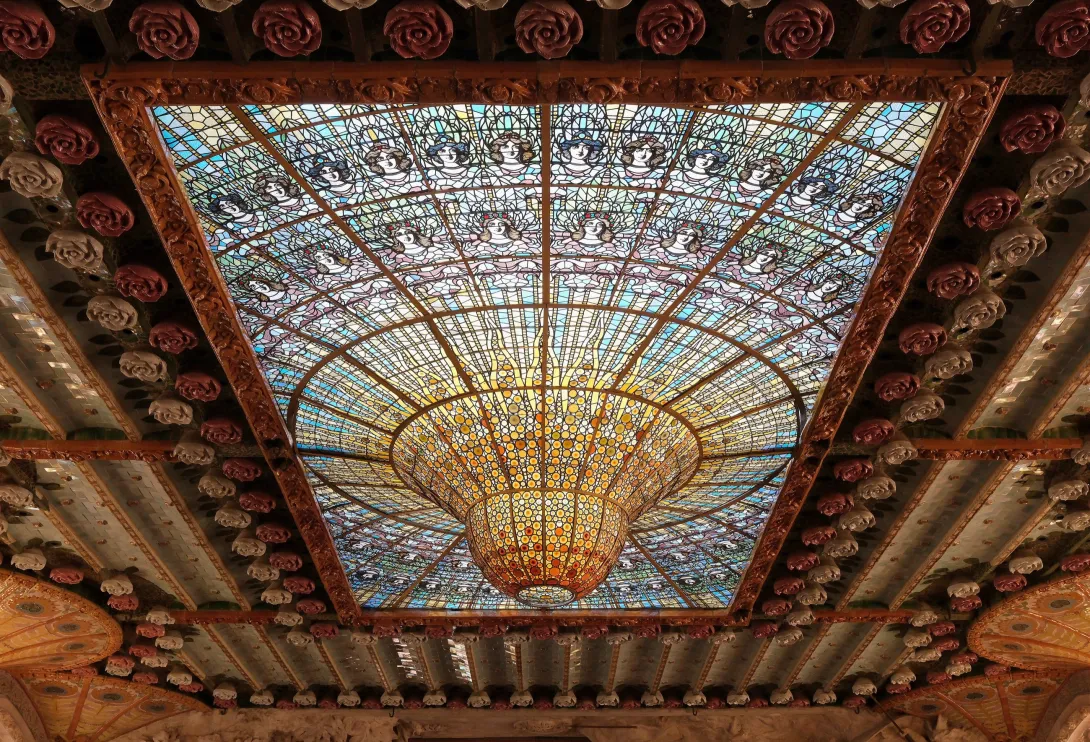
© Alvesgaspar, CC BY-SA 4.0, via Wikimedia Commons
Art in Every Detail
Must-See Attractions
Barcelona's Must-See Modernist Monuments
These monuments offer a glimpse into the key aspects of Catalan modernism, from residential architecture to major cultural and religious buildings.

The Most Spectacular
Casa Batlló

The Most Architectural
La Pedrera (Casa Milà)

The Grand Setting
Palau de la Música Catalana

A Modernist City
Recinte Modernista de Sant Pau

The Beginnings of Gaudí
Casa Vicens Gaudí

The Monumental Work
Sagrada Família

A Different Perspective
Casa Museu Amatller

The First Discoveries
Palau Güell
Three Styles
The Architects of Modernism in Barcelona
Catalan modernism is not limited to a single architect. Several major creators contribute to the transformation of Barcelona.
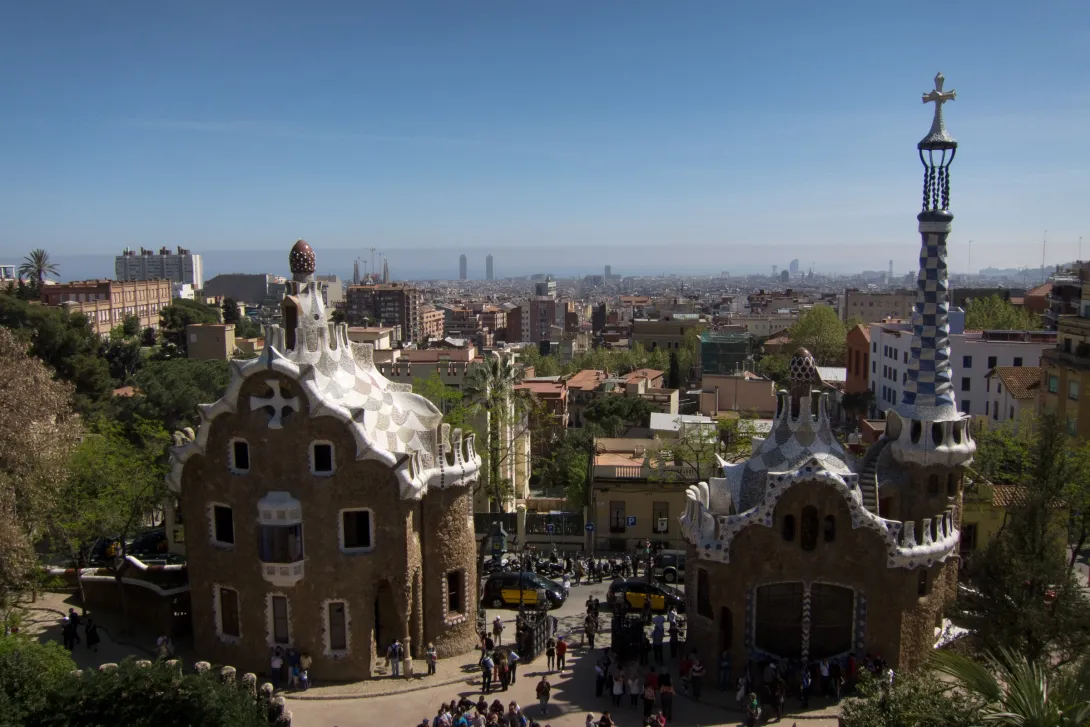
© Thomas Quine, CC BY 2.0, via Wikimedia Commons
Antoni Gaudí
Gaudí is today the most famous figure of Barcelona's modernism. He developed an extremely personal style, inspired by nature, organic forms, geometry, and structural experimentation.
Sagrada Família, Park Güell, Casa Batlló, Casa Milà, Casa Vicens, and Palau Güell allow us to trace his evolution.
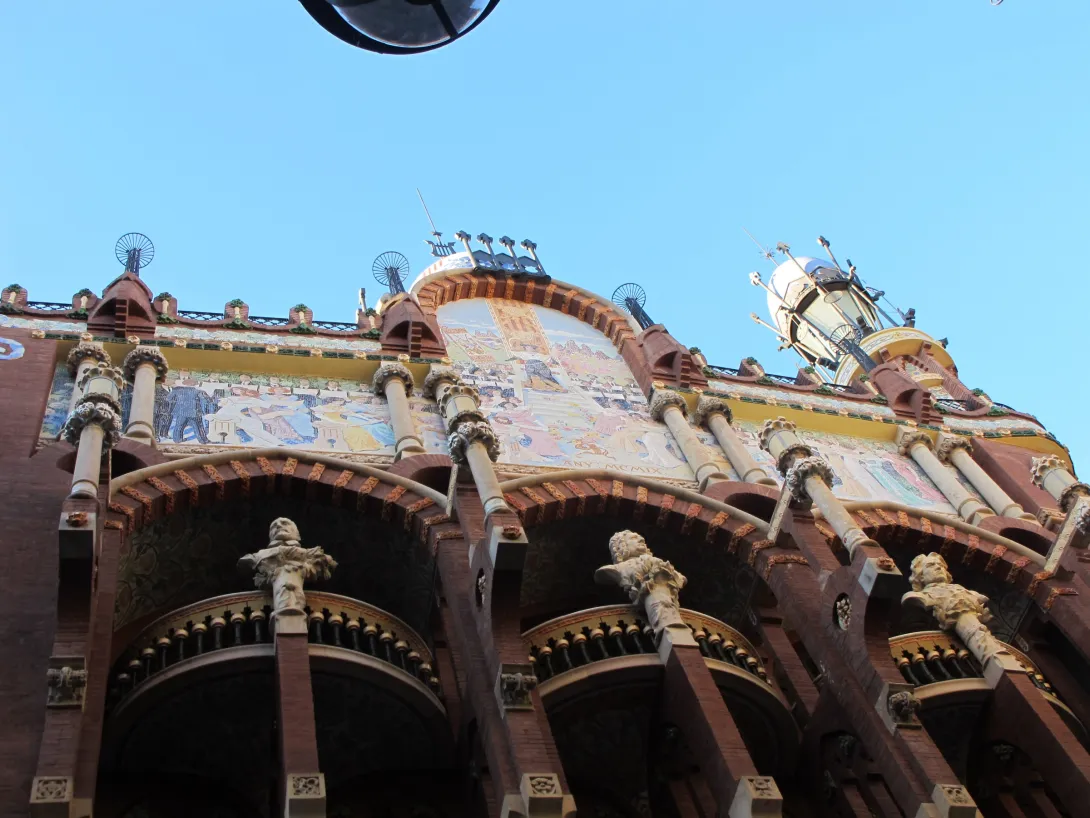
© Cattzy, CC BY-SA 3.0, via Wikimedia Commons
Lluís Domènech i Montaner
Domènech i Montaner combines a very rational construction with a great decorative richness.
In Barcelona, his two most famous works are the Palau de la Música Catalana and the Hospital de Sant Pau. He is also the creator of the Casa Lleó Morera on Passeig de Gràcia.
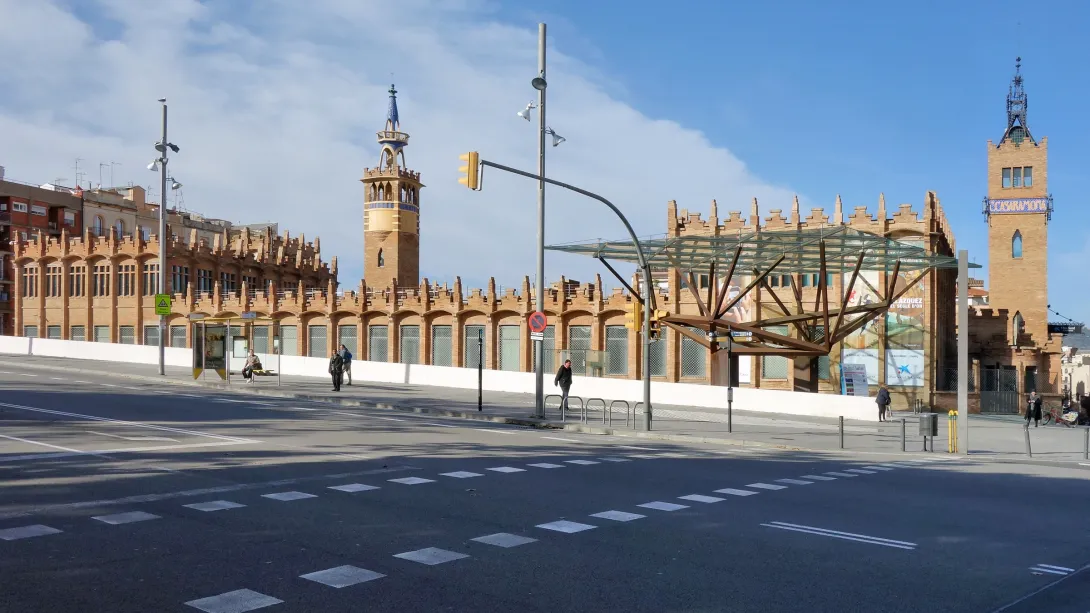
© 0000ff, CC BY-SA 4.0, via Wikimedia Commons
Josep Puig i Cadafalch
Puig i Cadafalch developed an architecture rich in historical and medieval references.
His Casa Amatller, located right next to Casa Batlló, is one of the iconic buildings of the Manzana de la Discordia. He is also the creator of the former Casaramona factory, which now houses CaixaForum Barcelona.
A Major Figure
Gaudí and Catalan Modernism
Antoni Gaudí is the most famous figure of Catalan modernism, but the movement is not limited to his work. Lluís Domènech i Montaner, Josep Puig i Cadafalch, and many other architects, artists, and craftsmen developed their own interpretations of modernism in Barcelona.
Sagrada Família, Parc Güell, Casa Batlló, Casa Milà, Casa Vicens, Palau Güell... check out our complete Gaudí guide to explore his style, his monuments, and all his works in Barcelona.

Open-air museum
Passeig de Gràcia: the showcase of modernism
If you had to choose just one place to explore modernism on foot, Passeig de Gràcia would probably be the best starting point.
At the end of the 19th century, this grand avenue in the Eixample became a favored spot for Barcelona's bourgeoisie. Wealthy families built their residences here and enlisted the most prominent architects of the time.
Today, several masterpieces of modernism are located just minutes apart:
- Casa Batlló by Gaudí
- Casa Milà by Gaudí
- Casa Amatller by Puig i Cadafalch
- Casa Lleó Morera by Domènech i Montaner
- the Block of Discord
Passeig de Gràcia thus serves as a true open-air museum of architecture.
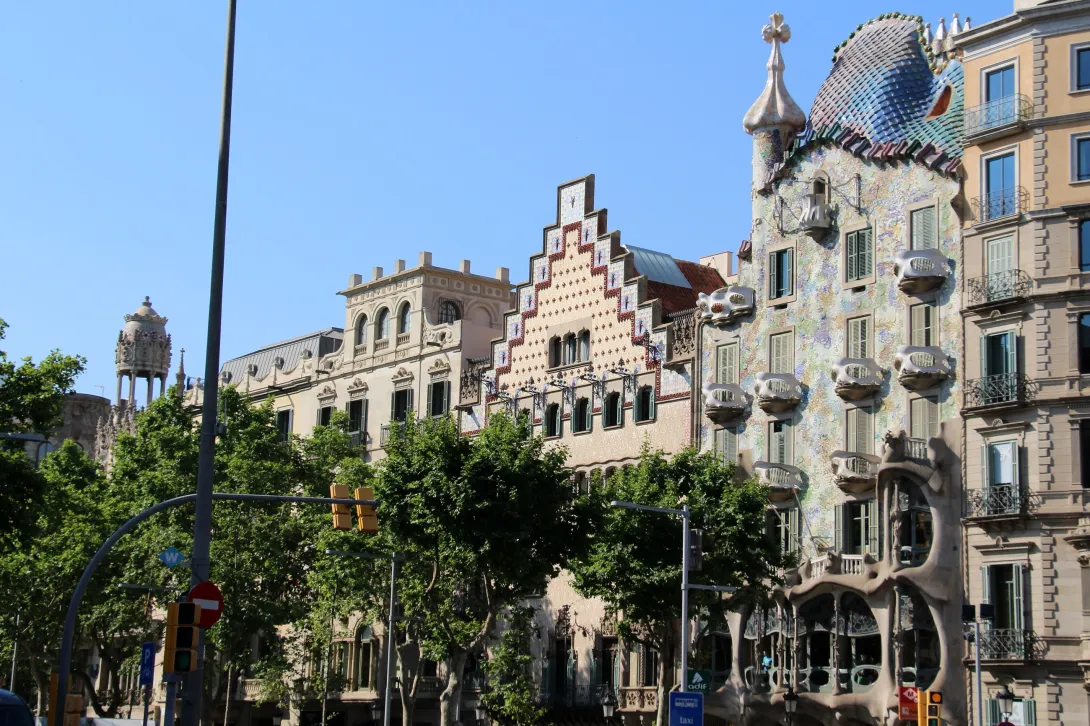
© Fred Romero, CC BY 2.0, via Wikimedia Commons
Modernism on a Single Avenue
Three Architects
The Apple of Discord: Three Visions of Modernism
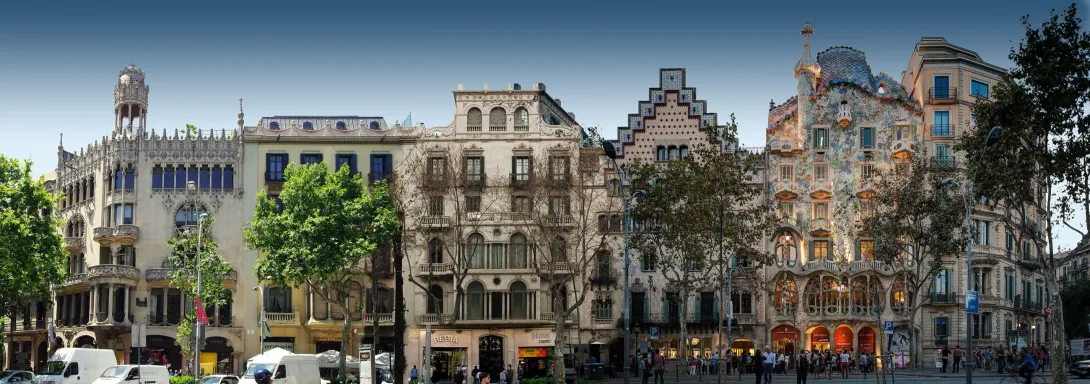
© ChristianSchd, Xavier Badia Castellà, Amadalvarez, Balou46, CC BY-SA 3.0, via Wikimedia Commons
Three Facades, Three Styles
On the same stretch of Passeig de Gràcia, three buildings allow you to directly compare the styles of three great architects:
- Casa Batlló — Antoni Gaudí
- Casa Amatller — Josep Puig i Cadafalch
- Casa Lleó Morera — Lluís Domènech i Montaner
This proximity is particularly interesting as it shows how Catalan modernism can take on different forms.
Gaudí favors organic shapes and curves. Puig i Cadafalch draws more inspiration from historical architectures. Domènech i Montaner develops a highly decorative architecture that combines structure and applied arts.
Follow the Movement
The Modernism Route in Barcelona
Barcelona boasts a genuine Modernism Route that allows you to discover numerous buildings associated with this movement across various parts of the city.
It is not limited to Gaudí's monuments and also lets you explore works by Domènech i Montaner, Puig i Cadafalch, and other modernist architects.
The Modernism Route is particularly interesting because it allows you to compare very different buildings along the same walk: bourgeois houses, palaces, hospitals, churches, and former industrial buildings. This provides a much more comprehensive view of the movement than just discovering Gaudí's works.
The Passeig de Gràcia and the Eixample are among the most spectacular areas of this route, but the journey also extends towards the Rambla, the Diagonal Avenue, the Sagrada Família, Sant Pau, and other neighborhoods.
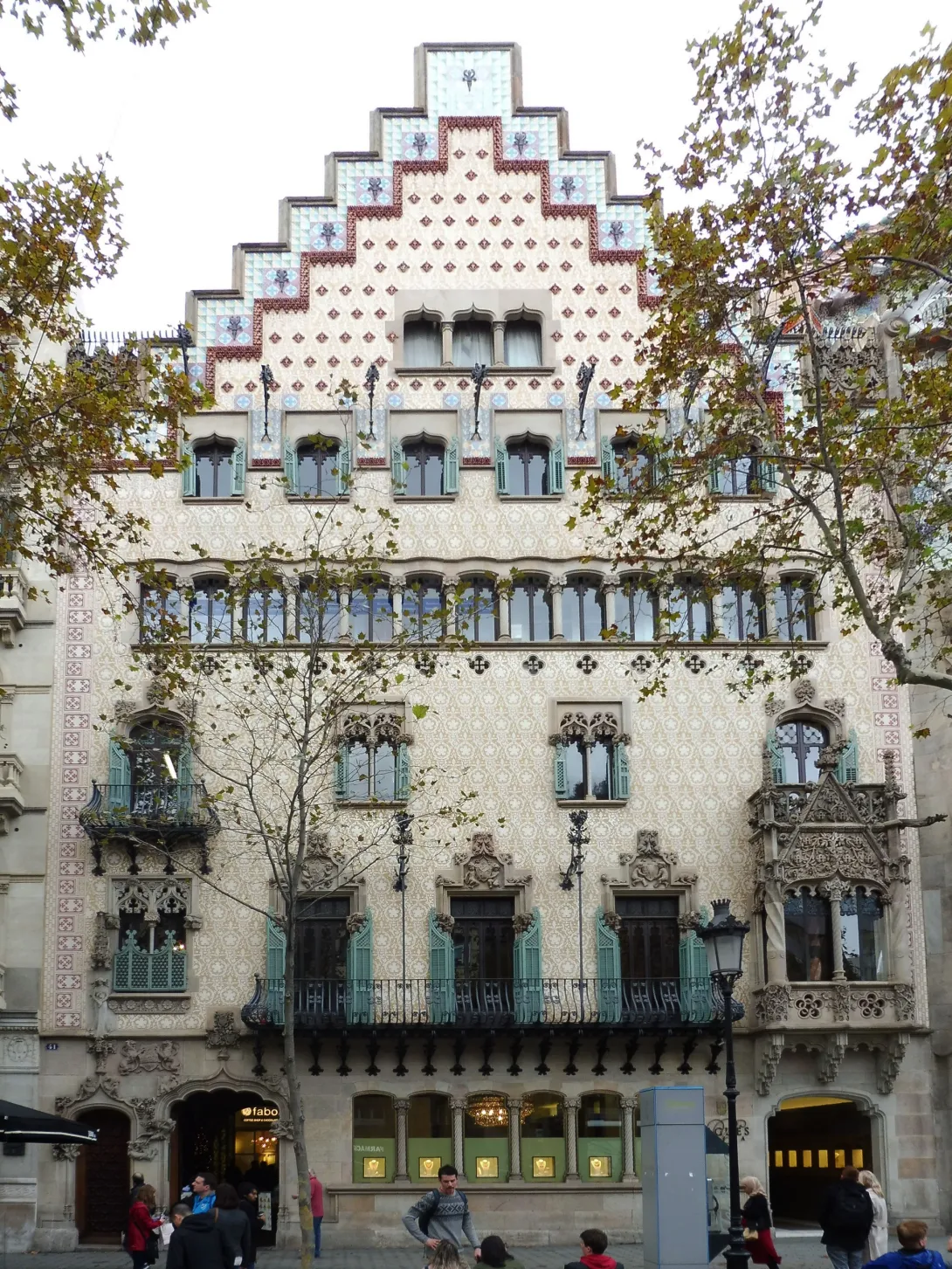
© Xavier Badia Castellà, CC BY-SA 3.0, via Wikimedia Commons
A Journey Through Barcelona
Plan Your Visit
Our Modernist Tours in Barcelona
Our Half-Day Modernist Tour
Start at Passeig de Gràcia. First, discover the Manzana de la Discordia, featuring Casa Batlló, Casa Amatller, and Casa Lleó Morera.
Then continue to Casa Milà – La Pedrera, located a bit further up the avenue.
This is the simplest route to explore various architects and expressions of modernism without using public transport.
Our Full-Day Modernist Tour
Morning: Passeig de Gràcia → Manzana de la Discordia → Casa Batlló → Casa Milà.
Afternoon: Sagrada Família → Hospital de Sant Pau.
This day allows you to compare the residential architecture of Passeig de Gràcia with two very different monumental projects.
By Neighborhoods
Where to See Modernism in Barcelona?
Modernism is present throughout the city, but certain areas particularly concentrate the most interesting buildings.
Passeig de Gràcia and the Eixample
The best starting point. This is where you'll find Casa Batlló, Casa Milà, Casa Amatller, Casa Lleó Morera, and many lesser-known modernist buildings. A stroll along Passeig de Gràcia offers a glimpse into the significance of the movement in the architecture of the Eixample.
Sagrada Família and Sant Pau
Two monumental masterpieces. Gaudí's Sagrada Família and Domènech i Montaner's Hospital de Sant Pau showcase two profoundly different visions of modernism. Both monuments can easily be visited during the same walk.
Ciutat Vella
Modernism in the old city. Gaudí's Palau Güell is located near the Ramblas. Meanwhile, the Palau de la Música Catalana is just a few minutes from the Gothic Quarter. These buildings demonstrate that modernism is not confined to the Eixample.
Gràcia
Gaudí's beginnings. Casa Vicens is located in the former village of Gràcia. It offers a chance to explore Gaudí's early architectural experiments in a much more intimate setting than Casa Batlló or Casa Milà.
Signs to Look For
How to Recognize Modernist Architecture?
There is no single formula for identifying a modernist building. However, certain elements frequently appear in the facades, interiors, and decorations.
Shapes & motifs
The modernist decor draws heavily from flowers, leaves, animals, and natural forms, but each architect interprets them in their own way.
- Plant motifs
- Curved lines and organic shapes
- Highly detailed façades
- References to nature
- Medieval or historical references
Materials & Craftsmanship
Ironworkers, ceramists, sculptors, glassmakers, and cabinetmakers collaborate with the architect. The decor is an integral part of the building.
- Wrought Iron
- Stained Glass
- Ceramics and Mosaics
- Sculpture
- Crafted Wood and Furniture
Architecture & Light
Modernism often aims to create a complete work: facade, structure, interior, furniture, and decoration all adhere to a single vision.
- Natural light
- Structure and decoration designed together
- Furniture designed for the building
- Attention to the smallest details
Choose Your Tour
Which Modernist Monument to Visit?
The best choice mainly depends on what you want to discover: a Gaudí house, decorative arts, a large architectural complex, or simply several facades during a stroll.
| For a First Discovery | Casa Batlló Spectacular, centrally located, and perfect for a stroll along Passeig de Gràcia. |
|---|---|
| For Architecture and Decorative Arts | Palau de la Música Catalana An excellent choice to discover a modernist masterpiece not designed by Gaudí. |
| For a grand architectural ensemble | Hospital de Sant Pau A visit quite different from the modernist houses, featuring several pavilions, gardens, and monumental spaces. |
| Understanding Gaudí's Architecture | Casa Milà - La Pedrera Its courtyards, structure, attics, and roof offer a remarkable opportunity to observe Gaudí's architectural explorations. |
| To discover several works without entering | Passeig de Gràcia The best area to see several important modernist facades during a single stroll. |
| To Discover Modernism Beyond Gaudí | Palau de la Música + Hospital de Sant Pau Two major works by Domènech i Montaner that offer a different perspective on the movement. |
Frequently Asked Questions
FAQ: Modernism in Barcelona
Catalan Modernism is an artistic movement that developed primarily at the end of the 19th and the beginning of the 20th century. Closely related to European Art Nouveau, it takes on a unique form in Catalonia, particularly in architecture and decorative arts.
Antoni Gaudí, Lluís Domènech i Montaner, and Josep Puig i Cadafalch are among the leading figures of Barcelona's architectural modernism.
Among the must-see attractions are Casa Batlló, Casa Milà, Palau de la Música Catalana, Hospital de Sant Pau, Casa Vicens, Sagrada Família, Casa Amatller, and Palau Güell.
Yes. Barcelona has a Modernism Route that connects many modernist buildings across several neighborhoods. For a first walking tour, Passeig de Gràcia and the Manzana de la Discordia offer the simplest route.