The most elegant avenue in Barcelona
Passeig de Gràcia Barcelona: what to see and where to shop
Passeig de Gràcia is a grand avenue in the Eixample district that connects Plaça Catalunya to Gràcia. Don't confuse it with the Gràcia neighborhood, which is located further north. Visitors come here to admire Casa Batlló and La Pedrera, discover modernist façades, and enjoy shopping. This guide offers a walking tour, shops, and places to take a break.

Key Highlights
Passeig de Gràcia at a Glance
| Type | Grand avenue and urban promenade |
|---|---|
| Neighborhood | Eixample |
| Starting Point | Plaça Catalunya |
| To the North | Diagonal and Gràcia |
| Must-See Attractions | Casa Batlló, Casa Amatller, Casa Lleó Morera, La Pedrera |
| Ideal For | Architecture, shopping, and walking |
| Ideal Duration | 1 to 2 hours, excluding visits inside the buildings |
| Best Time | Morning or late afternoon |
| Metro | Passeig de Gràcia and Diagonal |
| Nearby | Rambla de Catalunya, Quadrat d'Or, Gràcia |
The Must-Sees
What to See on Passeig de Gràcia
Passeig de Gràcia is home to some of Barcelona's most stunning modernist buildings, as well as urban details that are worth noticing during your stroll.

© Barcelona.com
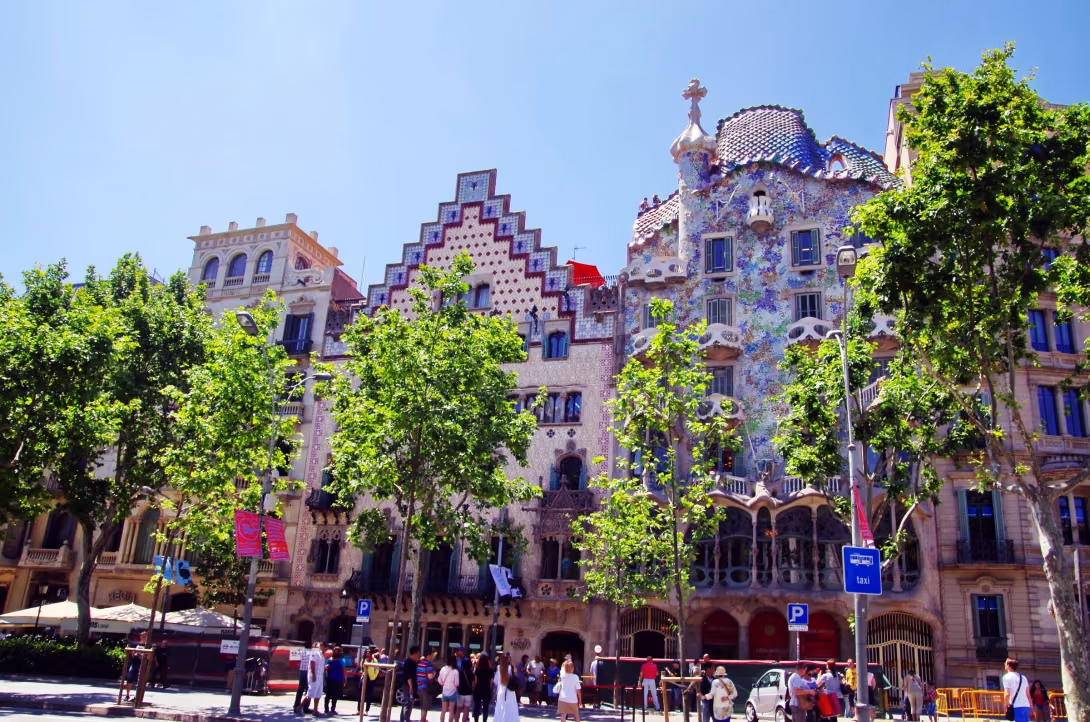
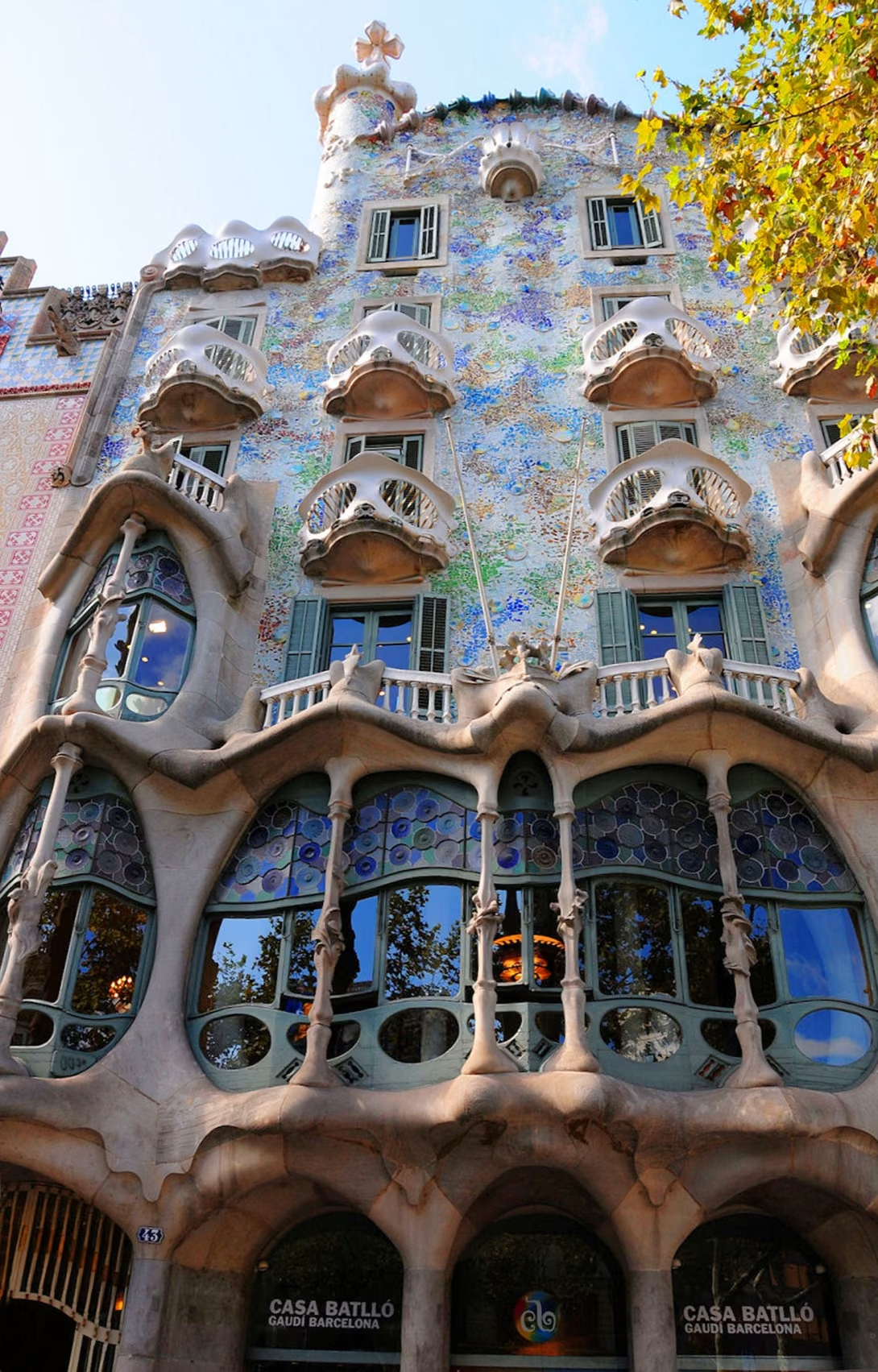
Casa Batlló
One of Antoni Gaudí's most famous works.
Its undulating façade, vibrant colors, and roof resembling a dragon's back make it one of the symbols of Barcelona's modernism.
© Xavier Badia Castellà, CC BY-SA 3.0, via Wikimedia Commons
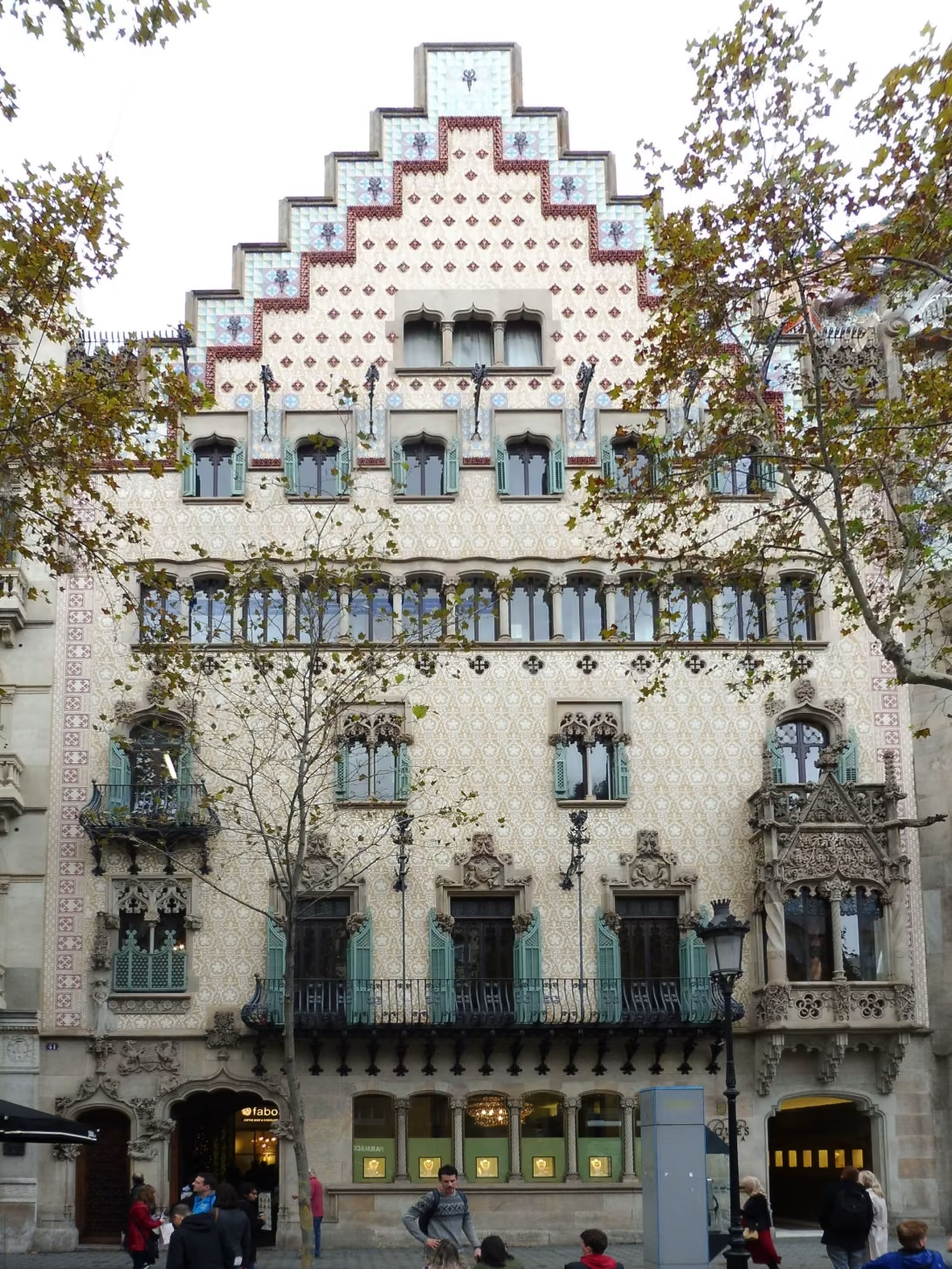
Casa Amatller
Right next to Casa Batlló, Casa Amatller is the work of Josep Puig i Cadafalch.
Its striking geometric façade contrasts sharply with Gaudí's and contributes to one of the most astonishing architectural ensembles in Barcelona.
© Fred Romero, CC BY 2.0, via Wikimedia Commons
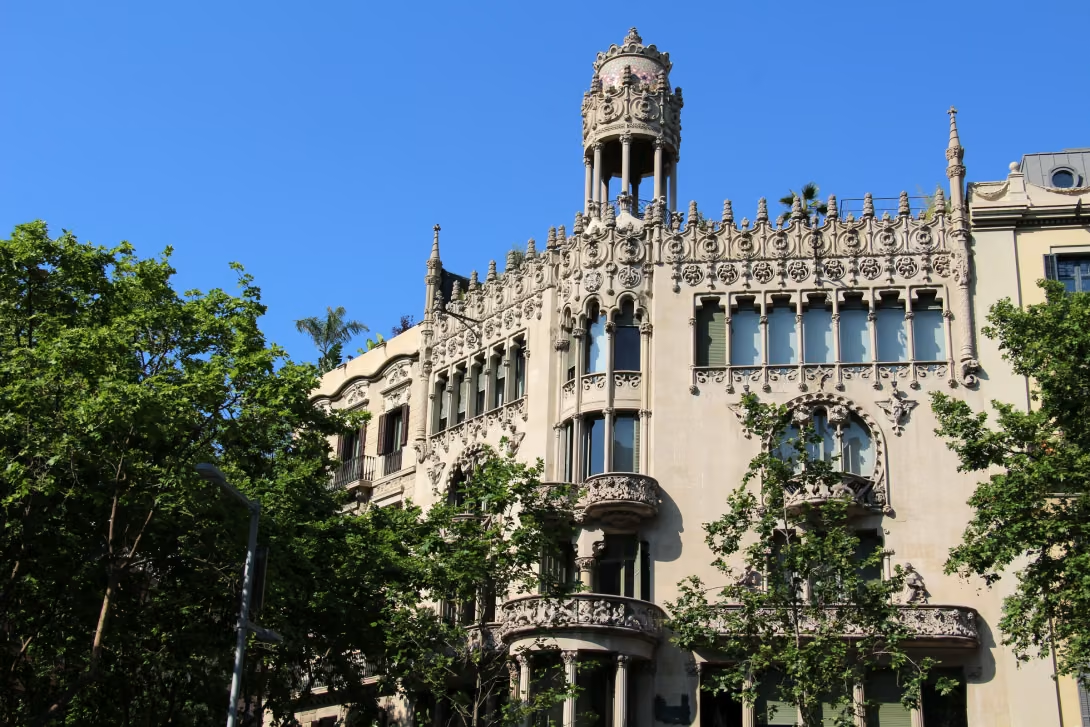
Casa Lleó Morera
Designed by Lluís Domènech i Montaner, the Casa Lleó Morera completes the iconic trio of the Block of Discord.
Its decoration combines sculpture, mosaic, stained glass, and decorative arts.
© Balou46, CC BY-SA 3.0, via Wikimedia Commons
The Block of Discord
This section of Passeig de Gràcia showcases several modernist masterpieces side by side.
The name refers to the striking contrast between the styles of Gaudí, Puig i Cadafalch, and Domènech i Montaner.

© Barcelona.com
La Pedrera – Casa Milà
Further north, La Pedrera is the other major work by Gaudí on the avenue.
Its undulating stone façade and spectacular roof make it one of the most recognizable landmarks in Barcelona.
© Fred Romero, CC BY 2.0, via Wikimedia Commons
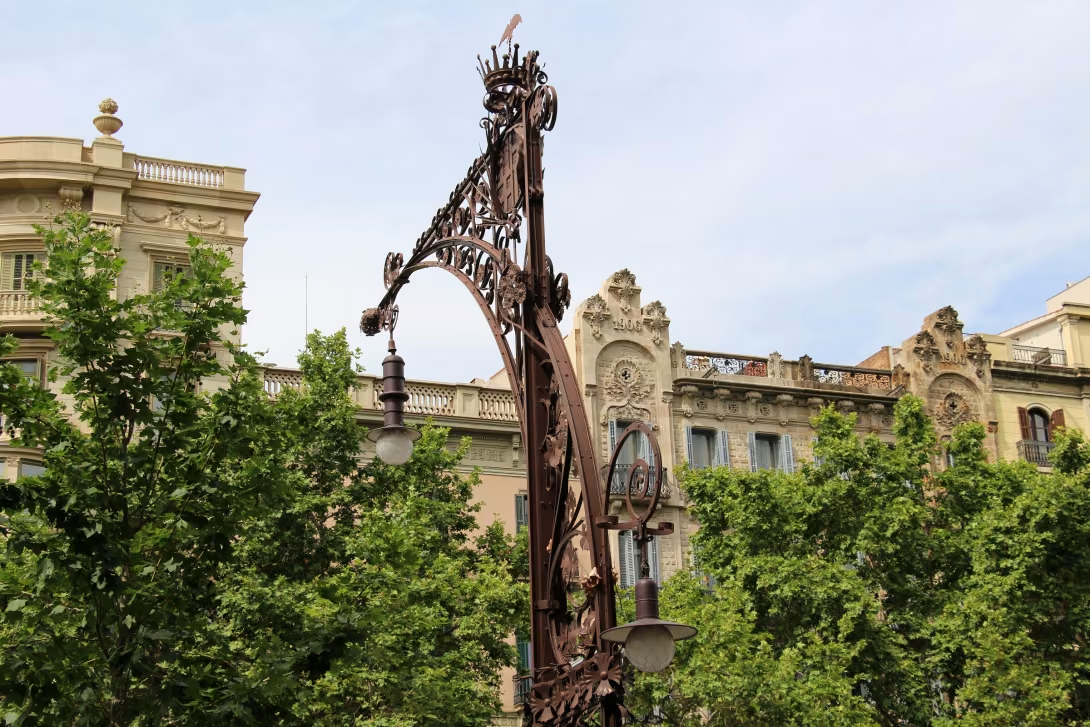
Benches, Lampposts, and Paving Tiles
Look closely at the details along Passeig de Gràcia.
The benches with integrated lampposts and the hexagonal paving tiles inspired by Gaudí's marine motifs are part of what makes the avenue distinctive.
Don't come just for Casa Batlló or La Pedrera.
Start at Plaça Catalunya and walk up the entire avenue to Diagonal: the façades, shop windows, benches with integrated lampposts, and even the pavement are all part of the experience.
If you plan to visit the interior of a monument, choose one or two at most to ensure you have time to enjoy the stroll.
A Walk Through the Heart of Eixample
From Plaça Catalunya to La Pedrera
Walk up the avenue from Plaça Catalunya to Diagonal, visiting the three houses of the Block of Discord as a single stop.
- Plaça Catalunya → Block of Discord: about 10 to 15 minutes on foot. Stop in front of Casa Lleó Morera (no. 35), Casa Amatller (no. 41), and Casa Batlló (no. 43).
- Block of Discord → La Pedrera: about 10 minutes on foot, continuing north. La Pedrera – Casa Milà is located at no. 92, at the corner of Provença.
- La Pedrera → Diagonal: about 5 minutes on foot. You can then continue to Casa Fuster and enter Gràcia.
Plan for 1 to 2 hours with photo stops, without interior visits or extended shopping. Walking times are estimates and vary according to your pace.
Walking along the avenue and admiring the façades from the street is free. Each house has its own admission and ticketing arrangements for interior visits.
To locate monuments and shops: check the Passeig de Gràcia association map (PDF, 2025 edition).
© Fred Romero, CC BY 2.0, via Wikimedia Commons
Details of the Walk
Between the monuments, look out for the benches with integrated lampposts, made of wrought iron and trencadís mosaic: the street furniture is part of the attraction too.
Three Architects, Three Styles
The Block of Discord
Known as Illa de la Discòrdia in Catalan and Manzana de la Discordia in Spanish, this block on Passeig de Gràcia features the Batlló, Amatller, and Lleó Morera houses. Their contrasting styles explain its nickname.
It is probably the most spectacular spot on the avenue.
Within a few dozen meters, you'll find three houses designed by three of the greatest architects of Catalan modernism:
- Casa Batlló – Antoni Gaudí;
- Casa Amatller – Josep Puig i Cadafalch;
- Casa Lleó Morera – Lluís Domènech i Montaner.
Their proximity allows for a direct comparison of three very different visions of modernism.
Gaudí favors organic forms, Puig i Cadafalch plays more with historical references, while Domènech i Montaner combines architecture and decorative arts with great richness.
© Balou46, CC BY-SA 3.0, via Wikimedia Commons
Three Façades, One Stop
Casa Lleó Morera, Casa Amatller, and Casa Batlló form a unified ensemble to admire during your stroll.
The Grand Boulevard of Barcelona's Wealthy Industrialists
Passeig de Gràcia and Modernism
At the end of the 19th century and the beginning of the 20th, Passeig de Gràcia became one of the most prestigious addresses in Barcelona.
Wealthy industrial families built their homes here, commissioning increasingly bold architectural designs.
This context explains the exceptional concentration of modernist buildings on and around the avenue.
Passeig de Gràcia is therefore one of the best places to understand how modernism transformed Barcelona.
To learn more: Discover Modernism in Barcelona
© Mike McBey / Wikimedia Commons, CC BY 2.0
The Façade of Casa Batlló
Glass mosaic, mask-shaped balconies, and bone-like columns, seen from the sidewalk.
One of Barcelona's major shopping avenues
Shopping on Passeig de Gràcia
Passeig de Gràcia combines luxury fashion houses with more affordable clothing brands. Here are four stores to help you plan your shopping walk, from south to north:
- UNIQLO — no. 18: everyday clothing for adults and children, offering a more affordable option than luxury brands. See the store and its hours.
- CHANEL — no. 70: fashion, accessories, and the world of luxury. Check out the store profile.
- Santa Eulalia — no. 93: a Barcelona multi-brand luxury store, offering high-end collections and bespoke tailoring services. See the address and hours.
- Massimo Dutti — no. 96: women's and men's fashion in a restored historic building; a stop that combines shopping and architecture. Check the store hours.
Where Should You Start? Start around Plaça Catalunya for affordable brands, then head up the avenue to alternate between high-end storefronts and monuments. The parallel Rambla de Catalunya allows you to continue your stroll between shops and terraces.
Sundays and holidays: opening hours vary by store and date. Check each establishment's profile before visiting.
Addresses verified on October 19, 2026. For more places to shop, see our Barcelona shopping guide.
© Xavier Badia Castellà, CC BY-SA 3.0, via Wikimedia Commons
Shopping and Modernist Façades
Combine shopping with a look at the architecture: Casa Amatller is one of the landmarks along the walk.
Take a Break in the Eixample
Where to Eat Near Passeig de Gràcia
Here are two places to eat without going far from the route:
- El Nacional — Passeig de Gràcia, 24 bis: a collection of restaurants and bars housed in one building, right on the avenue. Choose La Taperia to share tapas, La Llotja for fish and rice dishes, or La Braseria for grilled meats. It's about a 5 to 10-minute walk from Casa Batlló.
- Vinitus — Carrer del Consell de Cent, 333: a spot for a tapas break in the Eixample, just a few minutes from the Block of Discord, heading towards the Rambla de Catalunya. See the address and opening hours in the municipal guide.
To manage your budget: compare menu prices before settling in and consider the number of dishes to share. At El Nacional, the bill can vary greatly depending on whether you opt for a few tapas or a full fish or meat meal.
Walking times are approximate. Addresses verified on October 19, 2026. Also, check out our selection of restaurants in Barcelona.
© Barcelona.com
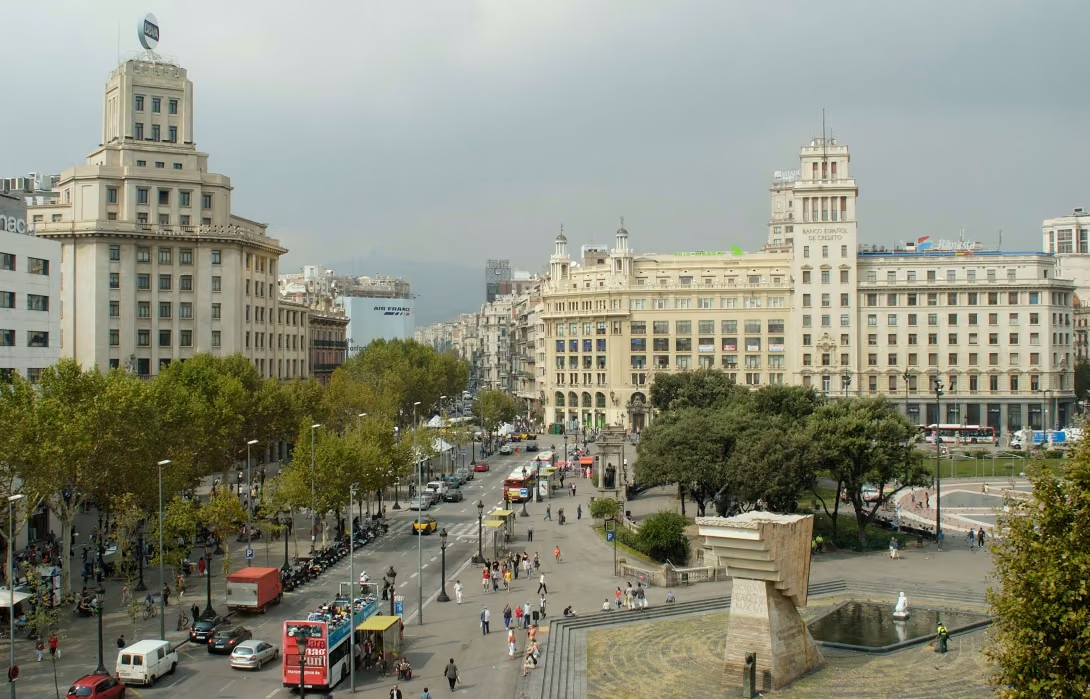
A Break Near the Center
Plaça Catalunya marks the beginning of the promenade. El Nacional is located a bit further up on Passeig de Gràcia, at no. 24 bis.
Stay in the Heart of Barcelona
Where to Stay Near Passeig de Gràcia
This area is one of the most central and convenient places to stay in Barcelona.
You can walk to Plaça Catalunya, the Eixample, and many monuments.
Hotels located directly on the avenue are often quite upscale. For a better balance between location and budget, also consider the nearby streets of the Eixample and the Rambla de Catalunya.
It's an excellent area if you want to stay in the center while being within walking distance of many attractions.

Metro, Train, and Access Tips
How to Get to Passeig de Gràcia?
Located in the Eixample district, Passeig de Gràcia is easily explored on foot. Choose your starting point based on your first stop: the beginning of the avenue, the Block of Discord, or La Pedrera.
By Metro
Starting from Plaça Catalunya
L1L3 Catalunya: Passeig de Gràcia begins immediately north of the square.
For Casa Batlló and the Block of Discord
L2L3L4 Passeig de Gràcia: choose this stop to reach the modernist heart of the avenue.
For La Pedrera and the top of the avenue
L3L5 Diagonal: convenient if you want to start at Casa Milà and then head down towards Plaça Catalunya.
Check out our Barcelona metro guide for maps, lines, and connections.
By Train from the Airport
R2N Passeig de Gràcia: the R2 North connects airport T2 to the center of the avenue. Check schedules and service status on the Rodalies website.
By Tourist Bus
The Barcelona Bus Turístic serves the area of Casa Batlló and La Pedrera. Choose the stop corresponding to your first visit and check the route and direction.
By Urban Bus
The axes Plaça Catalunya, Gran Via, Aragó, and Diagonal allow access to different sections of the avenue. Choose your stop based on the specific address you wish to reach.
Which starting point to choose?
For a first exploration, start at the bottom of the avenue and gradually make your way up. If you have a reserved tour, begin near the relevant monument instead.
- To explore the entire avenue, start at Plaça Catalunya.
- For a tour focused on the three modernist houses, begin at Casa Batlló.
- For a visit to La Pedrera, arrive via Diagonal.
- To extend your walk to the squares of Gràcia, end the stroll in the north.
From the old town, opt for walking. Head to Plaça Catalunya, then directly enter Passeig de Gràcia. To visit the monuments along the avenue, continue on foot rather than taking the metro between each stop.
In a taxi, provide a specific address. Give the name of the monument or the number of your destination: the avenue is long, and "Passeig de Gràcia" alone is not enough to choose the best drop-off point.
Continue exploring Barcelona
What to see around Passeig de Gràcia?
After exploring Passeig de Gràcia, continue discovering Barcelona in one of these four neighborhoods of Barcelona. Gràcia naturally extends the walk northward; the Gothic Quarter can be reached by heading back down towards Plaça Catalunya. El Born and Barceloneta are easily combined with the stroll thanks to the L4 metro.

© thierrytutin, CC BY 2.0, via Wikimedia Commons
Gràcia
Extend your walk north to the squares and narrow streets of Vila de Gràcia. It's the most natural choice to continue on foot after Diagonal.

© Enric, CC BY-SA 4.0, via Wikimedia Commons
El Born
Switch up the atmosphere with the medieval alleys, Santa Maria del Mar, and the museums of El Born. From Passeig de Gràcia, the L4 to Jaume I makes the connection easy.

© dronepicr, CC BY 2.0, via Wikimedia Commons
Barceloneta
After exploring the modernist facades, head towards the old maritime quarter and the beach. Take the L4 from Passeig de Gràcia to Barceloneta, then continue on foot.

© Naval S, CC BY 2.0, via Wikimedia Commons
The Gothic Quarter
Head to Plaça Catalunya, then venture into the old town to explore the narrow streets, squares, and the cathedral. Discover another side of Barcelona to combine with the Eixample.
FAQ
FAQ – Passeig de Gràcia
The Catalan name means "promenade of Gràcia". It refers to the old road that connected Barcelona to the village of Gràcia, before it was incorporated into the city. In Spanish, you will also come across the name "Paseo de Gracia": it refers to the same avenue.
No. Passeig de Gràcia heads north from Plaça Catalunya, into the Eixample. Las Ramblas descend from this square towards the old port and the Christopher Columbus monument. The Rambla de Catalunya is yet another avenue: it runs parallel to Passeig de Gràcia.
No: Barcelona-Passeig de Gràcia and Barcelona Sants are two separate stations. Check the exact name of the departure station on your ticket before heading out. If your train departs from Sants, go to Sants, even if your accommodation is near Passeig de Gràcia. Refer to the official Passeig de Gràcia station page.
Several paid underground parking lots allow you to reach the avenue on foot:
- Saba Bamsa Passeig de Gràcia – Consell de Cent: Passeig de Gràcia, 33, near the Block of Discord.
- Saba Bamsa Passeig de Gràcia – La Pedrera: Passeig de Gràcia, 86, for the upper part of the avenue.
- Saba Pau Claris: Carrer de Pau Claris, 174, on a street parallel to Passeig de Gràcia.
Check the vehicle entrance, the allowed height, and the rate before choosing. To compare options and plan your parking, visit our parking in Barcelona page.