The former village has become one of the most vibrant neighborhoods in Barcelona
Gràcia Neighborhood Barcelona: What to See and Do
Gràcia has maintained a very different atmosphere from the center of Barcelona. Small streets, lively squares, terraces, independent shops, and a vibrant neighborhood life surround two major works by Gaudí: Casa Vicens and, further up in the district, Park Güell.

At a Glance
Gràcia at a Glance
| Neighborhood | Vila de Gràcia |
|---|---|
| District | Gràcia |
| Atmosphere | Local, lively, and bohemian |
| Perfect for | Walks, squares, terraces, restaurants, and shopping |
| Not to be missed | Parc Güell, Casa Vicens, Plaça del Sol, Carrer de Verdi |
| Ideal Duration | Half a Day to a Full Day |
| Best Time | Late morning, afternoon, and early evening |
| Metro | L3 Fontana and L4 Joanic |
| Where to Sleep | Central yet more local than Ciutat Vella |
| Nearby | Eixample, Passeig de Gràcia, Sagrada Família, Sant Gervasi |
Key Highlights
Must-See Attractions in Gràcia
Gràcia is best known for its atmosphere and squares, but the district also hosts several places that are truly worth a visit.

© Barcelona.com
Park Güell
Located in La Salut, in the Gràcia district, Park Güell is one of Antoni Gaudí's major works. Mosaics, monumental staircases, a hypostyle hall, porticoes, and views of Barcelona make it a unique visit. However, the park is situated higher than Vila de Gràcia: it's best to consider it as a separate visit rather than just a stop on a stroll through the neighborhood.

© Canaan, CC BY-SA 4.0, via Wikimedia Commons
Casa Vicens
The Casa Vicens is the first major house designed by Antoni Gaudí in Barcelona. More intimate than Casa Batlló or La Pedrera, it offers a glimpse into the beginnings of his style through its colorful façade, ceramics, garden, and interior decorations.
Carrer de les Carolines, 20-26 – Gràcia
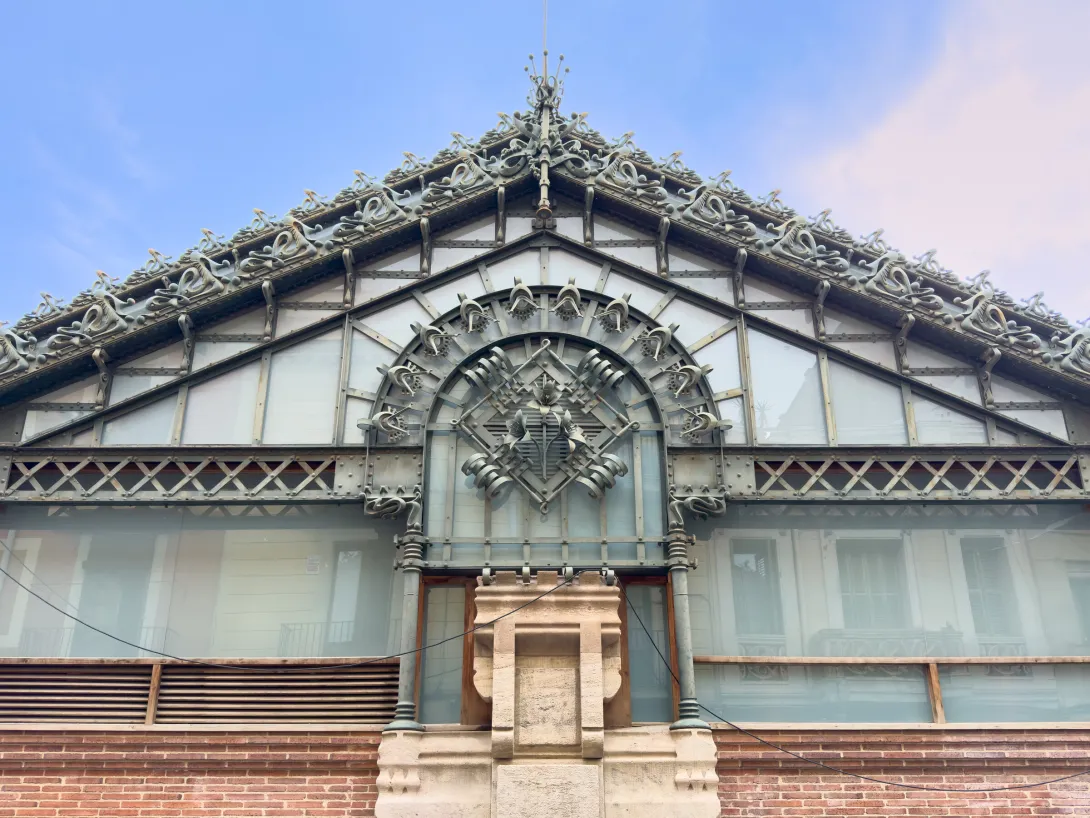
© Kent Wang, CC BY 4.0, via Wikimedia Commons
Mercat de la Llibertat
The Mercat de la Llibertat is one of the historic markets in Gràcia. Its metal structure and daily activity make it a great stop to explore the neighborhood beyond its monuments. Fruits, vegetables, fish, meats, and fresh products remind us that Gràcia is, above all, a residential area.
Plaça de la Llibertat – Gràcia
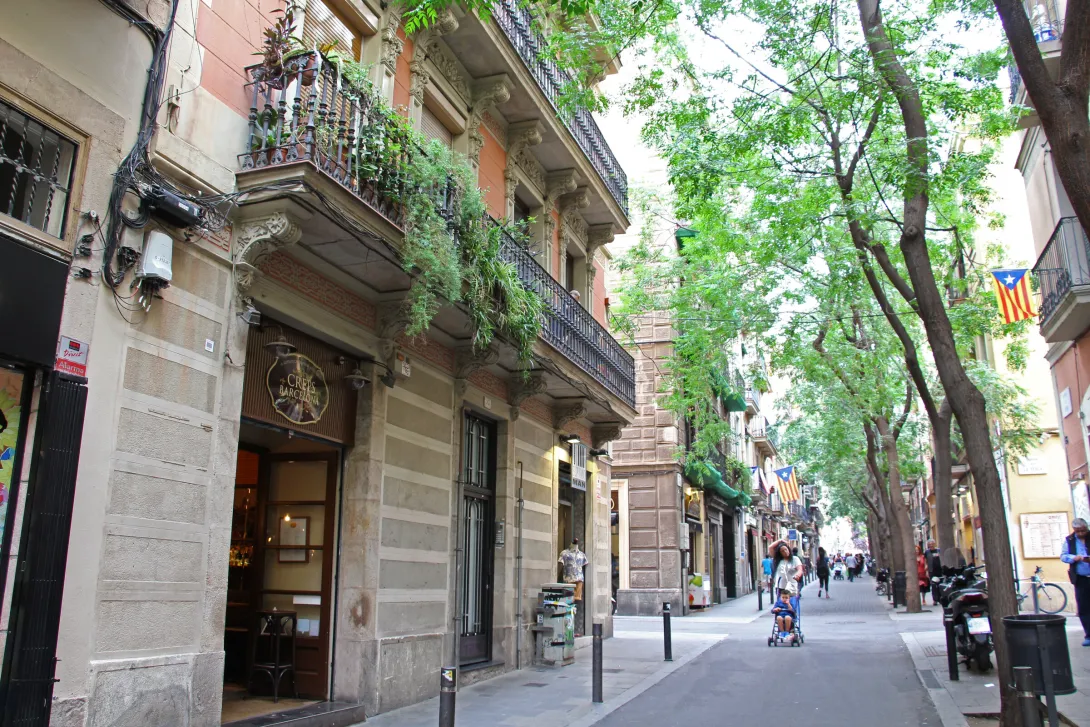
© Fred Romero, CC BY 2.0, via Wikimedia Commons
Carrer de Verdi
Carrer de Verdi is one of the most iconic streets in Vila de Gràcia. Independent shops, small restaurants, cafés, and a cinema give it a very different vibe from the large avenues of the Eixample. It's also a great route for crossing the neighborhood from south to north.
The Heart of Neighborhood Life
The Most Beautiful Squares of Gràcia
To truly understand Gràcia, you need to wander from square to square. It's around these squares that you'll find terraces, cafés, benches, local festivals, and everyday life coming together.
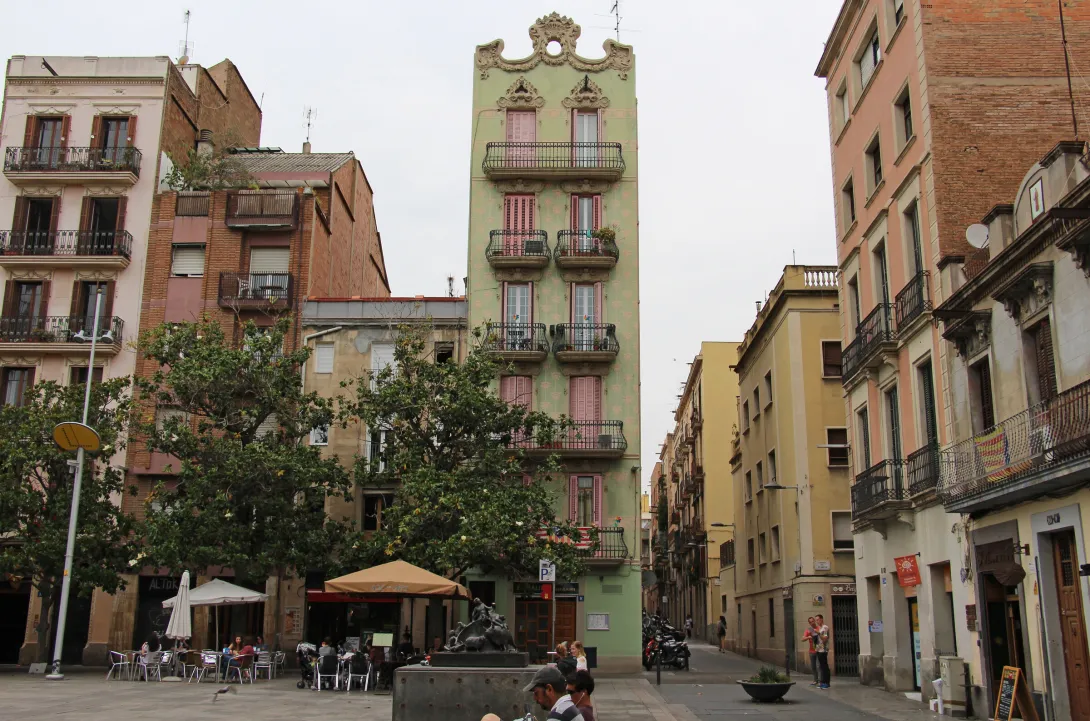
© Fred Romero, CC BY 2.0, via Wikimedia Commons
Plaça del Sol
The Plaça del Sol is probably the most well-known square in Gràcia. Very peaceful in the morning, it becomes much livelier in the late afternoon when the terraces fill up and locals gather around the square.
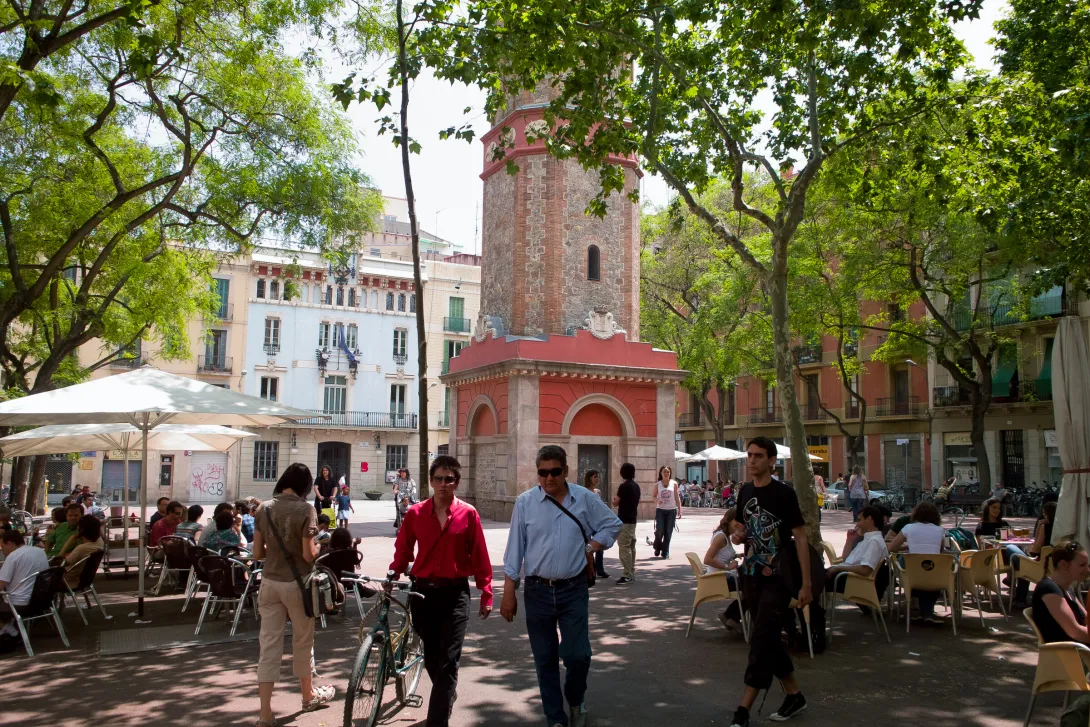
© thierrytutin, CC BY 2.0, via Wikimedia Commons
Plaça de la Vila de Gràcia
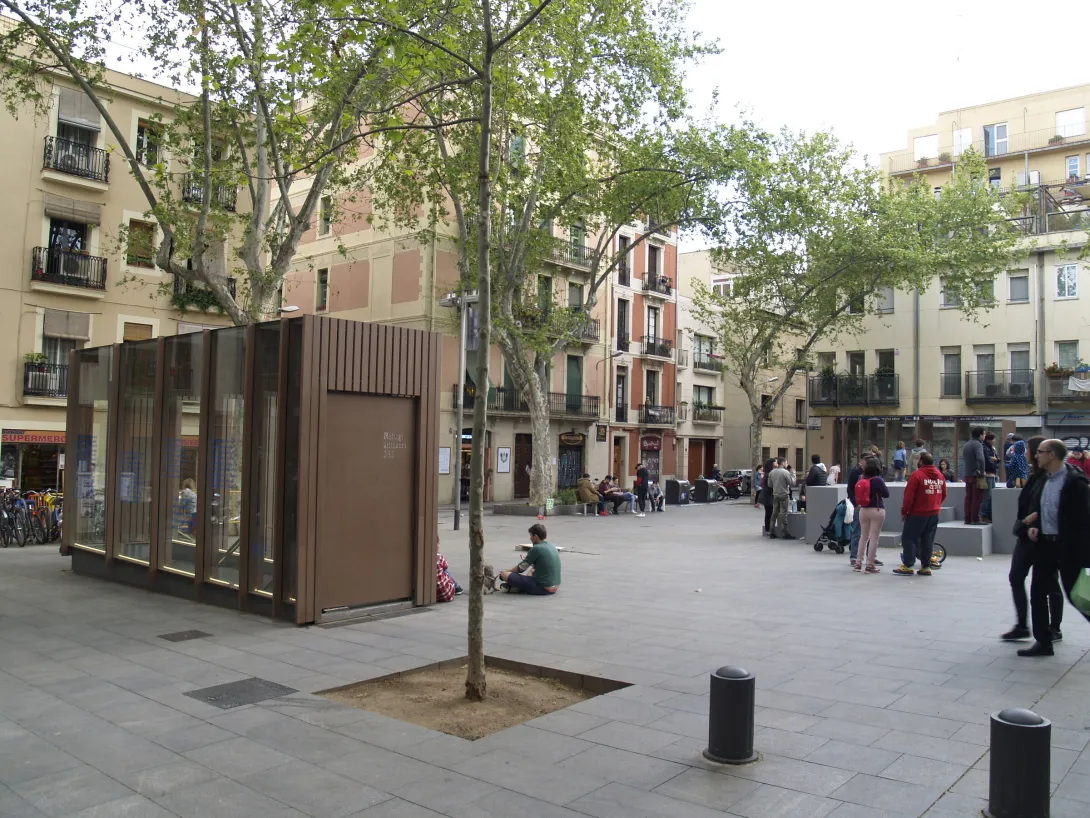
Once the administrative center of the independent municipality of Gràcia, Plaça de la Vila is easily recognizable by its tall clock tower. It retains a very local character despite its central location in the neighborhood.
© Joe Mabel, CC BY-SA 4.0, via Wikimedia Commons
Plaça de la Virreina
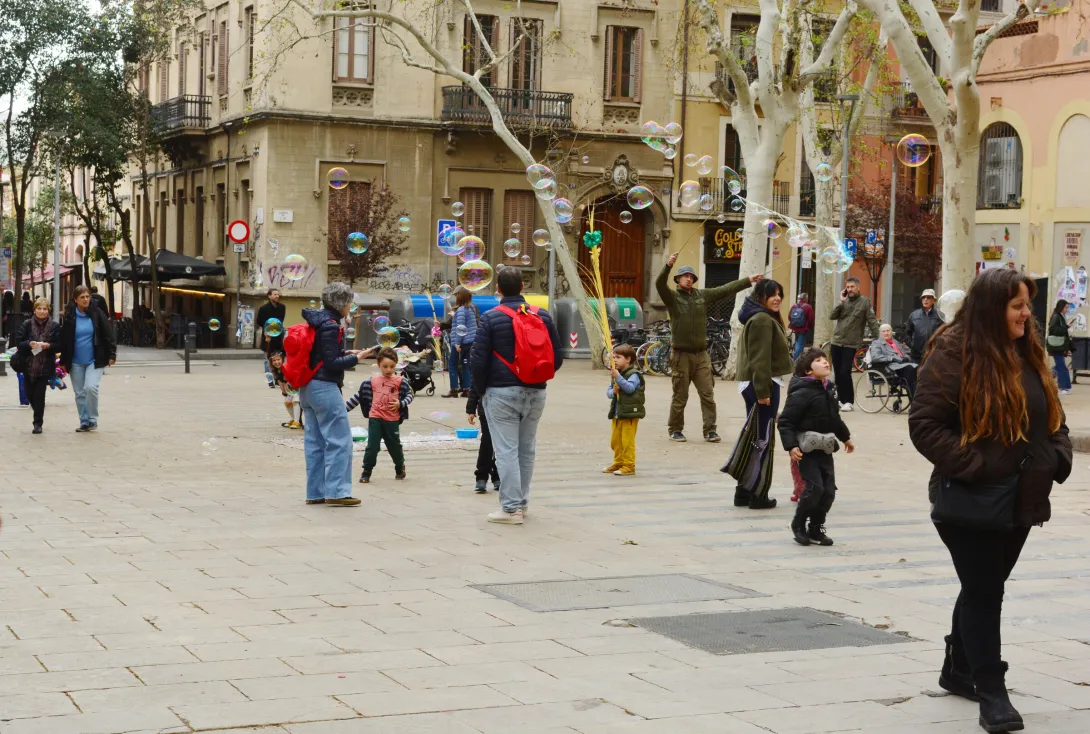
With the Sant Joan church as a backdrop and its terraces under the trees, Plaça de la Virreina offers a more peaceful and almost village-like atmosphere. It is one of the most pleasant squares to take a break during your stroll.
© Vanbasten 23, CC BY-SA 4.0, via Wikimedia Commons
Plaça del Diamant
The Plaça del Diamant is closely tied to the cultural history of Gràcia thanks to the famous novel by Mercè Rodoreda, The Time of the Doves. Beneath the square, there is also an old air-raid shelter built during the Spanish Civil War.
Don't come to Gràcia just to visit Casa Vicens or head to Parc Güell.
The real charm of the neighborhood lies in the streets and squares in between. Start around Fontana, wander through Vila de Gràcia without sticking to a strict path, and stay until the end of the day when the terraces start to come alive.
From Place to Place
Explore Gràcia on Foot
Gràcia is compact enough to be explored entirely on foot.
Fontana → Casa Vicens → Mercat de la Llibertat → Plaça de la Vila → Plaça del Sol → Plaça del Diamant → Plaça de la Virreina → Carrer de Verdi
From the Fontana station, first head to Casa Vicens. Then continue to the Mercat de la Llibertat before entering the lively pedestrian heart of the neighborhood.
Pass through Plaça de la Vila and then Plaça del Sol. From there, head to Plaça del Diamant before making your way up to Plaça de la Virreina.
Finish at Carrer de Verdi, one of the most pleasant streets in the area with its small shops, cafes, and restaurants.
Without interior visits, allow about 1.5 to 2 hours, taking time to pause at the squares.
Parc Güell is intentionally not included in this walk: it is located higher up in the district and deserves several hours on its own.
The Stops on the Walk
A compact stroll through the heart of Vila de Gràcia, without a detour to Parc Güell.
- Casa Vicens
- Mercat de la Llibertat
- Plaça de la Vila
- Plaça del Sol
- Plaça del Diamant
- Plaça de la Virreina
- Carrer de Verdi
Terraces and Local Life
Where to Eat and Drink in Gràcia?
Gràcia is one of the most pleasant neighborhoods in Barcelona for dining or having a drink without staying in the main tourist areas.
Around Plaça del Sol, bars and terraces abound, with a particularly lively atmosphere in the evening.
Plaça de la Virreina offers a more tranquil atmosphere, while Carrer de Verdi, Carrer d’Astúries, Torrent de l’Olla, and Travessera de Gràcia are home to numerous restaurants, bars, and cafés.
Our tip: don't necessarily choose your table at the first square you come across. Just a few streets away, the vibe often becomes more local.
Also, check out our recommendations among the restaurants in Barcelona.
Where to find a table?
The best areas largely depend on the atmosphere you're looking for.
- Plaça del Sol: bars and terraces
- Plaça de la Virreina: a more relaxed atmosphere
- Carrer de Verdi: restaurants and cafés
- Torrent de l’Olla: plenty of local spots
Designers and Small Boutiques
Shopping in Gràcia
Shopping in Gràcia is almost the opposite of shopping on Passeig de Gràcia.
Here, you'll find fewer international chain stores: the neighborhood is particularly appealing for its small boutiques, designers, bookstores, home decor, independent fashion, and local shops.
The most pleasant streets for strolling include Carrer d’Astúries, Carrer de Verdi, Travessera de Gràcia, and Gran de Gràcia.
For big brands and luxury, head down to Passeig de Gràcia instead.
Also, check out our guide to shopping in Barcelona.
Streets for Shopping
Gràcia is particularly interesting for its small independent shops.
- Carrer d’Astúries
- Carrer de Verdi
- Travessera de Gràcia
- Gran de Gràcia
The Neighborhood in Celebration
Festa Major de Gràcia
Every summer, the Festa Major de Gràcia completely transforms the neighborhood.
For several days in August, residents decorate their streets around a theme and compete with creativity to create often spectacular displays.
Concerts, communal meals, dances, giants, castellers, and Catalan traditions accompany the decorated streets.
The festival has become one of Barcelona's major popular events, yet it remains deeply connected to the associations and residents of Gràcia.
If you are in Barcelona during the Festa Major, visit during the day to admire the decorations, and perhaps return in the evening for the lively atmosphere of concerts and street parties.
Must-See During the Festa Major
The Festa Major is one of the best times to experience the popular identity of Gràcia.
- Decorated Streets
- Concerts
- Human Towers
- Giants
- Popular Festivals
A village turned neighborhood of Barcelona
History of Gràcia
The unique identity of Gràcia largely stems from its history.
For a long time, the area developed outside the walls of Barcelona. Around convents, country houses, and small farms, a true village gradually emerged.
In the 19th century, Gràcia experienced significant growth with the arrival of artisans, workers, and families seeking to live outside the dense city.
The village became an independent municipality before finally being annexed to Barcelona in 1897.
This history still explains the neighborhood's structure today: small streets, numerous squares, and local life centered around a few main thoroughfares rather than large avenues.
The opening of the Eixample gradually brought Gràcia closer to the center of Barcelona, but the neighborhood retains a strong identity and a significant tradition of community involvement.
Gràcia in a few dates
A few landmarks help to understand the current identity of Gràcia.
- Former independent village
- Development in the 19th century
- Annexation to Barcelona in 1897
- Numerous small squares
- Strong tradition of community associations
Stay like a local
Where to stay in Gràcia?
Staying in Gràcia is an excellent option if you're looking for a more local atmosphere than in the Gothic Quarter or on Las Ramblas, while still being close to the center.
Around Fontana and Gran de Gràcia
This is the most convenient area for quickly reaching Passeig de Gràcia and Plaça Catalunya while enjoying the small streets of Gràcia.
Around Plaça del Sol and Vila de Gràcia
Here, you're at the heart of the neighborhood's vibe, close to restaurants, bars, and main squares. However, some streets can be lively late at night.
Towards Lesseps
This area is a bit quieter and convenient if you want to be halfway between Vila de Gràcia and Park Güell.
For those seeking a balance between centrality, neighborhood life, and dining options, Gràcia is one of the most pleasant areas to stay in Barcelona.

Continue the exploration
What to see around Gràcia?
Gràcia's location makes it easy to reach several neighborhoods of Barcelona, as well as some of the city's major monuments and its most beautiful squares.

© Enric, CC BY-SA 4.0, via Wikimedia Commons
Eixample
As you head down Gran de Gràcia, you'll find yourself entering the Eixample, easily recognized by its grid layout and grand modernist avenues.

© Fred Romero, CC BY 2.0, via Wikimedia Commons
Passeig de Gràcia
Extending from Gran de Gràcia, Passeig de Gràcia is home to Casa Batlló, La Pedrera, Casa Amatller, and several grand modernist façades.

© Barcelona.com
Sagrada Família
To the east of Gràcia, the Sagrada Família is another major attraction associated with Gaudí. It is easily accessible from the neighborhood on foot or by public transport.

© Canaan, CC BY-SA 4.0, via Wikimedia Commons
Sant Gervasi
To the west of Gràcia begins Sarrià-Sant Gervasi, a much more residential and less touristy area. In this upper part of Barcelona, you'll find the CosmoCaixa, the Torre Bellesguard, and the routes leading to Tibidabo.
Metro and Access
Where is Gràcia and how do you get there?
Vila de Gràcia is located immediately north of the Eixample, between Passeig de Gràcia, Sant Gervasi, and the Sagrada Família area.
By Metro
To reach the heart of Vila de Gràcia, the most convenient station is usually L3 Fontana. It provides quick access to Casa Vicens, Gran de Gràcia, Plaça del Sol, and the main streets of the neighborhood.
L4 Joanic is convenient for the eastern part of the neighborhood and Carrer de Verdi.
L3 Lesseps is more suitable for the northern part of Gràcia and for getting closer to Parc Güell.
Find lines, fares, and tickets in our Barcelona Metro guide.
By FGC
The Gràcia station of the Ferrocarrils de la Generalitat directly connects the southern part of the neighborhood to Plaça Catalunya and several areas of Sarrià-Sant Gervasi.
Tourist Bus
The Barcelona Bus Turístic is especially interesting if your main goal is Parc Güell.
To explore Vila de Gràcia itself, the metro followed by walking remains much more practical.
Which station to choose?
Choose your station based on the part of Gràcia you wish to explore:
- Fontana: Casa Vicens and the heart of Vila de Gràcia
- Joanic: Carrer de Verdi and the eastern part
- Lesseps: northern Gràcia and access to Parc Güell
- FGC Gràcia: southern part of the neighborhood and connection to Plaça Catalunya
On foot, from the upper part of Passeig de Gràcia, simply continue towards Gran de Gràcia to gradually enter the neighborhood.
Vila de Gràcia can then be explored almost entirely on foot.
FAQ
FAQ - The Gràcia District in Barcelona
The main attractions are Park Güell and Casa Vicens, but Gràcia is especially known for its squares, including Plaça del Sol, Plaça de la Vila, Plaça de la Virreina, and Plaça del Diamant, as well as Carrer de Verdi with its charming village atmosphere.
Yes. Gràcia is one of the most intriguing neighborhoods if you want to experience a Barcelona that is more local, less monumental, and more vibrant in everyday life than the major tourist areas in the center.
Plan for about half a day to explore Vila de Gràcia, its squares, Casa Vicens, and its main streets. With Park Güell, consider setting aside a full day or making two separate visits.
Park Güell is located in La Salut, which belongs to the district of Gràcia, but it is not situated in the heart of Vila de Gràcia. Therefore, be prepared for an uphill walk from the main squares of the neighborhood.
Yes. Gràcia is particularly suited for travelers seeking restaurants, cafés, charming streets, and local life, while still being close to the Eixample and the city center.
The late morning is perfect for exploring the neighborhood at a leisurely pace. Ideally, you should stay until the late afternoon or early evening, when the squares and terraces come to life.