Between Old Factories and the Mediterranean
Poblenou Barcelona: what to see and do in the neighborhood
Poblenou is one of the neighborhoods that best showcases Barcelona's recent transformation. Once an industrial area, it now blends a lively Rambla, workshops, contemporary architecture, restaurants, beaches, and local life. It's a great alternative to the historic center if you want to explore a more local, creative, and seaside-oriented Barcelona.

Essential Highlights
Poblenou at a Glance
| Neighborhood | Sant Martí |
|---|---|
| Atmosphere | Local, creative, and residential |
| Not to be missed | Rambla del Poblenou, old factories, 22@, beaches |
| Perfect for | Walks, restaurants, architecture, beach |
| Ideal Duration | 2 to 4 hours |
| Best Time | Late Afternoon and Evening |
| Nearby Beaches | Bogatell, Mar Bella, Nova Mar Bella |
| Metro | Poblenou and Llacuna – line L4 |
| Nearby | Port Olímpic, Glòries, Diagonal Mar |
The Must-Sees of the Neighborhood
What to See in Poblenou?
Poblenou is best explored on foot: from the Rambla to industrial heritage, contemporary architecture, and beaches, the neighborhood's atmosphere shifts within just a few streets.
© pere prlpz, CC BY-SA 3.0, via Wikimedia Commons
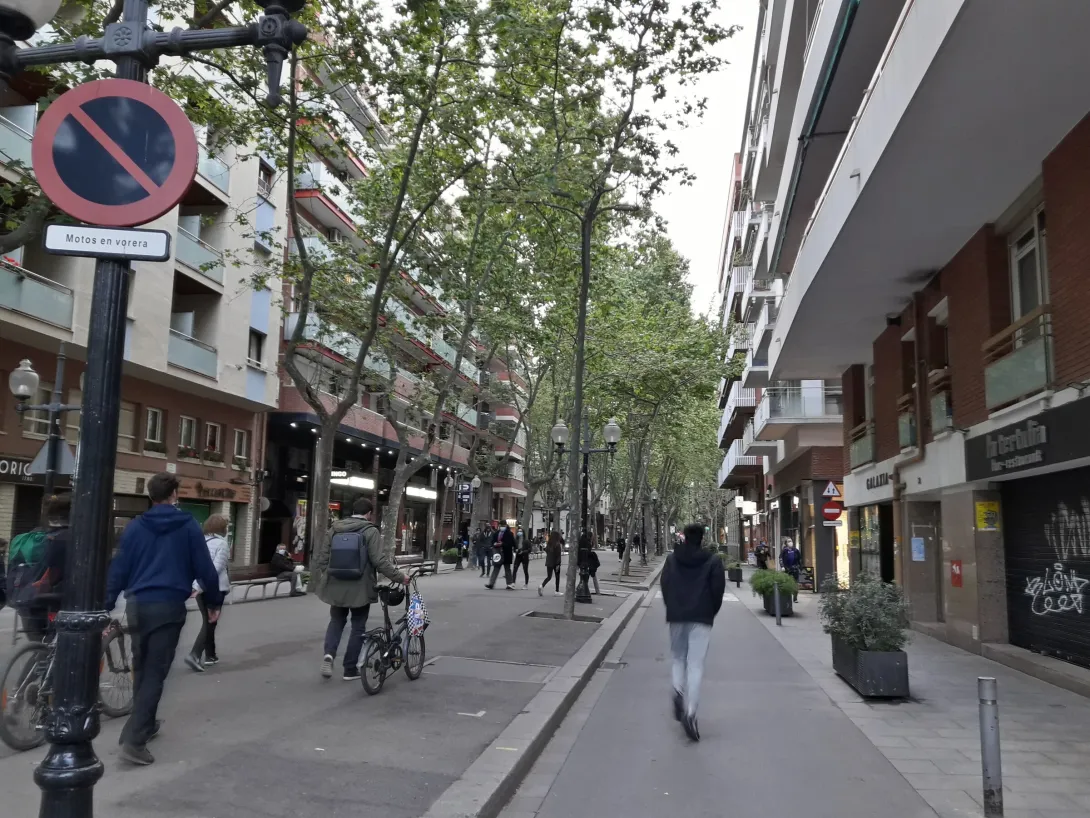
Rambla del Poblenou
The main promenade of the neighborhood is the best place to start your visit.
Lined with terraces, shops, and local establishments, it remains the primary meeting spot for the residents of Poblenou.
© Pere López Brosa, CC BY-SA 4.0, via Wikimedia Commons
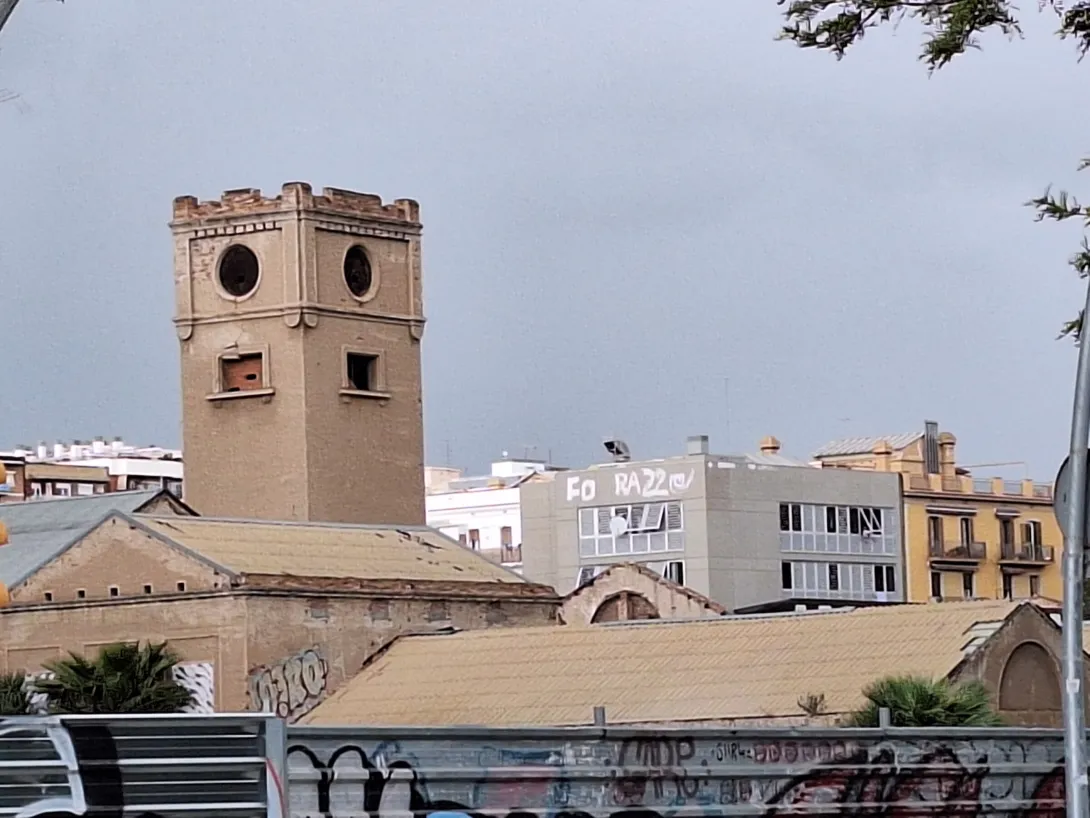
The Old Factories
Poblenou was once one of the main industrial areas of Barcelona.
Even today, chimneys, warehouses, and old factories remind us of this past, although many buildings have been converted into offices, workshops, schools, or cultural spaces.
© Davidpar, CC BY-SA 4.0, via Wikimedia Commons
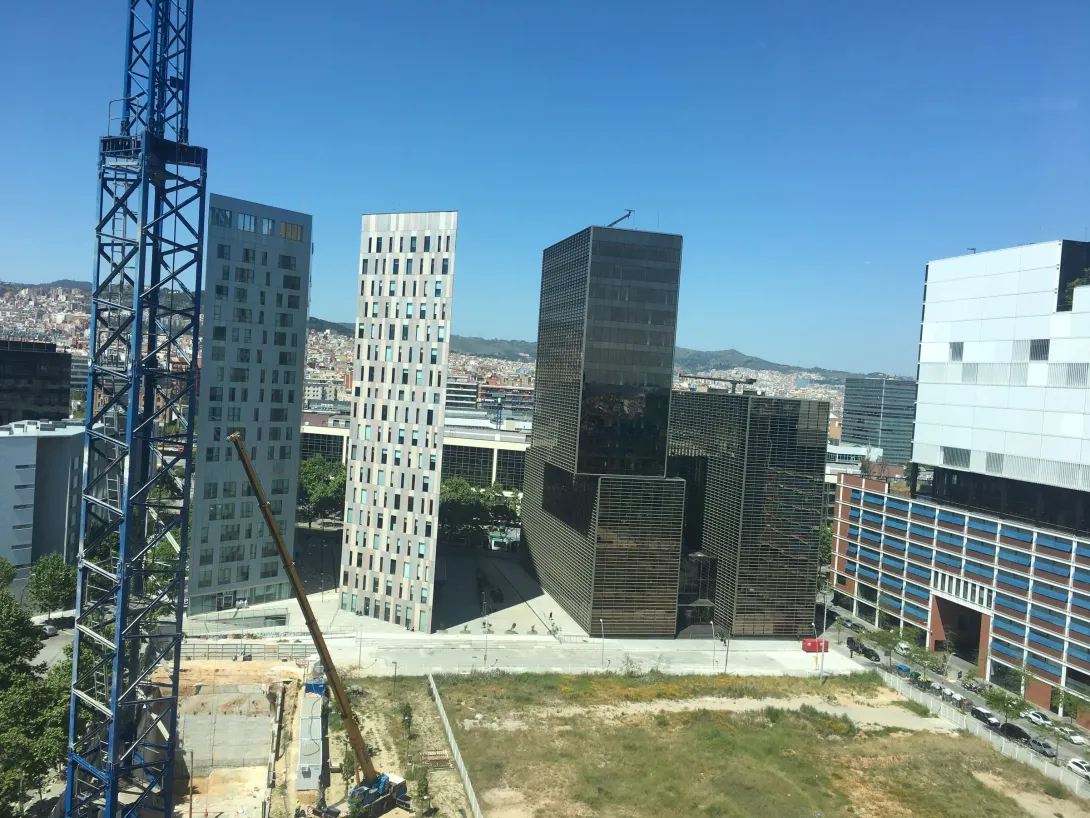
22@
Around Pere IV, Llacuna, and Glòries, the former industrial areas have gradually given way to tech companies, universities, design studios, and creative spaces.
This is where you can best experience the contrast between industrial Poblenou and contemporary Barcelona.
© Fpvc, CC BY-SA 3.0, via Wikimedia Commons
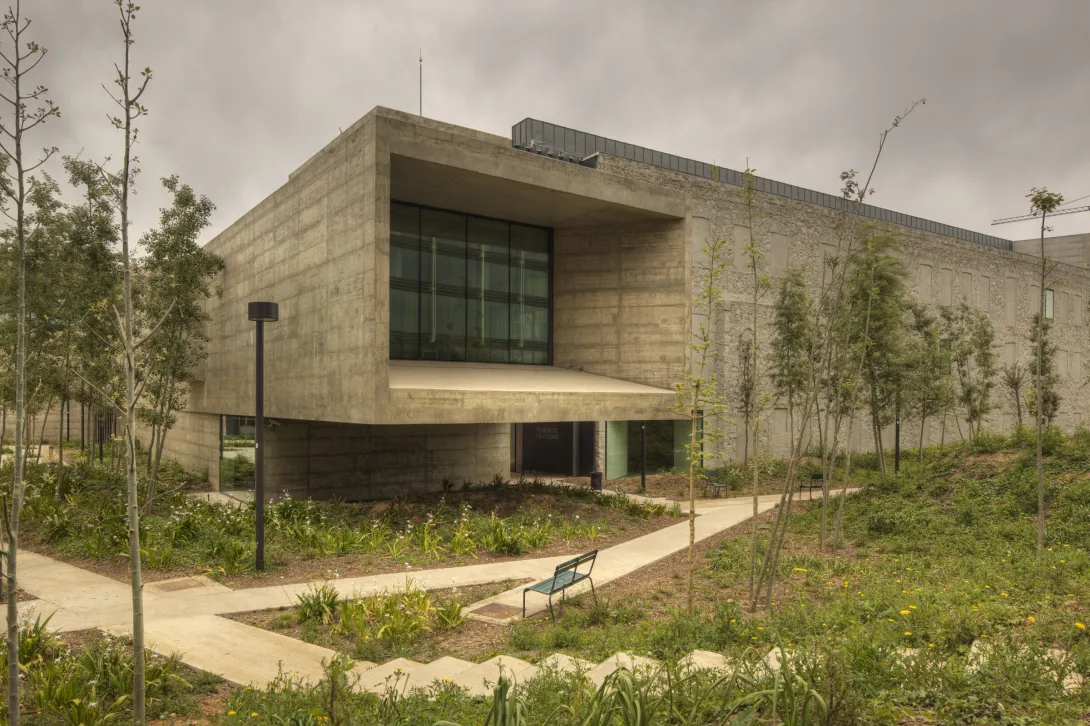
Can Framis
Housed in a converted former factory, Can Framis is dedicated to contemporary Catalan painting.
The building itself perfectly illustrates the architectural transformation of the neighborhood.
© Gerardo Nuñez, CC BY 3.0, via Wikimedia Commons
Parc del Centre del Poblenou
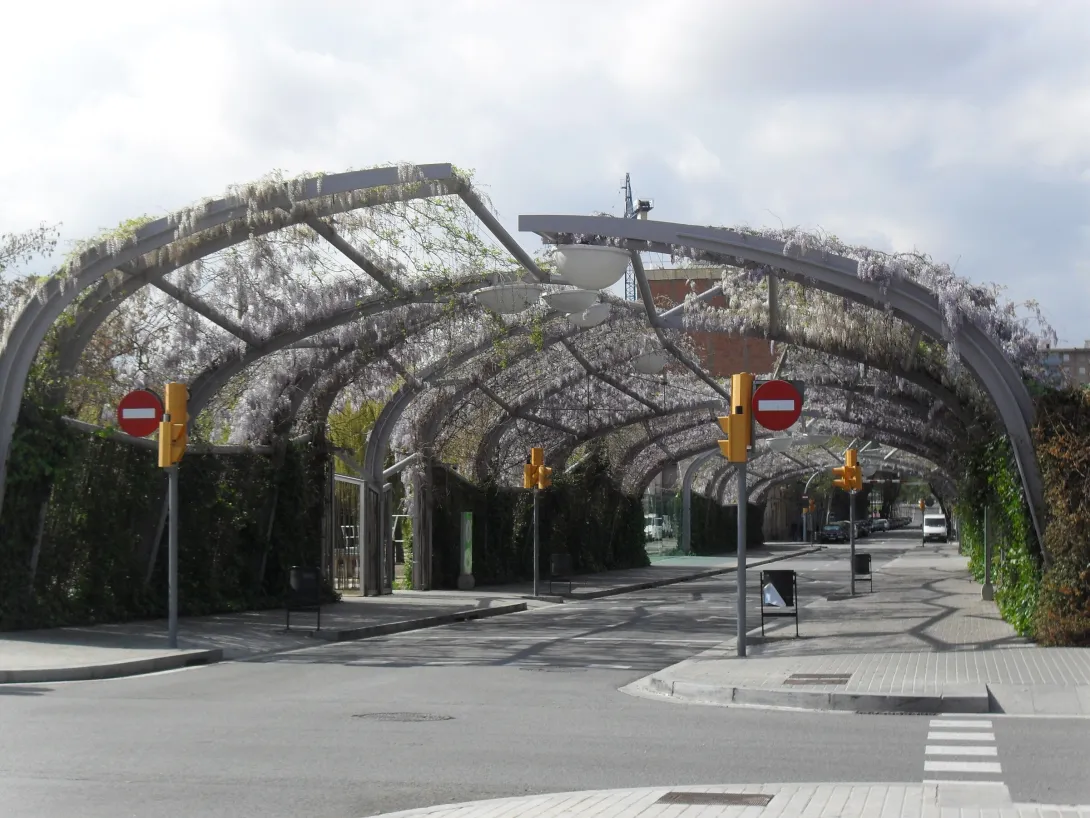
Designed by Jean Nouvel, this contemporary park offers a green oasis amidst the urban landscape and new buildings of the neighborhood.
© Gunnar E. Heßke, CC BY-SA 3.0, via Wikimedia Commons
The Beaches
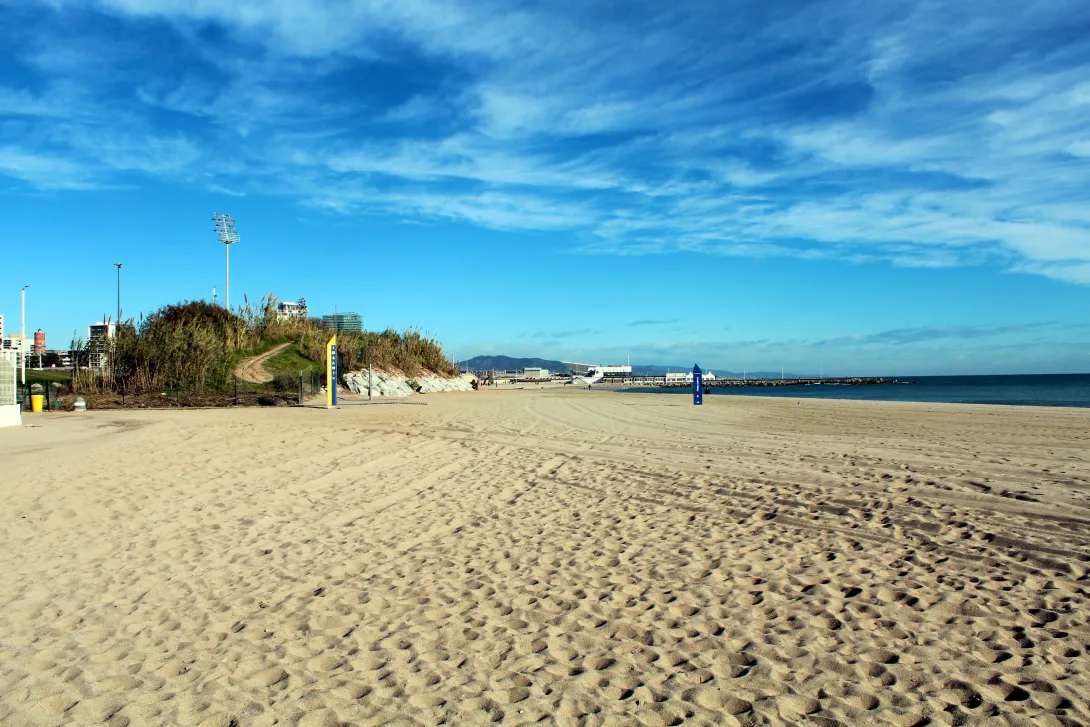
Poblenou is just a few minutes' walk from several beaches: Bogatell, Mar Bella, and Nova Mar Bella.
It's one of the few neighborhoods in Barcelona where you can easily combine an urban stroll, lunch, and a few hours by the sea.
Start with the Rambla del Poblenou, then leave it to wander through the streets between Pere IV and the sea.
It's by moving from old factories to new buildings, and from terraces to the beach, that you truly grasp the neighborhood's identity.
If you visit in the late afternoon, finish with a stroll on Bogatell or Mar Bella before heading back to dine in Poblenou.
From Industrial Past to the Mediterranean
A Walk Through Poblenou
The neighborhood is particularly well-suited for walking.
Our route:
Glòries → Pere IV → old factories → Rambla del Poblenou → Bogatell Beach → Mar Bella
Starting from Glòries, you'll first cross the most contemporary part of the neighborhood, marked by the 22@ district.
Around Pere IV, you'll still find many traces of the industrial past.
Then, head to the Rambla del Poblenou and leisurely stroll down to the sea.
You can finish at Bogatell or continue to Mar Bella.
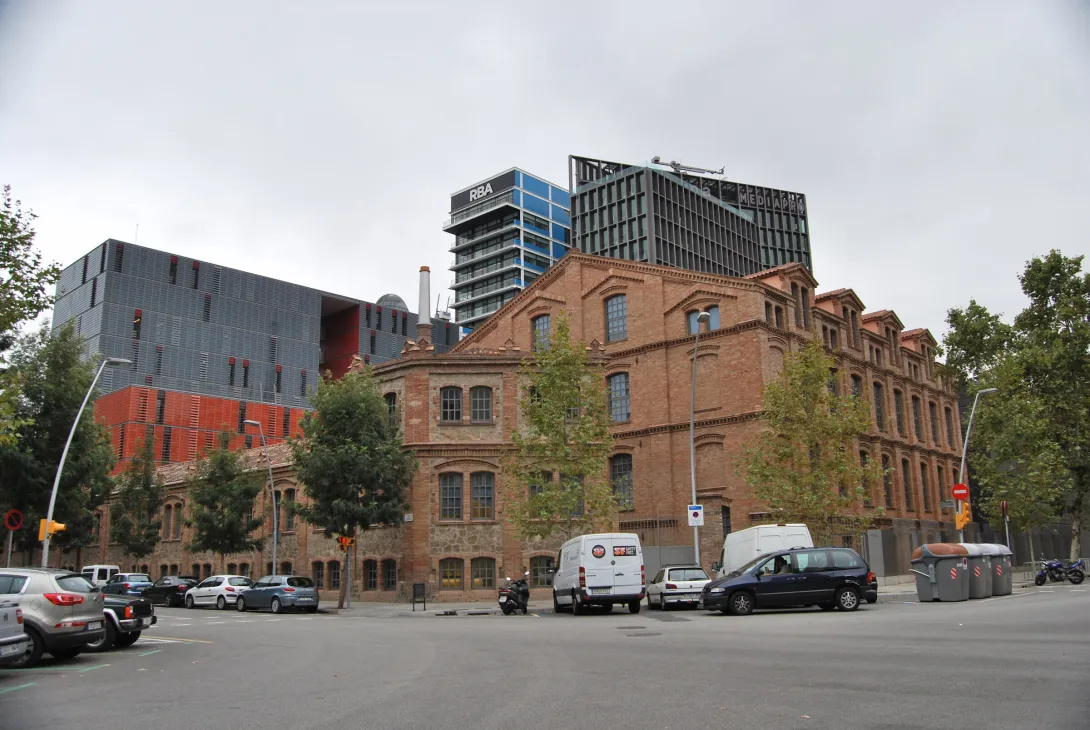
© CésarOP, CC BY-SA 3.0, via Wikimedia Commons
Brick and glass side by side
An old factory and, just behind it, a university campus building: the typical street of today's Poblenou.
The Heart of the Neighborhood
Rambla del Poblenou: The Locals' Promenade
The Rambla del Poblenou is the true heart of the neighborhood's social life.
Its wide, tree-lined central promenade is home to terraces, shops, cafés, and restaurants.
It connects the interior of the neighborhood to the seafront and maintains a much more local atmosphere than the Ramblas in the city center.
It's also one of the best places to observe the daily rhythm of Poblenou: families, neighbors, terraces, and small shops intersect here all day long.
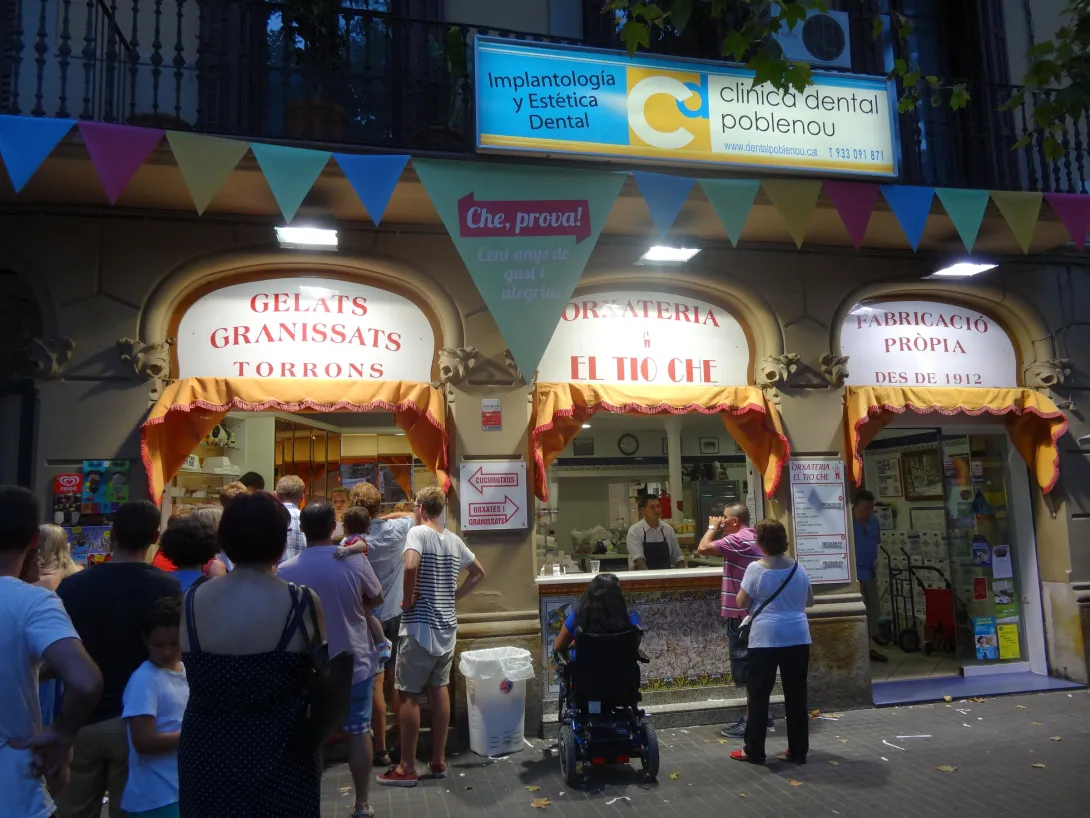
© Jordiferrer, CC BY-SA 3.0, via Wikimedia Commons
La Rambla, the village square
The line in front of El Tio Che, a century-old horchateria, says it all about the Rambla del Poblenou: a stroll for locals before being a street for visitors.
The "Catalan Manchester"
The Industrial Past of Poblenou
In the 19th century, Poblenou became one of the major industrial centers of Barcelona.
Textile, metallurgy, food, and other industries settled in this coastal area, to the point that the neighborhood was sometimes nicknamed the "Catalan Manchester".
The deindustrialization of the 20th century then left many factories and warehouses vacant.
Today, some of this heritage has disappeared, but many chimneys and old factories are still visible, giving the neighborhood a very distinctive identity.
© Ismael March Muñoz, CC BY-SA 4.0, via Wikimedia Commons
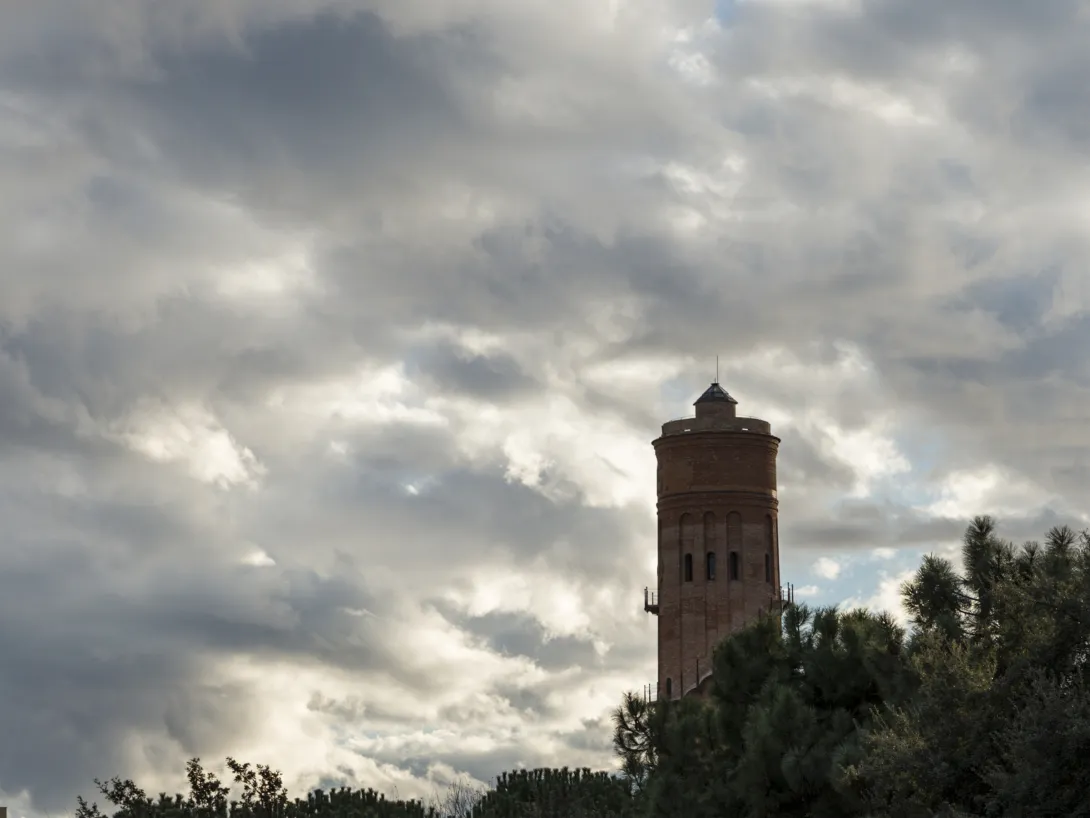
The Torre de les Aigües del Besòs
This late 19th-century brick water tower once supplied the neighborhood's factories. Today, it is open for visits and still towers over the rooftops of Poblenou.
Poblenou and the 22@ District
At the beginning of the 21st century, a significant portion of the former industrial lands of Poblenou was integrated into the urban project 22@.
The goal: to transform the old industrial areas into a district dedicated to innovation, technology, knowledge, and creative industries.
Among the contemporary buildings, many elements of industrial heritage remain, creating a rather unique urban landscape.
Today, tech companies, universities, architecture studios, creative agencies, and cultural spaces coexist with residents and the old factories.
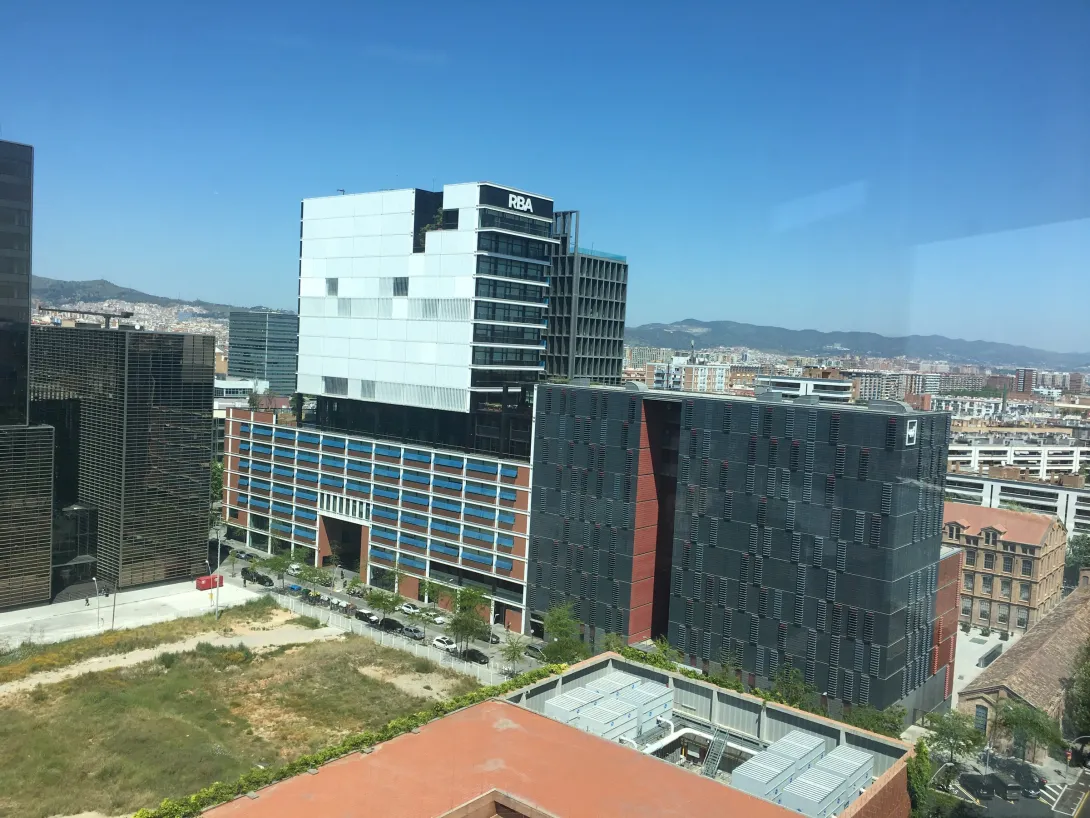
© Davidpar, CC BY-SA 4.0, via Wikimedia Commons
22@, the Innovation District
Media offices, a university, and studios occupy new buildings erected on former industrial plots.
A Neighborhood Always in Motion
A Creative Neighborhood
Poblenou has been attracting artists, designers, architects, and creative entrepreneurs for several years.
Old factories have been transformed into workshops, schools, studios, galleries, or cultural spaces.
The neighborhood is also associated with design, audiovisual production, architecture, and new creative enterprises.
Street art is part of this identity, but it's best discovered by wandering the streets: the artworks change regularly.
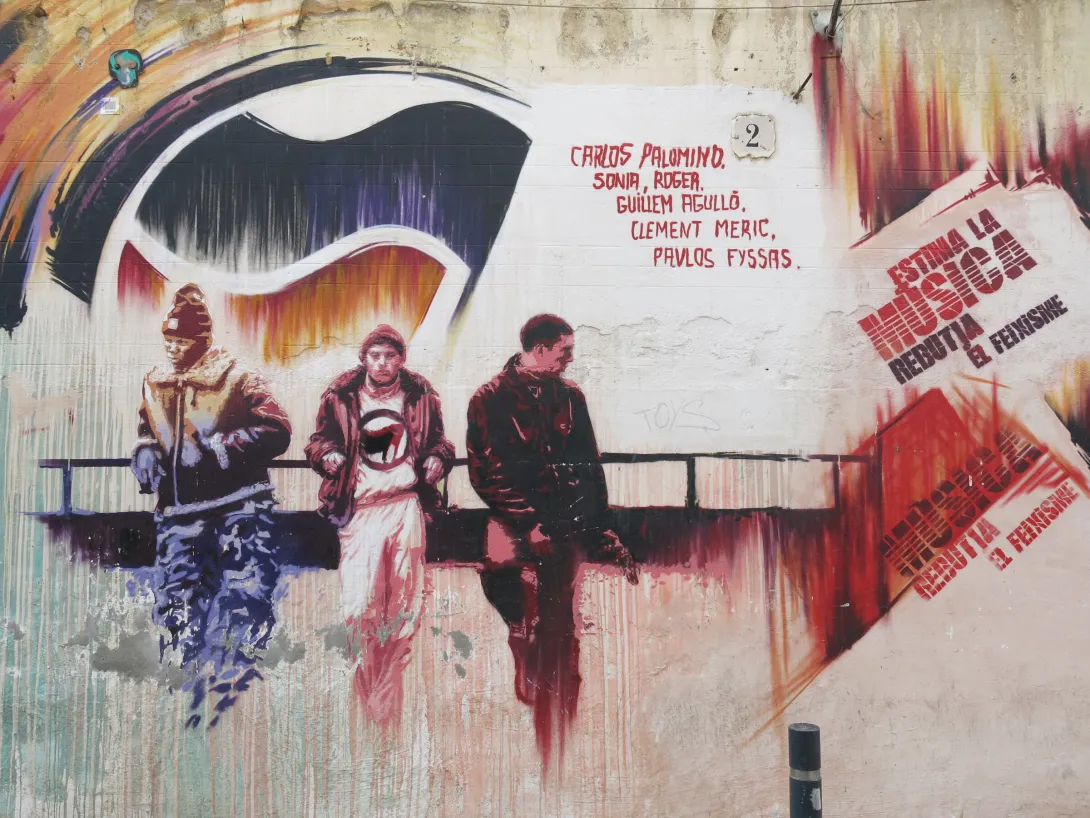
© Enric, CC BY-SA 4.0, via Wikimedia Commons
A neighborhood of workshops and murals
Painted walls, former factories turned into artists' studios or creative spaces: creativity is everywhere in the streets of Poblenou.
The neighborhood that slopes down to the sea
Poblenou and the beaches of Barcelona
One of the great advantages of Poblenou is its proximity to the Mediterranean.
The beaches of Bogatell, Mar Bella, and Nova Mar Bella are easily accessible on foot from the neighborhood.
Bogatell is a good choice for a pleasant and fairly central urban beach.
Mar Bella has a more sporty vibe and includes a traditionally naturist area.
Nova Mar Bella is generally quieter and more residential.
Poblenou is therefore an excellent choice if you want to combine neighborhood life and beach without staying in the very touristy part of Barceloneta.
Also, check out our guide to the beaches of Barcelona.
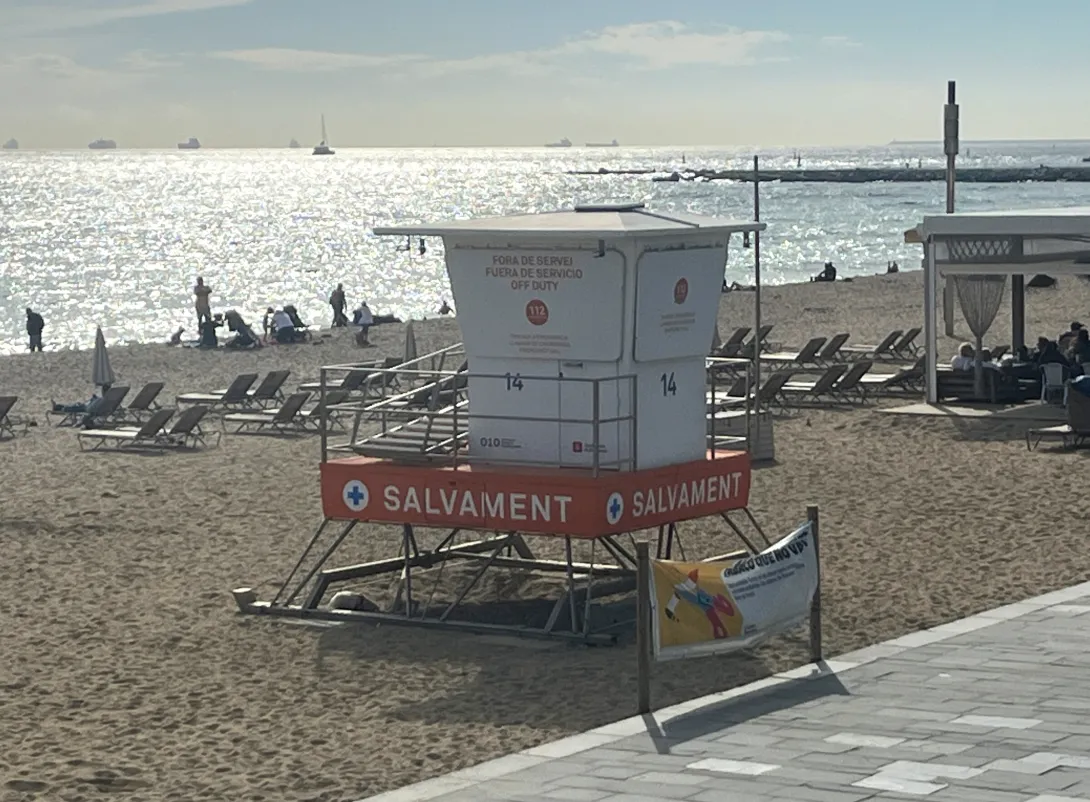
Benoît Prieur, CC0, via Wikimedia Commons
Bogatell Beach just ten minutes away
Bogatell, Mar Bella, and Nova Mar Bella can be reached on foot from La Rambla: Poblenou is a neighborhood of both beaches and factories.
Terraces and Great Spots
Where to Eat in Poblenou?
The Rambla del Poblenou is home to many restaurants and terraces, but we also recommend exploring the nearby streets.
By venturing slightly away from the Rambla, you'll discover more local spots, international cuisines, and new restaurants set up in former industrial spaces.
The Pere IV and 22@ areas have also seen significant development in recent years.
Our tip: use the Rambla for a drink or to soak in the neighborhood's vibe, then explore the parallel streets for lunch or dinner.
Also, check out our restaurants in Barcelona.
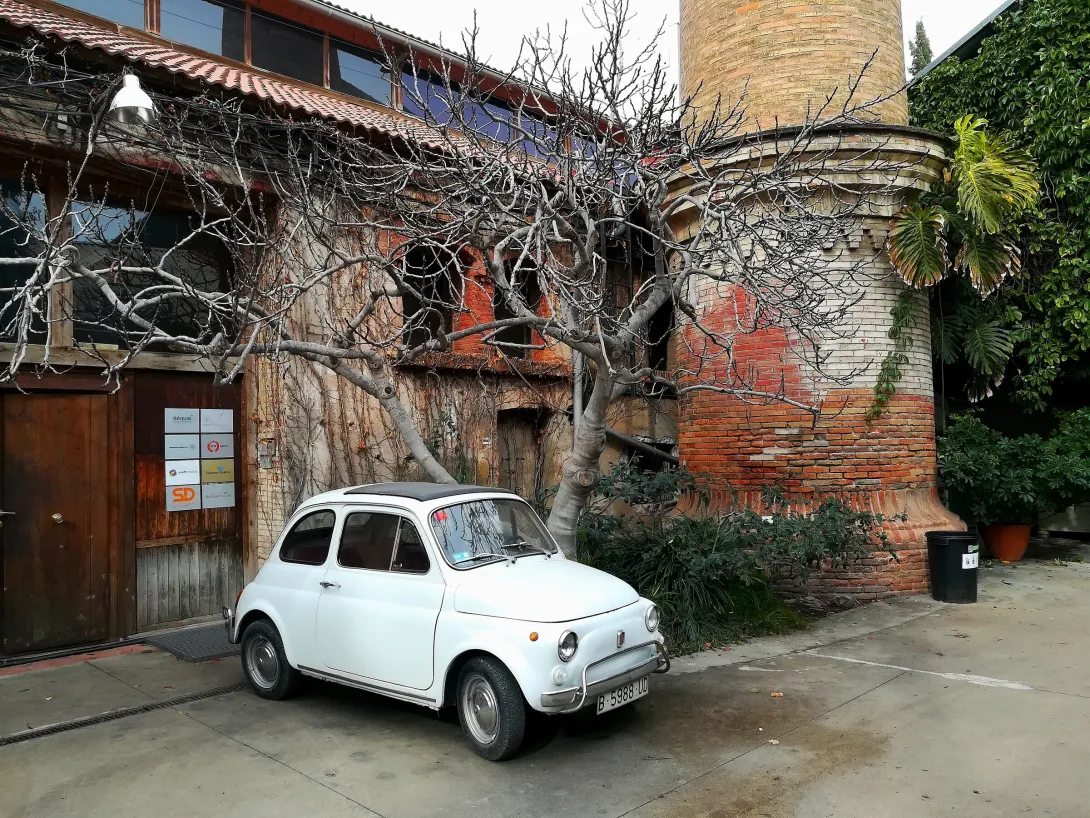
© Enric, CC BY-SA 4.0, via Wikimedia Commons
Dine in a Former Factory
At Palo Alto, as in other repurposed factories, restaurants and canteens are nestled among bricks, ivy, and glass roofs.
A more local than festive atmosphere
Where to have a drink and go out in Poblenou?
Poblenou is not a neighborhood with concentrated nightlife like some areas in the center.
The atmosphere is mainly composed of terraces, bars, breweries, cultural spaces, and creative venues.
La Rambla del Poblenou is the easiest choice to start the evening, while the streets around Pere IV host more alternative or event-focused spots.
For a livelier night around the large seaside nightclubs, the Olympic Port area remains distinct and more specialized.
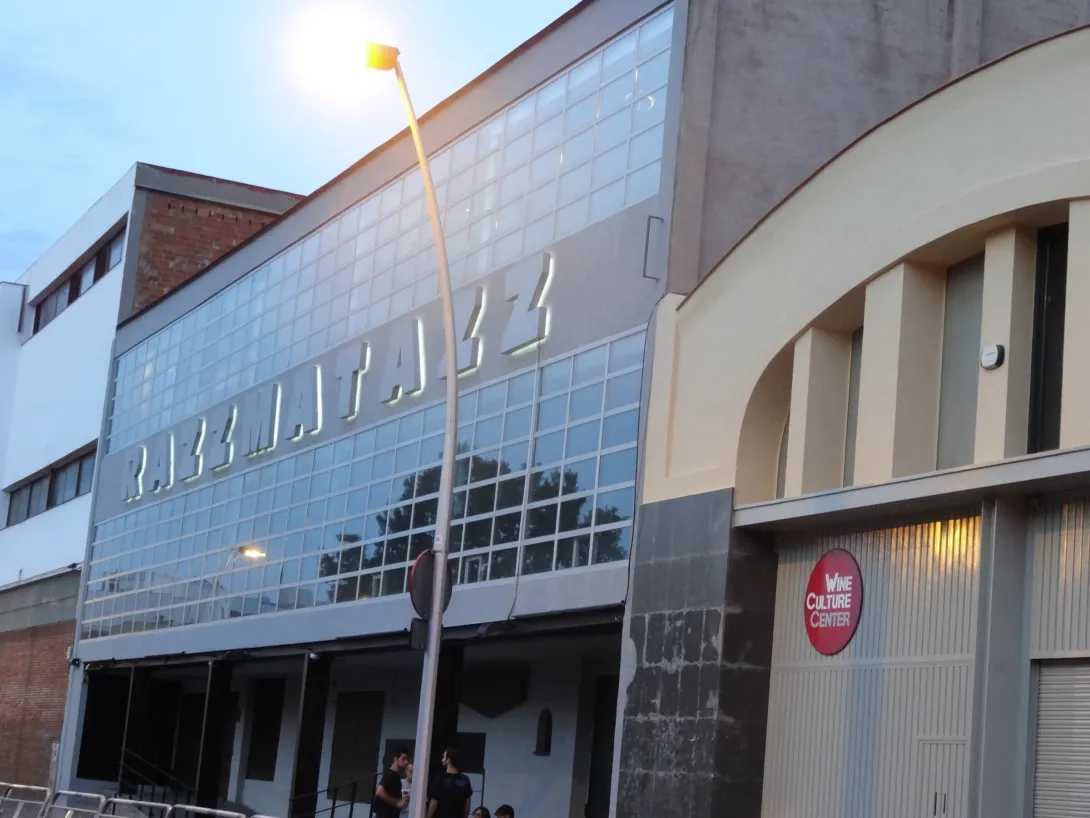
© Jordiferrer, CC BY-SA 3.0, via Wikimedia Commons
Going Out in Poblenou
The Razzmatazz Club, housed in a former industrial building, is one of the major concert and nightlife venues in Barcelona.
Sleep by the sea
Where to stay in Poblenou?
Poblenou is an excellent area if you want to stay in a quieter neighborhood than the historic center while still being well connected to the rest of Barcelona.
The hotels are often modern, and the beaches of Bogatell, Mar Bella, and Nova Mar Bella are easily accessible.
The neighborhood is particularly suitable for travelers who prioritize beach, tranquility, restaurants, and metro over the hustle and bustle of the old town.

Access and Transportation
How to Get to Poblenou?
| Metro – Poblenou | The Poblenou – L4 station provides direct access to the heart of the neighborhood. |
|---|---|
| Metro - Llacuna | The Llacuna – L4 station is convenient for the western part of Poblenou and the 22@ area. |
| From the center | The L4 line connects Poblenou with several central areas of Barcelona. Check out our guide to the Barcelona metro. |
| Barcelona Tourist Bus | The Red Route of the Barcelona Bus Turístic serves the Poblenou area and is a convenient option for entering the neighborhood. |
| On foot from the Olympic Port | From the Olympic Port and Nova Icària, it's easy to continue on foot along the seafront and then head up towards the Rambla del Poblenou. |
| By Bike | The flat terrain and numerous bike paths make cycling particularly convenient for exploring Poblenou and the waterfront. |
Continue exploring the waterfront
What to see around Poblenou?
Poblenou is located in a part of Barcelona where residential neighborhoods, beaches, and major urban projects come together. To continue your visit, also check out our guide to the neighborhoods of Barcelona.

© Enric, CC BY-SA 4.0, via Wikimedia Commons
Olympic Port
To the west of the neighborhood, the Olympic Port offers a marina, promenade, restaurants, and access to the beaches.

© Jordiferrer, CC BY-SA 3.0, via Wikimedia Commons
Beaches of Barcelona
Bogatell, Mar Bella, and Nova Mar Bella are among the most intriguing beaches to complement a visit to Poblenou.
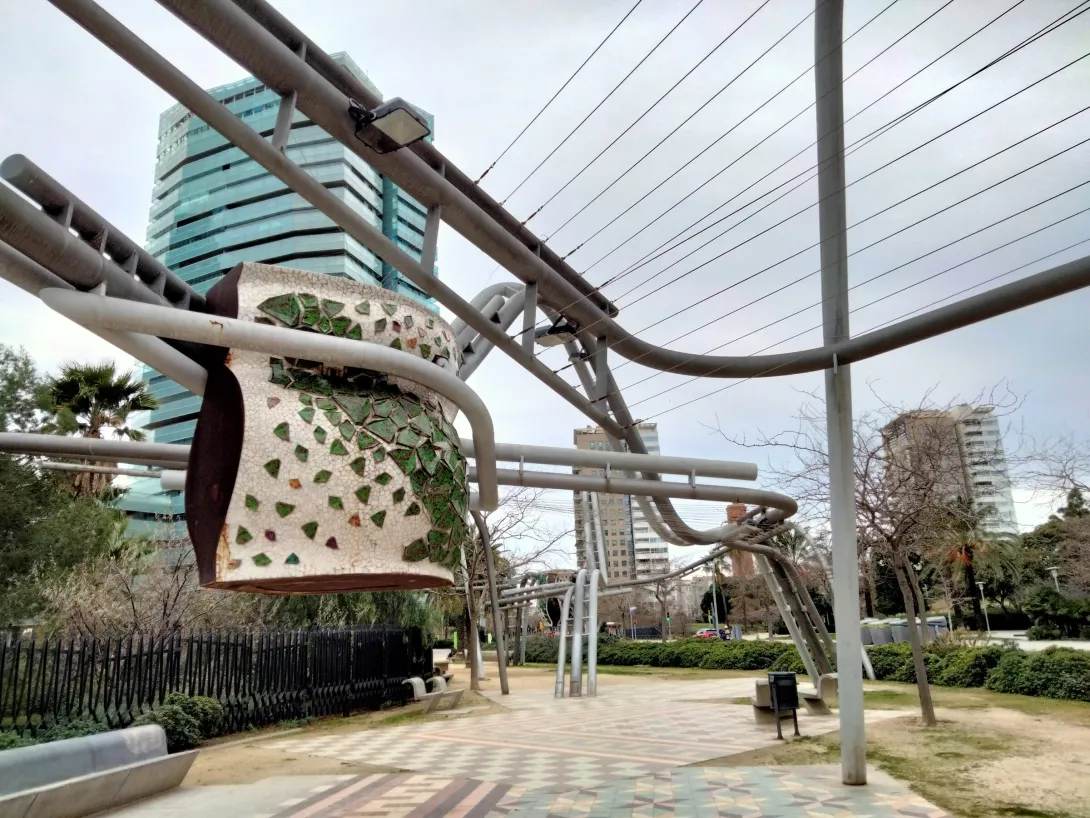
© Enric, CC BY-SA 4.0, via Wikimedia Commons
Diagonal Mar
Further east, Diagonal Mar marks the most recent urban development on the waterfront.
Contemporary high-rise buildings, green spaces, and proximity to the Fòrum give the area a very different atmosphere from the old Poblenou.
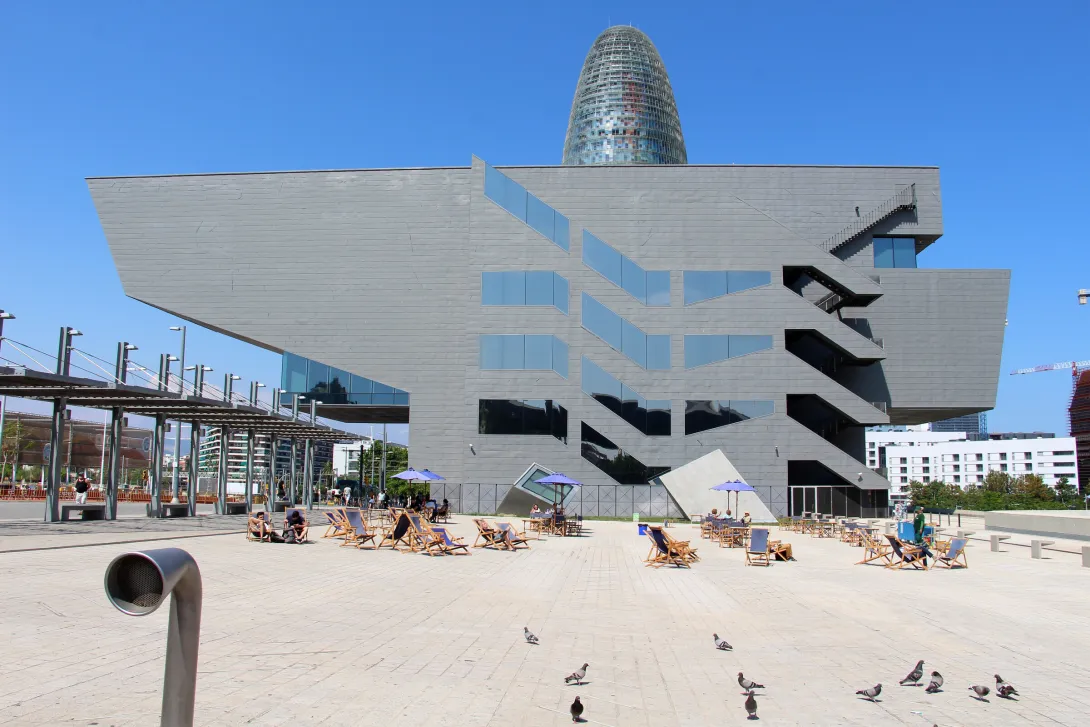
© Fred Romero, CC BY 2.0, via Wikimedia Commons
Glòries
To the west of Poblenou, Plaça de les Glòries marks the entrance to the 22@ district.
Notable landmarks here include the Torre Glòries and the Disseny Hub. This area is now one of the main gateways to contemporary Barcelona.
FAQ
FAQ: Poblenou Barcelona
Yes, especially if you want to explore a more local neighborhood than the historic center. Poblenou combines Rambla, industrial architecture, contemporary creativity, restaurants, and beaches.
The main points of interest are the Rambla del Poblenou, the old factories, the 22@ district, Can Framis, and the beaches of Bogatell and Mar Bella.
Poblenou is located in the Sant Martí district, northeast of the center of Barcelona, between Glòries and the waterfront.
The beaches of Bogatell, Mar Bella, and Nova Mar Bella are the most directly connected to the neighborhood.
Yes. It's a great choice if you're looking for a quieter area, close to the beaches, with modern hotels and easy access to the metro.
Barceloneta is a former maritime neighborhood very close to the historic center and much more touristy. Poblenou is more residential, larger, and characterized by its industrial past, design, and the 22@ district.
Plan for about 2 to 4 hours to explore La Rambla, the neighborhood streets, and the waterfront. A half-day is perfect if you also want to enjoy the beach.
Rambla del Poblenou offers plenty of terraces, but the neighboring streets are often more interesting for discovering local restaurants and more creative spots.