A day trip in Catalonia
Montserrat from Barcelona: monastery and day trip guide
About 60 km from Barcelona, Montserrat Monastery stands beneath the dramatic rock formations of Catalonia, Spain. This Benedictine abbey and sanctuary of the Black Madonna is a popular day trip from Barcelona. Visit the basilica and the Moreneta, listen to the Escolania choir when its schedule allows, explore the museum or follow the walking trails. Allow a full day, including the journey, to explore at a relaxed pace.
Monastery, Moreneta, museum, and landscapes: plan your visit to Montserrat from Barcelona.

Why visit Montserrat?
A visit to Montserrat combines mountain scenery, the monastery's cultural heritage and a working place of worship. The abbey buildings sit beneath towering rock formations, creating a setting very different from the sights in central Barcelona.
A mountain to admire as much as to explore
The rounded rock formations and cliffs of the massif are the result of a long geological history. Even without a major hike, the squares around the sanctuary and nearby paths allow you to appreciate this landscape. To walk more, choose a route that suits your fitness level and the weather.
A living sanctuary
The abbey still houses a Benedictine community. The basilica, church services, and the chants of the Escolania add a special dimension to the visit. You can come out of cultural curiosity or for a pilgrimage, respecting the silence requested in the prayer areas.
Who is a Montserrat day trip suitable for?
Montserrat appeals to art and history enthusiasts and anyone who enjoys mountain scenery, as well as families looking to escape the city. The visit is also suitable for a day without hiking. If your stay in Barcelona is very short, only allocate time for it after prioritizing your city activities: the trip takes up a significant part of the day.
What to see and do in Montserrat
The sanctuary and the mountain offer several different places to visit. Start by choosing your priorities: seeing the Moreneta up close, listening to the choir, exploring the museum, or taking the time to walk. Trying to fit everything into a short visit would be frustrating.
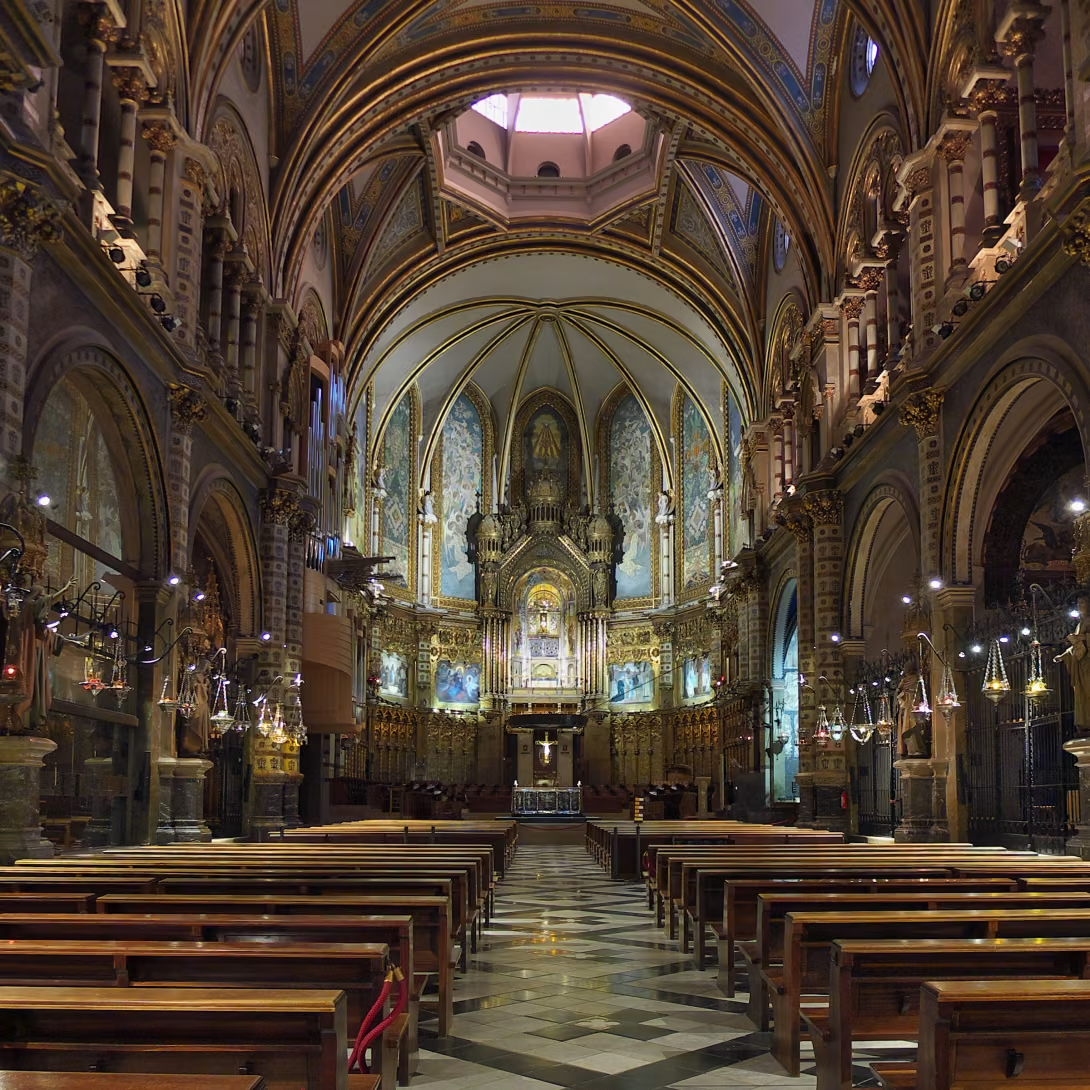
© Jose Luis Filpo Cabana, CC BY 3.0, via Wikimedia Commons
The Basilica of Santa Maria
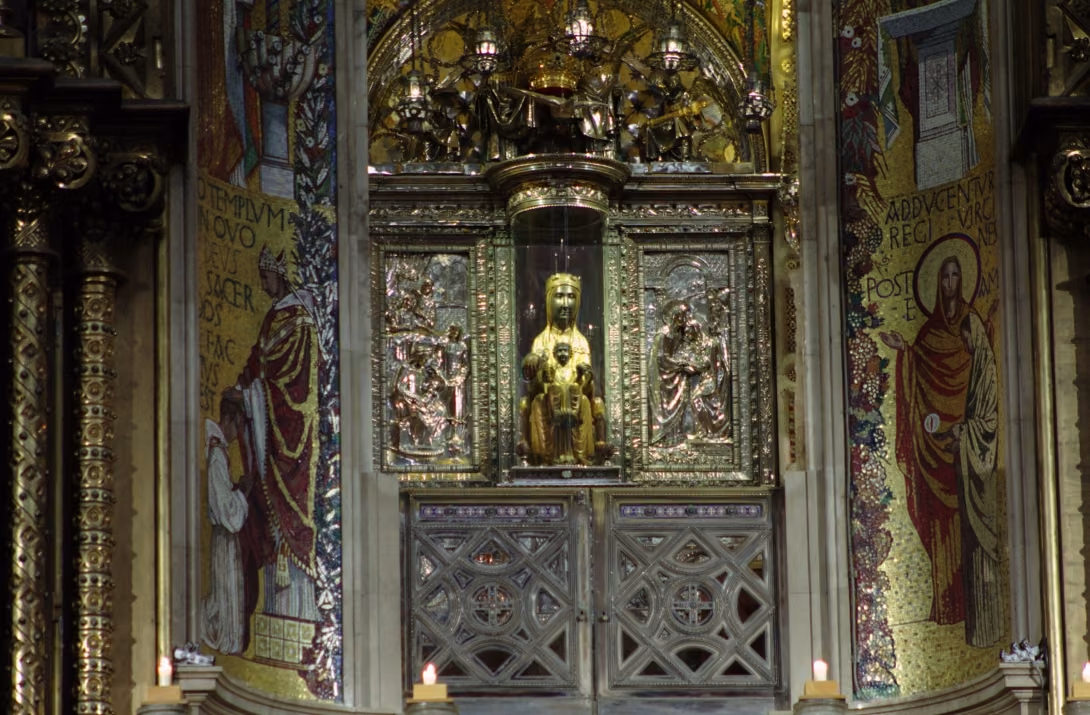
© José Luiz Bernardes Ribeiro, CC BY-SA 3.0, via Wikimedia Commons
La Moreneta, the Black Madonna
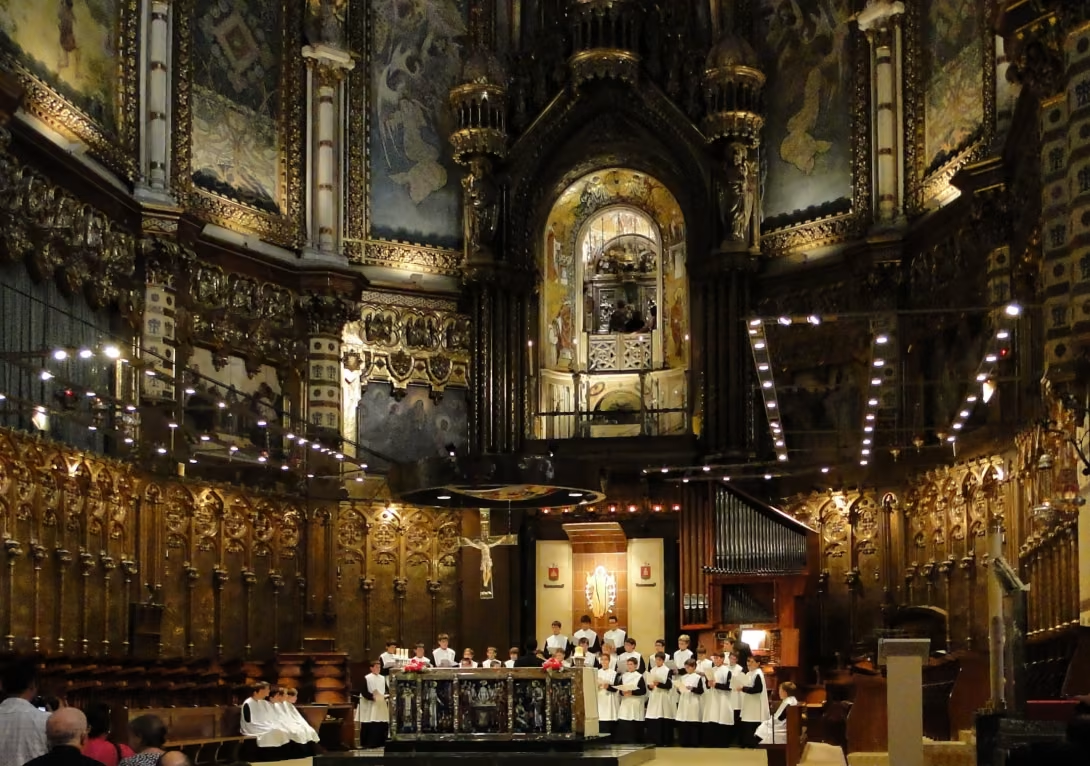
© Bernard Gagnon, CC BY-SA 4.0, via Wikimedia Commons
The Escolania de Montserrat
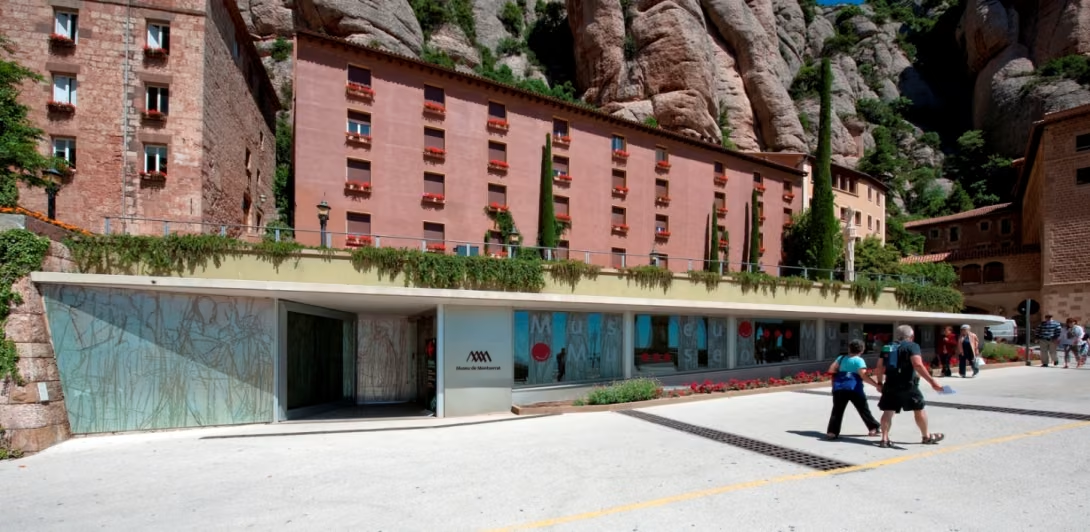
© Dani Rovira, CC BY-SA 1.0, via Wikimedia Commons
The Montserrat Museum
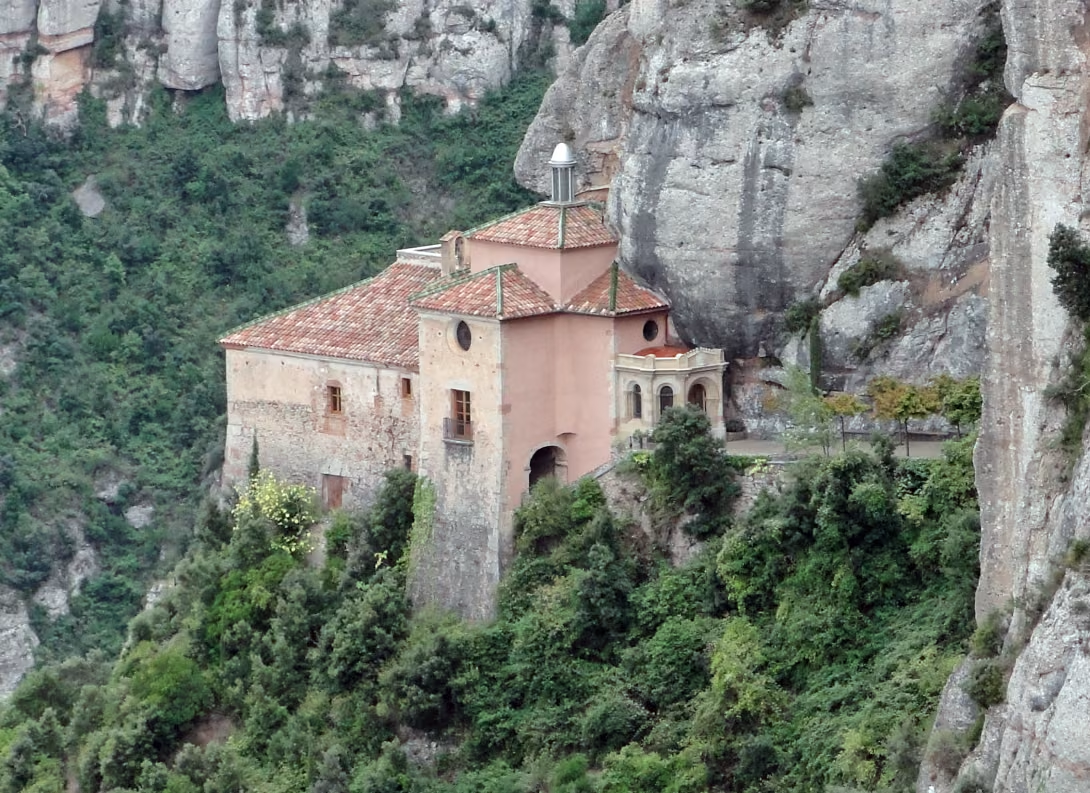
© Bernard Gagnon, CC BY-SA 3.0, via Wikimedia Commons
La Santa Cova, the Holy Cave
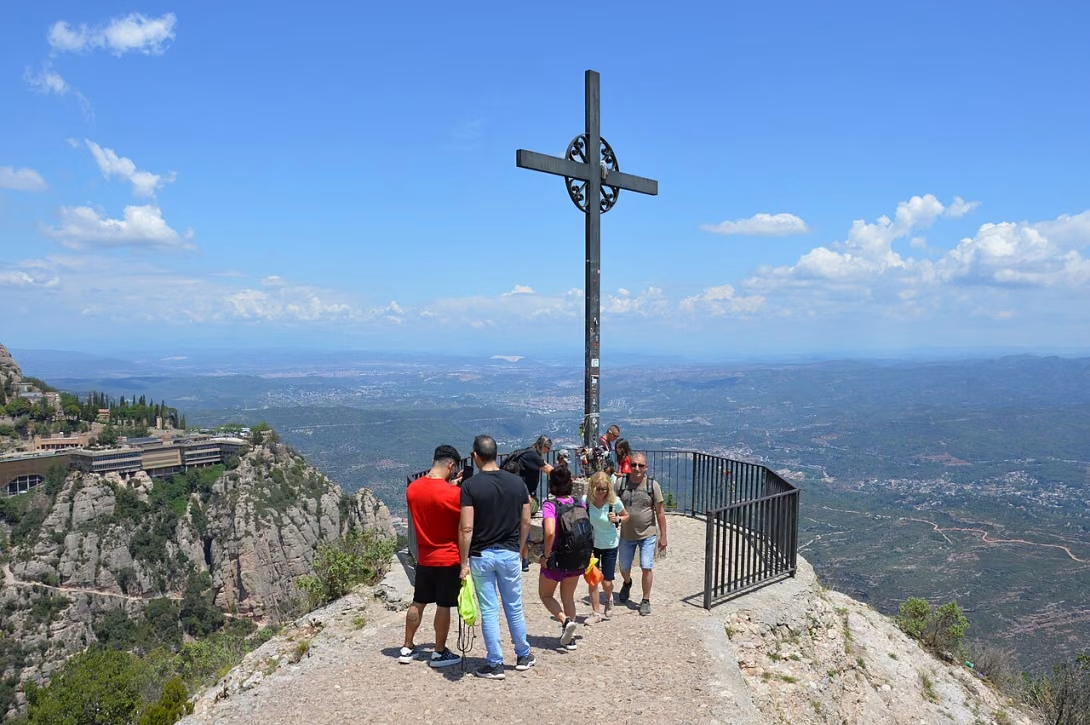
© DimiTalen, CC0 1.0, via Wikimedia Commons
Viewpoints and walking trails
Looking to book a tour of Montserrat?
Find tickets and excursions available on Tiqets. Check the language of the guide, transportation, and tours included in the selected offer.
How to get to Montserrat from Barcelona
The simplest journey to organize using public transport combines the regional train with either a rack railway or a cable car. The train from Barcelona does not arrive directly in front of the basilica: choose your connection before purchasing your tickets.
By train and then rack railway
Head to the FGC station at Plaça Espanya and take line R5 towards Manresa. Get off at Monistrol de Montserrat, then take the Cremallera up to the sanctuary. FGC estimates about 1 hour and 30 minutes from Plaça Espanya for the entire journey, including the connection; add travel time from your accommodation and allow for waiting time.
By train and then cable car
To ascend with the Aeri, get off at the Aeri de Montserrat station. This is not the same stop as for the rack railway. The cable car ride takes about five minutes, excluding waiting time. If you are prone to vertigo, the rack railway might be a more comfortable choice. Check the accessibility options for each mode of transport.
By car
You can reach the sanctuary area by road, but parking near the sanctuary is limited and charges apply. Another option is to leave your car at Monistrol Vila, where FGC indicates there is free parking, and then continue by rack railway. Travel time depends on your starting point and traffic conditions.
By bus
The official visitor website lists a coach service departing from the Sants area. Check with the operator for the boarding point, operating days, and return services for your travel date. Organized tours have their own departure points and itineraries; check the details of the tour you book.
Remember: Aeri and rack railway are two ways to reach the sanctuary. The Sant Joan and Santa Cova funiculars serve other areas of the mountain; they do not replace the train from Barcelona.
How much time do you need in Montserrat?
The durations below are guidelines for planning your day. They differentiate between the time spent on-site and the total travel time from Barcelona, and should be adjusted according to reservations, connections, and your own pace.
| Sanctuary and surroundings | Approximately 2 to 3 hours on site, with no extensive walking |
|---|---|
| Sanctuary and museum | Approximately 4 to 5 hours on site, depending on your pace |
| Visit with a walk | Spend a good part of the day there: choose just one route |
| Journey from Plaça Espanya | Approximately 1 hour and 30 minutes by train and rack railway according to FGC |
| Round-trip travel | Approximately 3 hours from Plaça Espanya, plus waiting time and travel to and from the station |
| Day trip from Barcelona | Set aside about 7 to 9 hours for a relaxed visit including a meal |
A half-day starting from Barcelona leaves little time for waiting and additional visits. For the museum, the choir, or a stroll, a full day is more comfortable.
A one-day Montserrat itinerary
Plan your day around confirmed reservations, then add other visits. Use the following itinerary as a guide and adapt it to your transport times.
Morning: arrive and explore the sanctuary
Leave early enough to reach Plaça Espanya and make your connection without rushing. Upon arrival, locate the return station and the route to the basilica. Then visit the sanctuary and, if you've booked access, the shrine of the Moreneta.
Midday: the choir or a break
If the Escolania is scheduled that day, make its timing the anchor of your plan. Otherwise, take this time to have lunch and enjoy the scenery. Allow enough time to reach any reserved visit or choir performance without relying on a tight connection.
Afternoon: the museum or a walk
Choose the museum if you prefer art and an indoor visit. If the weather is nice, head towards Sant Miquel or take the Degotalls path. The official site lists this path as 3.2 km and about 50 minutes; allow extra time for breaks and your own pace. Ensure you have enough time to return to your transport.
A shorter visit
With only two to three hours on site, focus on the basilica, the Moreneta if you have the required access, and the squares around the sanctuary. Then choose just one additional visit. Avoid adding a long walk at the last minute.
Add a walk
For the cross of Sant Miquel, the official map indicates about a 40-minute walk from the sanctuary. Also plan for the return, breaks, and elevation changes. The Santa Cova is another full outing; don't combine both routes if it jeopardizes your return to Barcelona.
Visitor tips tips for visiting Montserrat
The visits to the sanctuary, museum, and choir do not all follow the same schedule or conditions. The information below was verified on October 23, 2026, on the official website; please check the schedule again before your visit.
| Basilica | Listed opening hours: 7 AM to 8 PM, subject to church services and access arrangements |
|---|---|
| Shrine of the Moreneta | Scheduled slots from 8:00 AM to 10:30 AM and from 12:00 PM to 6:25 PM; access to be arranged separately |
| Museum | Monday to Friday from 10:00 AM to 5:45 PM; weekends and public holidays from 10:00 AM to 6:45 PM |
| Chapel of Santa Cova | Open from 10:30 AM to 5:00 PM |
| Escolania | Regular schedule announced at 1 PM from Monday to Friday and at 12 PM on Sunday; check the schedule for your visit |
| Last descent | Check with the chosen transport; it does not depend on the closing time of the basilica. |
Is visiting Montserrat free?
It's important to distinguish between outdoor areas, transportation, and visits. The sanctuary offers a tourist ticket and exemptions, particularly for residents of Catalonia, the rest of Spain, and the European Union. Special arrangements apply to groups and organized tours. An exemption does not necessarily mean you don't need to book the Moreneta or the choir: check your situation with the abbey. The museum and transportation have their own conditions.
What needs to be booked?
Prioritize checking access to the Virgin's throne and the Escolania choir if these are the highlights of your visit. Check what your ticket includes: some combined tickets have specific access arrangements. A transport ticket alone does not guarantee access to all visits.
Weather, attire, and meals
Check the mountain's weather before departure. Bring water, an extra layer, and shoes suitable for walking. In places of worship, choose respectful attire and follow the posted guidelines. Dining services have their own schedules.
Visiting with children or limited mobility
Plan the day around how far you can comfortably walk, without confusing the sanctuary's accessibility with the trails' accessibility. FGC indicates that the train and the rack railway are accessible to people with reduced mobility. For a wheelchair, stroller, or assistance needs, check the specific route and available facilities before setting out.
Official information: opening hours, church services and choir schedule, and sanctuary access conditions.
Montserrat Monastery: history and legends
The history of Montserrat Monastery and the legend of the Virgin's discovery are closely linked to this landscape, but they describe different events.
A monastery founded in 1025
A hermitage of Santa Maria is mentioned before the founding of the monastery. In 1025, Oliba, abbot of Ripoll and bishop of Vic, established a community nearby. The site welcomed pilgrims and over the centuries became a religious and cultural center. Destruction in the early 19th century interrupted its development; the restoration of monastic life began in 1844.
The legend of the Holy Cave
According to tradition, lights and songs guided shepherds to an image of the Virgin in a cave in 880. The story tells that she became too heavy to move, a sign that she was meant to remain on the mountain. The Santa Cova preserves the memory of this legend. It should not be confused with the dating of the statue venerated today.
La Moreneta, a symbol of Catalonia
The statue housed in the basilica dates from the 12th century. The Virgin of Montserrat was proclaimed the patroness of Catalonia in 1881. Her presence, the continuity of the Benedictine community, and the musical tradition explain why Montserrat is both a place of pilgrimage and a cultural landmark in Catalonia.
The name Montserrat evokes the "serrated mountain," referring to its jagged peaks. The legend adds to the site's cultural significance, while geology explains how the rock formations developed.
Frequently asked questions about visiting Montserrat
Yes. You can organize the journey and visits independently. Identify the connection between the train and mountain transport, then check the necessary reservations for the places you wish to explore. A guide remains an option to learn more about the history or simplify the organization.
Get off at Aeri de Montserrat if you're taking the cable car, or at Monistrol de Montserrat for the rack railway. These two stops are separate. Make sure to check your choice before purchasing a combo ticket and boarding the train from Plaça Espanya.
No. They are alternative ways to reach the sanctuary. The Sant Joan and Santa Cova funiculars are then used to reach other areas of the mountain, depending on their operation. Check the routes included in your ticket.
A half-day on site allows for an initial exploration. A half-day including the round trip from Barcelona is much more limited. To include the museum, the choir, or a leisurely walk, plan for a full day instead.
Don't take the choir's performance for granted. The program varies depending on the day, holidays, choir tours and religious services. Check the official schedule and booking conditions before planning your day around this event.
Yes. You can dedicate your day to the sanctuary, the Moreneta, the museum, and the nearby viewpoints. Plan your route according to your mobility. Mountain trails are additional options, with different constraints from those of the cultural visit.
Not necessarily. A single transport ticket and a combined ticket do not necessarily include the same visits. Check separately for the ascent, the sanctuary, the Moreneta, the choir, and the museum. Rely on the specific inclusions of the ticket you purchased.
Yes, by adjusting the itinerary to their age and stamina. Alternate between sightseeing and breaks, allow time for connections, and opt for a short walk if you wish to stroll. A stroller is not suitable for all mountain paths.