Gaudí's Extraordinary Garden
Park Güell Barcelona: What to See and How to Visit It
Parc Güell is one of Antoni Gaudí's most famous works in Barcelona. Originally designed as a garden city, it combines architecture, nature, and mosaics on the city's heights. Discover the must-see spots and the route to follow to understand the park.
Explore the must-see spots, history, and architecture of Gaudí's Parc Güell in Barcelona.
- Gaudí's Architecture
- UNESCO World Heritage Site
- Mosaics and Trencadís
- Views of Barcelona

The Essentials
Park Güell at a Glance
| Architect | Antoni Gaudí |
|---|---|
| Construction | 1900-1914 |
| Sponsor | Eusebi Güell |
| Initial Project | A residential garden city |
| Style | Catalan Modernism |
| UNESCO | Listed among Antoni Gaudí's Works |
| Neighborhood | Gràcia, perched on the heights of Barcelona |
Park Visit
What to See at Park Güell?
Park Güell unfolds as a journey into Gaudí's universe. Many of his most famous works are concentrated in the monumental zone of Park Güell. Beyond the staircase, the hypostyle hall, and the Nature Square, the viaducts, the Washerwoman's Porch, and the gardens demonstrate how Gaudí integrated his architecture with the natural landscape.
© Barcelona.com
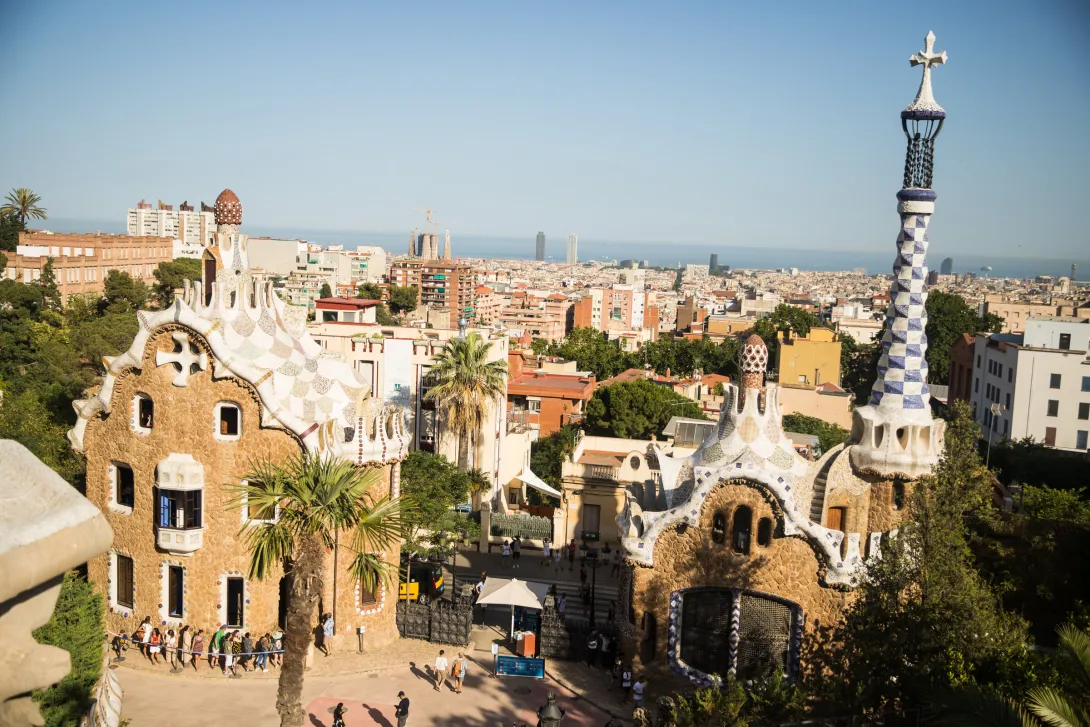
The Entrance Pavilions
The two concierge pavilions housed the services of the garden city. Their irregular volumes, ceramics, and fantastical roofs immediately set the tone.
© Barcelona.com
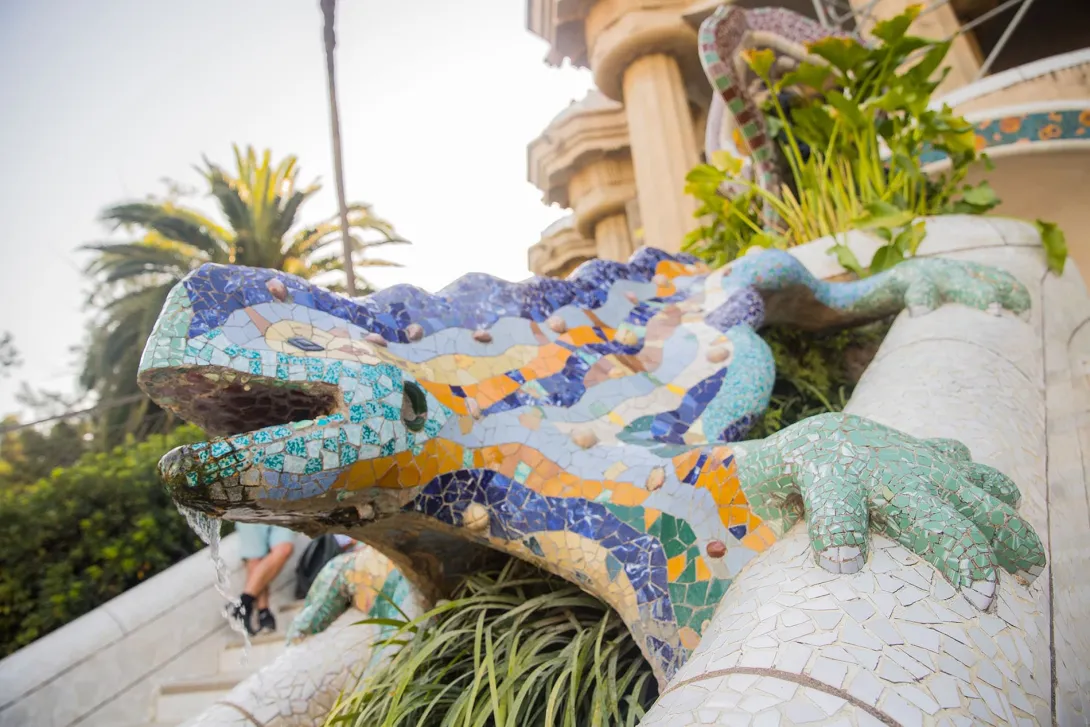
The Monumental Staircase and the Salamander
The grand staircase leads to the heart of the park. It is notably adorned with the famous dragon in trencadís, which has become one of the most popular symbols of Park Güell.
© Barcelona.com
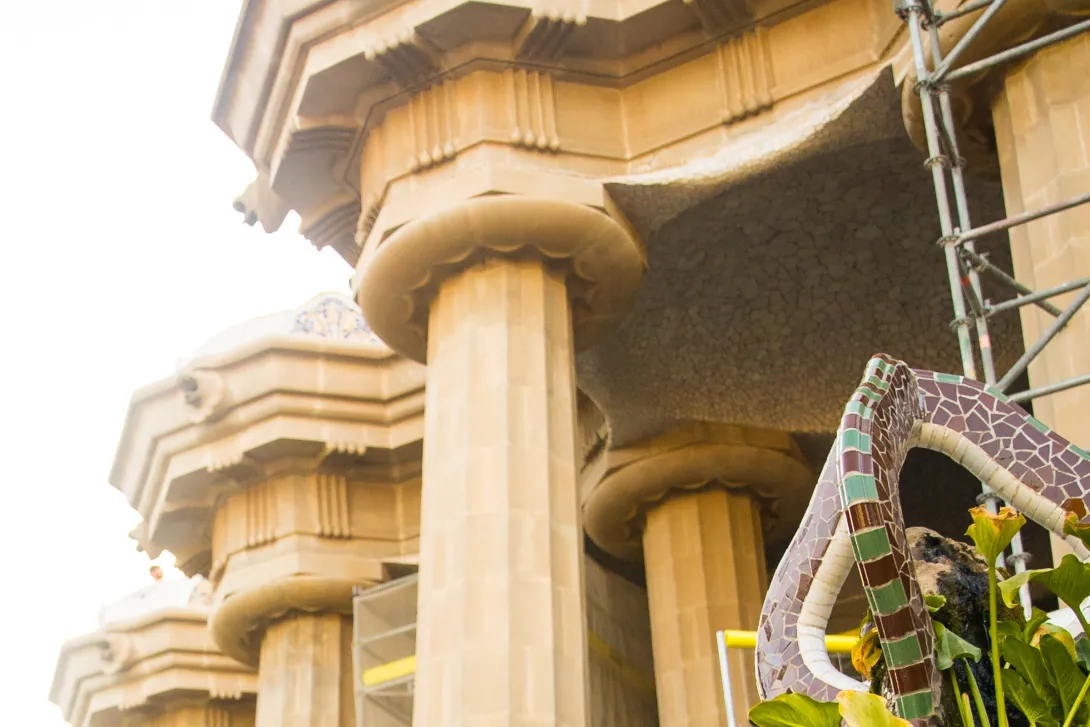
The Hypostyle Hall
Designed to host the garden city's market, this impressive hall features 86 columns and a ceiling adorned with domes and trencadís panels.
© Barcelona.com
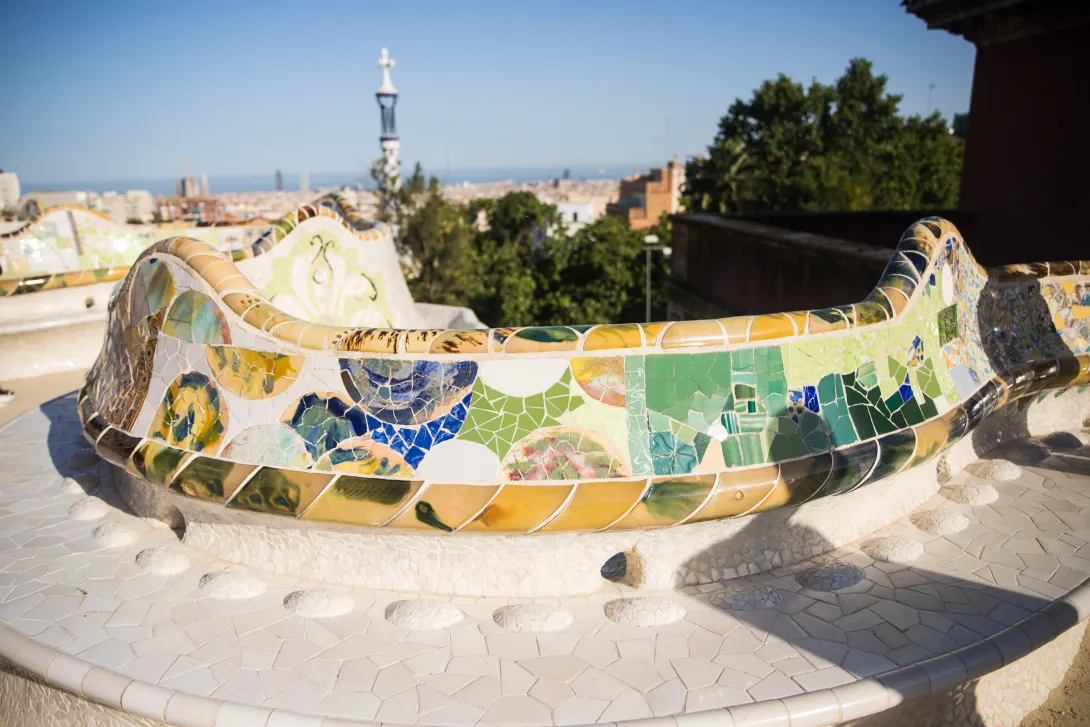
The Place of Nature and Its Bench
Originally a Greek theater project, this large terrace is bordered by the famous wavy bench in trencadís created with Josep Maria Jujol and offers a spectacular view of Barcelona.
© Barcelona.com
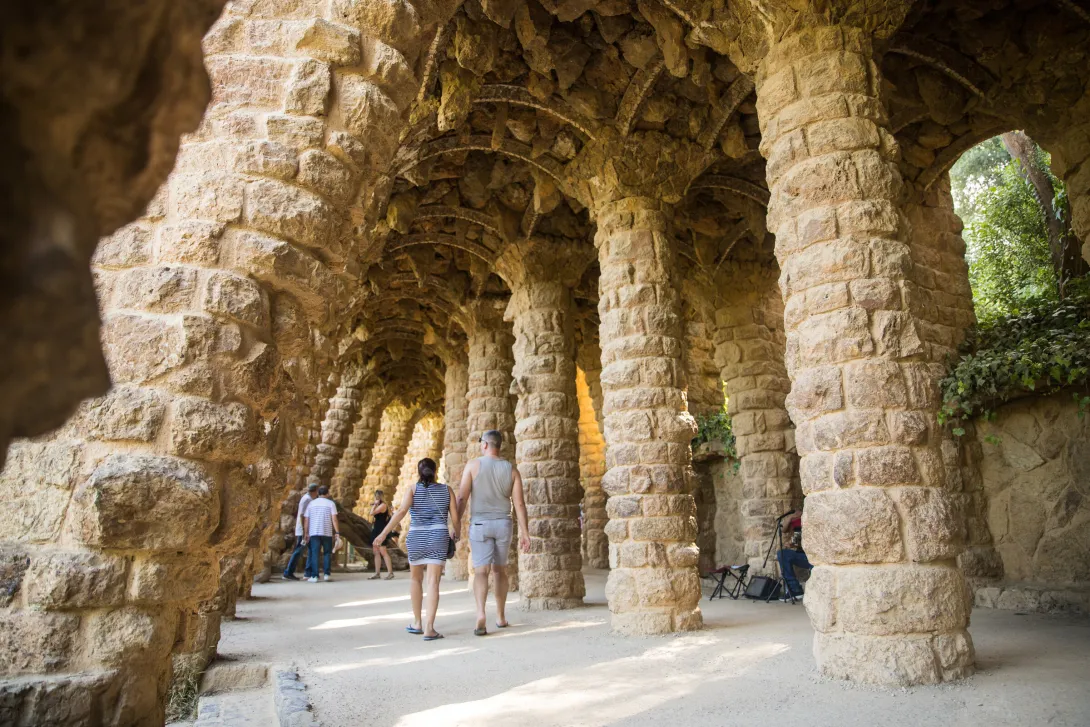
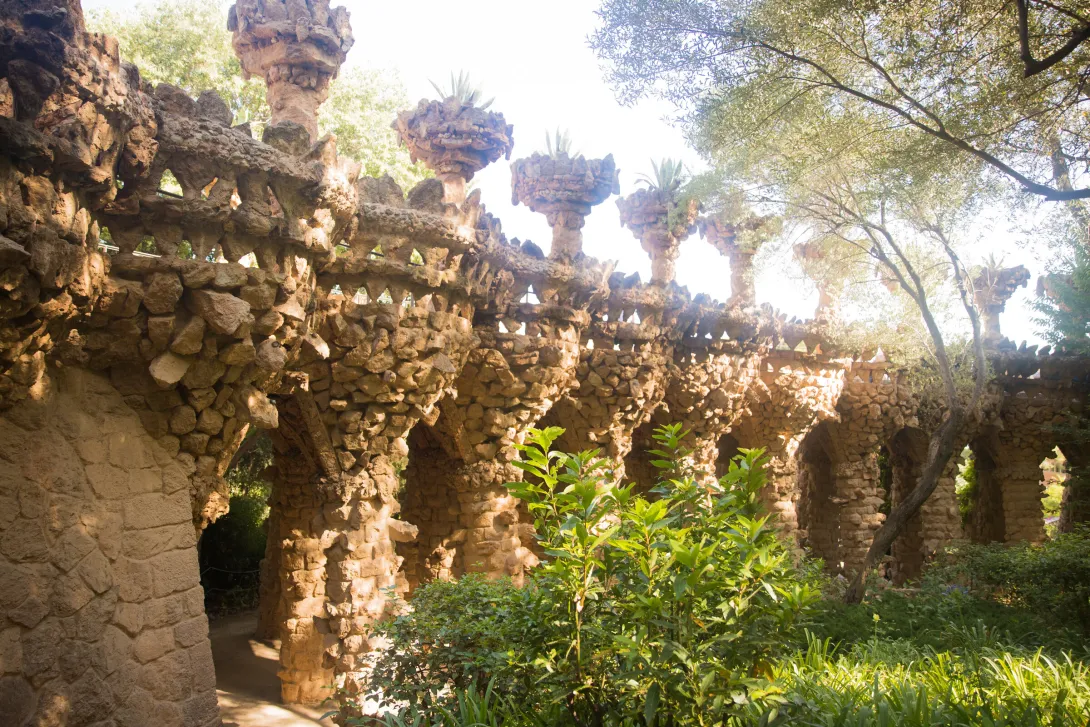
The Washerwoman's Porch
Built from rough stone, this undulating portico resembles a large wave. One of its columns takes the shape of a washerwoman carrying her tools.
© Barcelona.com
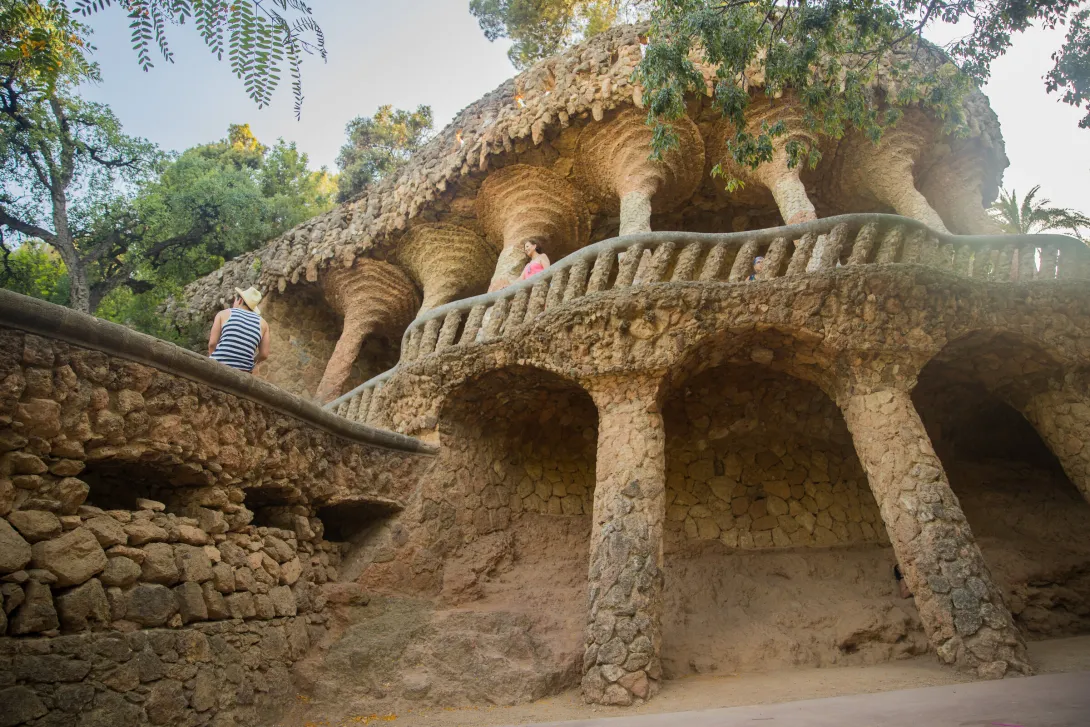
The Three Viaducts
The Pont d’en Bas, the Pont du Milieu, and the Pont d’en Haut allow for movement along the slope without disrupting the terrain, serving as one of the finest examples of architecture blending seamlessly with the landscape.
© Canaan, CC BY-SA 3.0, via Wikimedia Commons
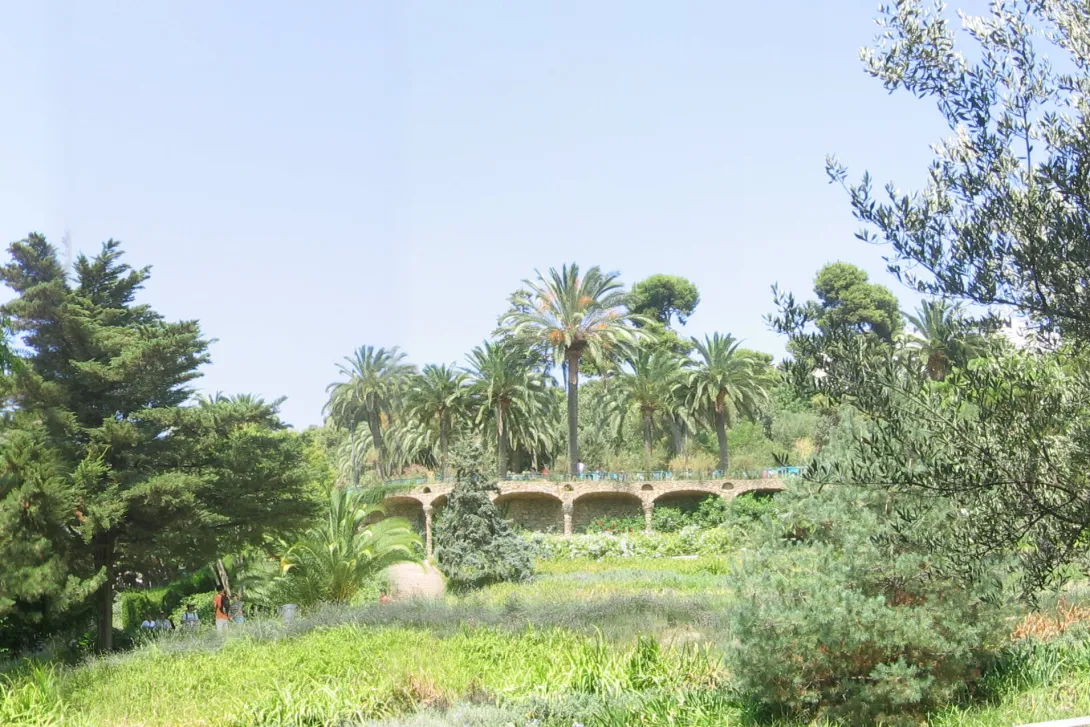
The Gardens of Austria
Once a municipal nursery set up on plots of the garden city, this area owes its name to the trees gifted by Austria and planted in 1977.
© Ferran Pestaña, CC BY-SA 2.0, via Wikimedia Commons
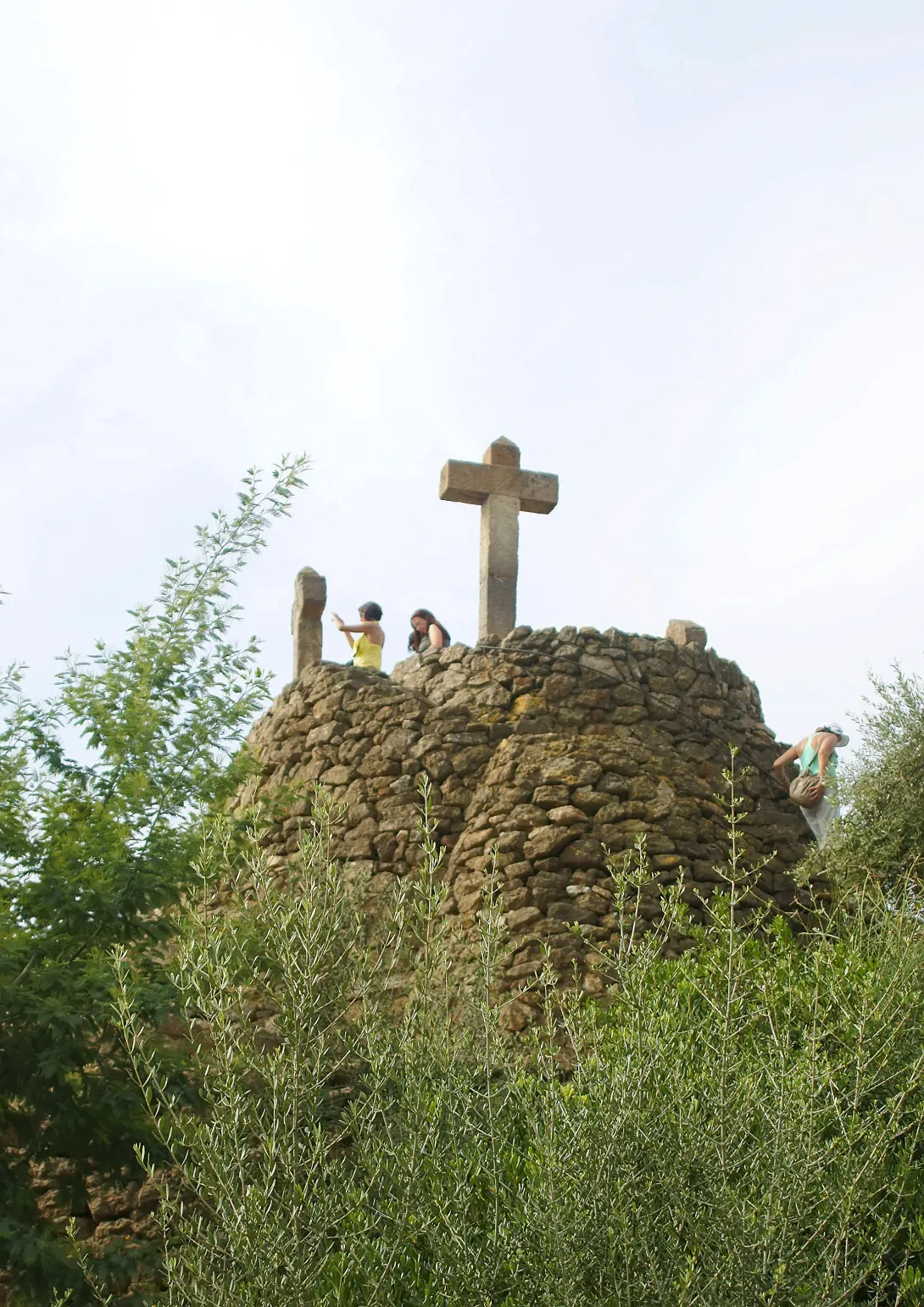
The Hill of the Three Crosses
Located on one of the highest points of the park, the Hill of the Three Crosses offers a different perspective of Park Güell and a vast panorama of Barcelona.
You don't just visit Parc Güell, you stroll through it as if it were an open-air work of art.
Visit the park
Which route to follow to visit Park Güell?
The best way to understand Park Güell is to gradually explore the different levels of the site rather than limiting yourself to the two or three most photographed spots.
1. The monumental zone
The heart of the visit, to be explored in the order of elevation.
- The entrance pavilions
- The monumental staircase and the salamander
- The hypostyle hall
- The Nature Square and its undulating bench
2. The Viaducts and Paths
Take the time to explore them: they show better than anything else how Gaudí integrated his constructions with the landscape and vegetation.
3. Natural Spaces and Viewpoints
Save this for the end if you want to extend your visit beyond the most famous landmarks.
Our advice: don't limit yourself to the salamander and the bench. The viaducts, pathways, and level changes are essential to understanding how Gaudí designed the park as a whole.
Getting Around
Parc Güell Map: Guide to Main Attractions
Park Güell stretches across a hill, with its main sites spread over several levels. The map helps locate the monumental staircase and the salamander, the hypostyle hall, the Nature Square, the entrance pavilions, the Washerwoman's Porch, the three viaducts, the Austrian Gardens, and the Hill of the Three Crosses.
Check the Park Güell map to identify the main monuments, paths, and different entrances before your visit.

In the Intimacy of Gaudí
The Gaudí House Museum in Park Güell
The House Where Gaudí Lived
Antoni Gaudí lived in this house in Park Güell from 1906 to 1925. Built as a model home for the garden city according to the plans of Francesc Berenguer, a friend and collaborator of Gaudí, it offers a more intimate glimpse into the architect's life and his personal connection with the park.
Now transformed into a museum, the house retains furniture and objects related to Gaudí. Visiting it requires a specific or combined ticket, separate from the standard Park Güell entrance.
The visit complements the park tour well: after exploring the vast spaces, mosaics, and viaducts, you can discover a more intimate world, reflecting Gaudí's everyday life. The furniture, personal items, and decorative elements also provide a deeper understanding of his taste for organic forms and craftsmanship.
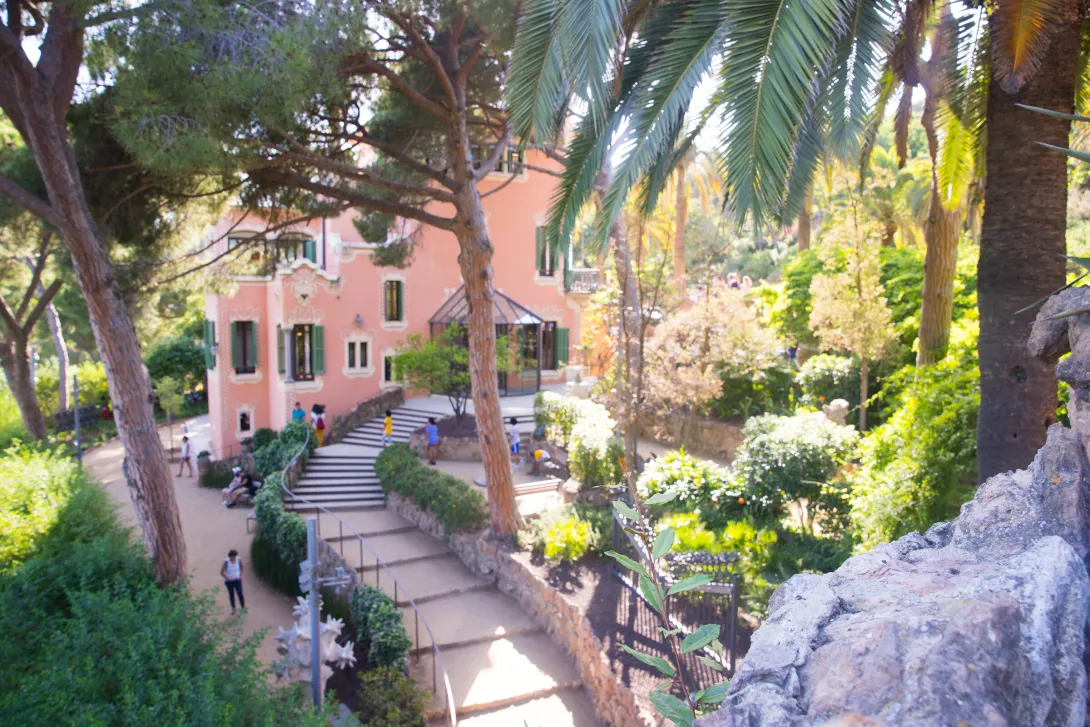
© Barcelona.com
Gaudí House Museum
Gaudí lived for nearly twenty years in this house located in the heart of Park Güell.
An Unfinished Project
Why Was Park Güell Built?
Parc Güell was not originally intended to be a public park. Eusebi Güell wanted to create a residential garden city on this hill, inspired by British models, and entrusted the project to Antoni Gaudí.
Starting in 1900, Gaudí envisioned the infrastructure, access points, communal spaces, and pathways for a new neighborhood intended for affluent families. The rugged terrain became a creative challenge: instead of leveling the hill, the architect adapted the roads, walls, and viaducts to the landscape.
However, the real estate project did not achieve the expected success. Few plots were sold, and the garden city remained largely unfinished. Construction stopped in 1914.
The city of Barcelona later acquired the estate and opened it as a public park in 1926. This change in function explains the unique character of the place: Park Güell retains the monumental and landscaped infrastructure of a residential area that never truly came to be.
Today, the site is one of the most important ensembles for understanding the collaboration between Gaudí and Eusebi Güell, as well as the evolution of Catalan modernism at the beginning of the 20th century.
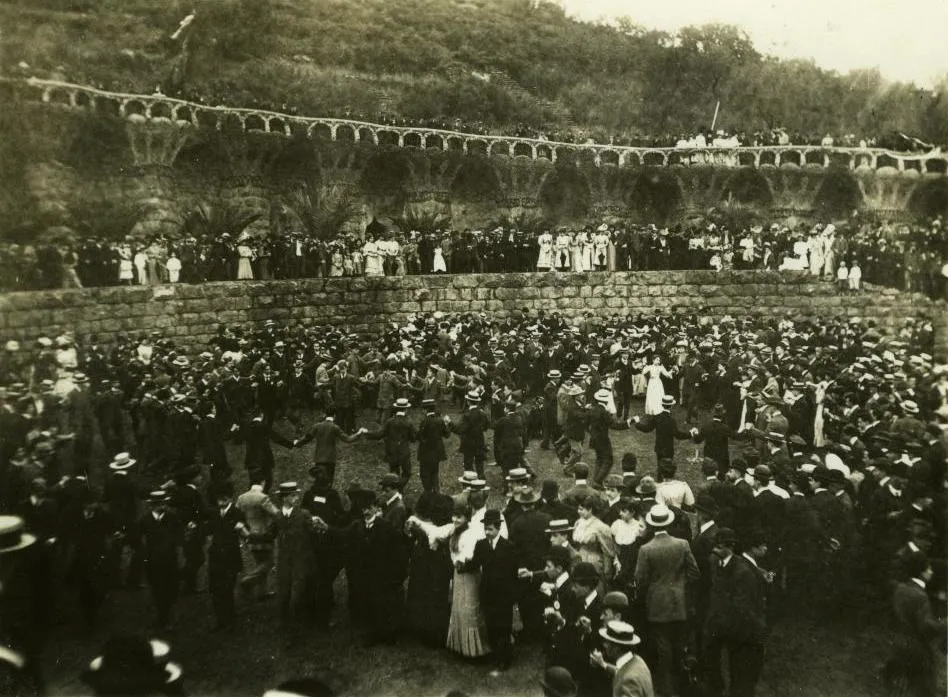
© Joan Morera, CC BY-SA 2.5, via Wikimedia Commons
The Inhabited Garden City, in 1906
Sardanas danced in Nature Square, back when the park was still a private estate.
Architecture and Nature
Why is the Architecture of Park Güell so Unique?
In Park Güell, Gaudí does not aim to contrast architecture with nature. On the contrary, he uses the shapes of the land, stone, vegetation, and color to create the impression that the structures extend the hillside.
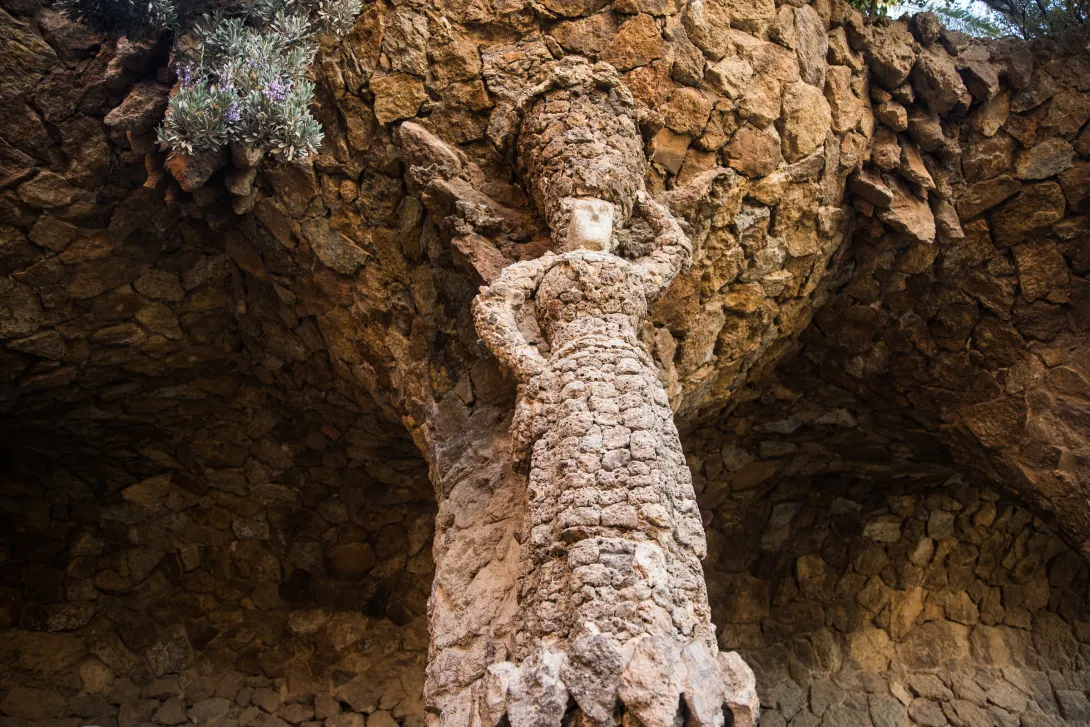
© Barcelona.com
Architecture Inspired by Nature
Slanted columns, curved lines, and organic shapes evoke trunks, caves, or the movements of the terrain. The structures adapt to the slope instead of imposing a regular geometry on the landscape.
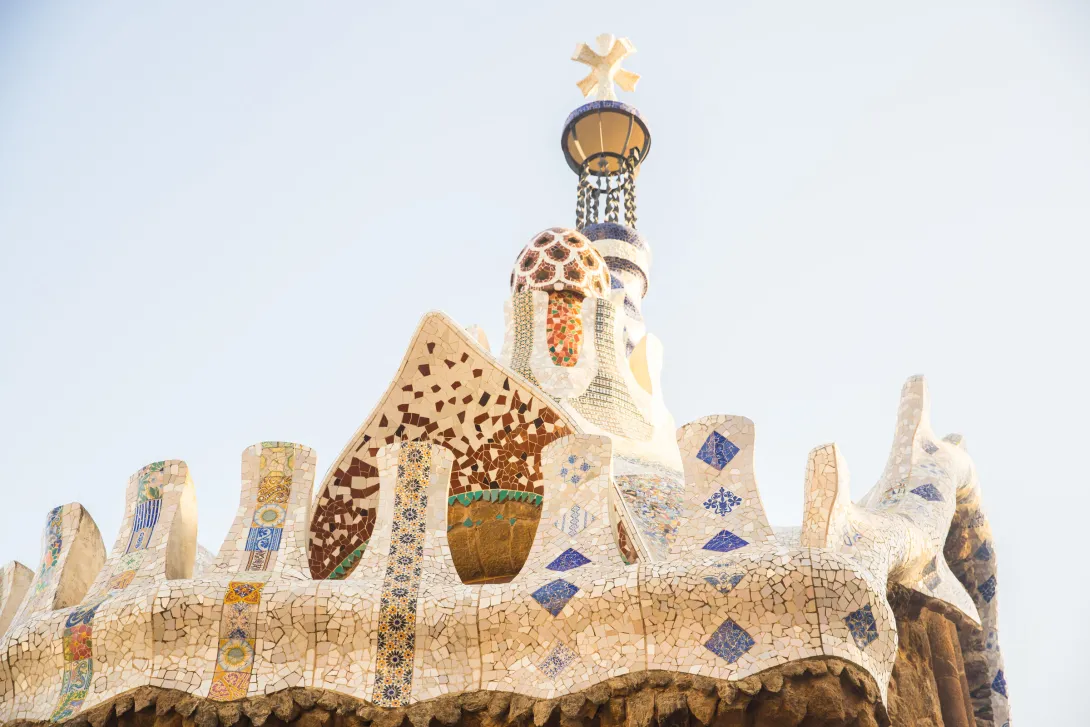
© Barcelona.com
Trencadís and Color
The park is one of the great examples of trencadís, a technique that assembles ceramic fragments to cover curved surfaces. It allowed Gaudí and his collaborators to combine color, material recycling, and freedom of form.
© Barcelona.com
Building with the Landscape
The viaducts, retaining walls, and water recovery systems are integrated into the site's architecture. This functional aspect is essential: behind the fantastic appearance of Park Güell lies an urban project designed to adapt to challenging terrain.
Plan Your Visit
Park Güell Tickets and Reservations
The tourist visit to Gaudí's main works requires a ticket with a time slot. Compare entries with audio guides, guided tours, passes, and combo tickets before booking.

Plan Your Visit
Practical Information About Park Güell
Schedules, duration, best time to visit, and access have dedicated guides. Find the essentials here, then check the corresponding page to plan your visit in detail.
Tourist hours vary according to the season, and entry is by reserved time slot.
Plan to spend about two hours exploring the park at a leisurely pace. The duration will then depend on the route and the time spent in the landscaped areas.
The choice depends on the season, the heat, and the crowd. Early in the day is particularly appealing if you plan to continue on to Gràcia or the Sagrada Família afterward.
The park is located on the heights of Gràcia. Metro and bus services can get you close, but routes and walking distances vary depending on your starting point.
Getting to Parc Güell by metro · Getting to Parc Güell by bus
Architecture in Barcelona
Discover Other Works by Gaudí in Barcelona
From Parc Güell to the Sagrada Família, including Casa Batlló and La Pedrera, Gaudí has left a significant mark on Barcelona. Explore his major works and discover other great monuments of Catalan modernism.

Frequently Asked Questions
FAQ about Park Güell
The main sights to see are the monumental staircase and its salamander, the hypostyle hall, the Nature Square with its undulating bench, the entrance pavilions, and the viaducts. Take some time to wander the paths to understand how Gaudí integrated his architecture into the landscape.
Start with the monumental entrance, then explore the staircase, the hypostyle hall, and the Nature Square before continuing to the viaducts and park pathways. This route allows you to gradually transition from the most famous works to areas where Gaudí's architecture blends seamlessly with the landscape.
Park Güell was designed by the architect Antoni Gaudí at the request of the industrialist and patron Eusebi Güell. Construction began in 1900 as part of a residential garden city project on the heights of Barcelona.
Eusebi Güell wanted to create a residential neighborhood inspired by British garden cities. Gaudí was tasked with designing the infrastructure, communal spaces, and pathways of the site. The real estate project failed, and the estate later became a public park.
The park is named after Eusebi Güell, the industrialist and patron who commissioned the project from Antoni Gaudí. The word "Park," written in English in the original name, reflects the British inspiration of the garden city project.