At Nature Square
Undulating Bench at Park Güell: Mosaics and Trencadís
The wavy bench covered in trencadís lines the Nature Square, the former Greek Theater of Park Güell. Its design is officially attributed to Josep Maria Jujol, a collaborator of Gaudí, and it forms one of the park's most recognizable features.
The wavy bench at Nature Square is famous for its colorful trencadís designed by Josep Maria Jujol.

The Essentials
The Wavy Bench at a Glance
| Location | Nature Square |
|---|---|
| Former name of the square | Greek Theatre |
| Decor | Trencadís / ceramic mosaic |
| Set Designer | Josep Maria Jujol |
| Construction | 1909-1914 |
| Function | Border and railing of the Place de la Nature |
Sources: Official Park Güell, official guide 2026, and Turisme de Barcelona. Verified in September 2026.
The grand viewpoint of the park
The bench at the Nature Square
The bench follows the edge of the large central esplanade of Parc Güell, now called Nature Square.
In the project documentation, this area was named the Greek Theatre and was intended to host large open-air performances. The square is artificial: one part is carved into the rock while the other rests on the Hypostyle Hall.
On the side of the Dragon Staircase, the wavy bench outlines the square and serves as a guardrail or handrail. Its curve follows the edge of the viewpoint.
Mosaic
The Trencadís of the Bench and the Role of Josep Maria Jujol
The bench is part of Gaudí's project, but its decorative treatment is explicitly attributed to Jujol in official sources.
What is trencadís?
The surface is made up of ceramic fragments assembled into colorful compositions. This Catalan technique is known as trencadís, and the French documentation of the park also uses the term "pique-assiette."
The Role of Jujol
The official Park Güell and Turisme de Barcelona credit the wavy bench covered in trencadís to Josep Maria Jujol, a collaborator of Gaudí on the park's construction.
View details
The mosaics of the wavy bench in detail
The gallery should complement the hero's overview with close-ups: trencadís patterns, ceramic fragments, the curve of the bench, details of the handrail, and its connection with the Nature Square.
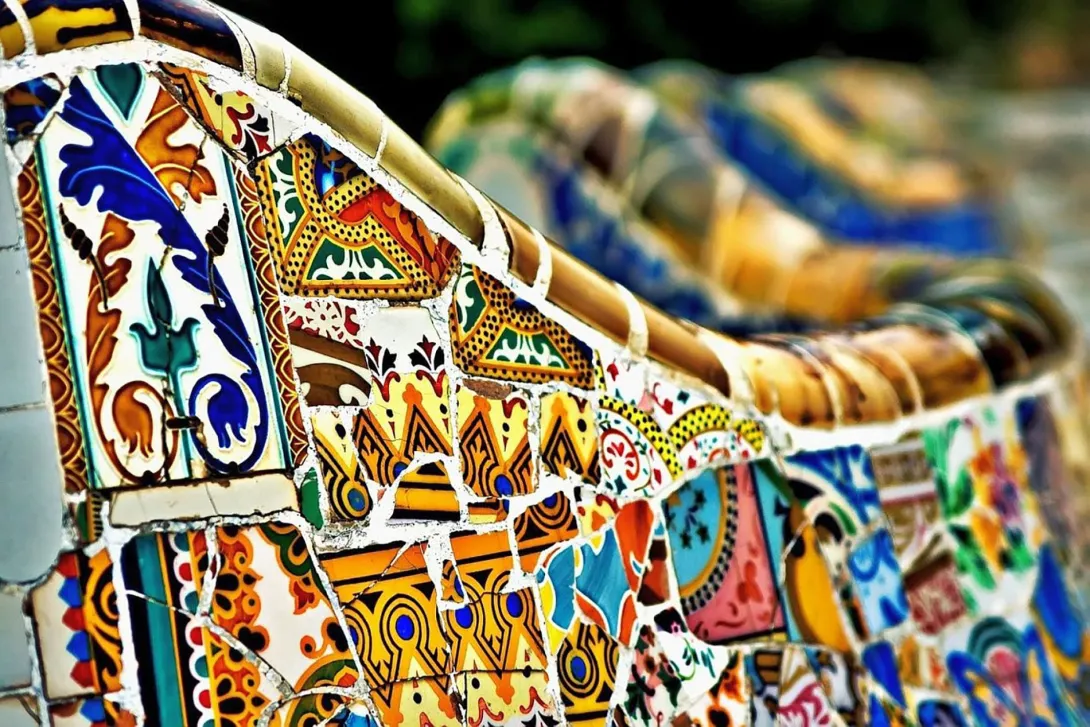
Close-up of the trencadís on the serpentine bench at Park Güell, colorful ceramic fragments
© Barcelona.com
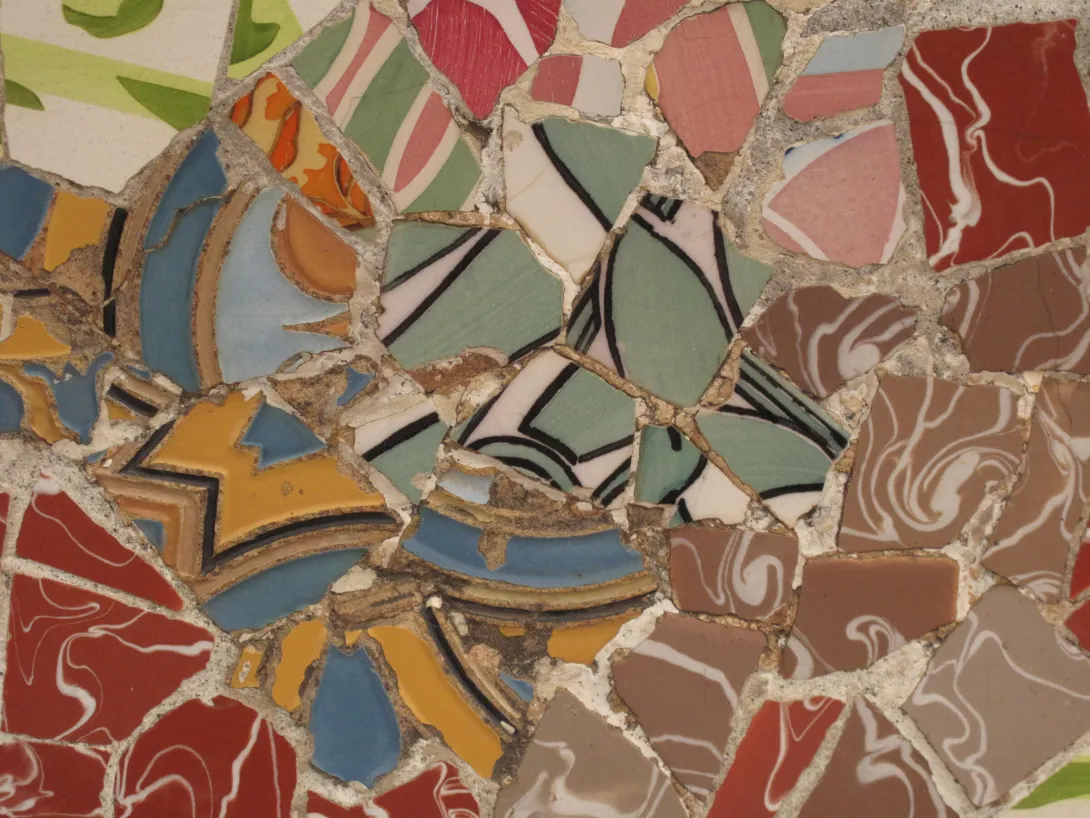
Red, blue, and ochre ceramic fragments assembled in trencadís on the serpentine bench
© Enfo, CC BY-SA 3.0, via Wikimedia Commons
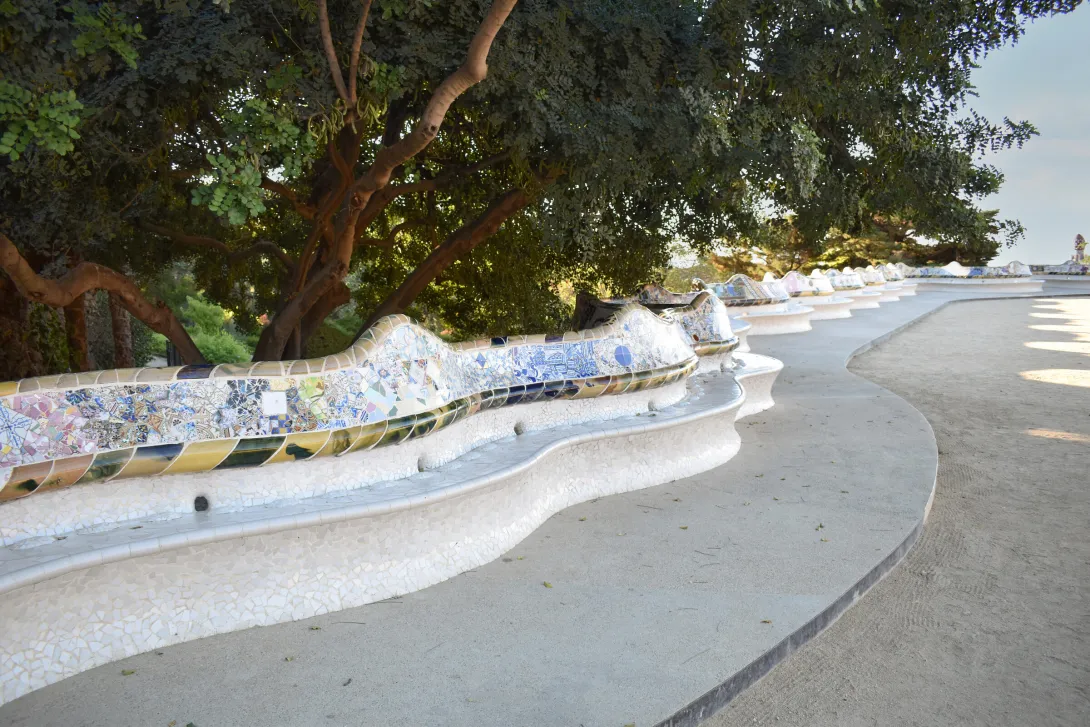
The curve of the serpentine bench at the Nature Square, empty in the early morning
© Canaan, CC BY-SA 4.0, via Wikimedia Commons
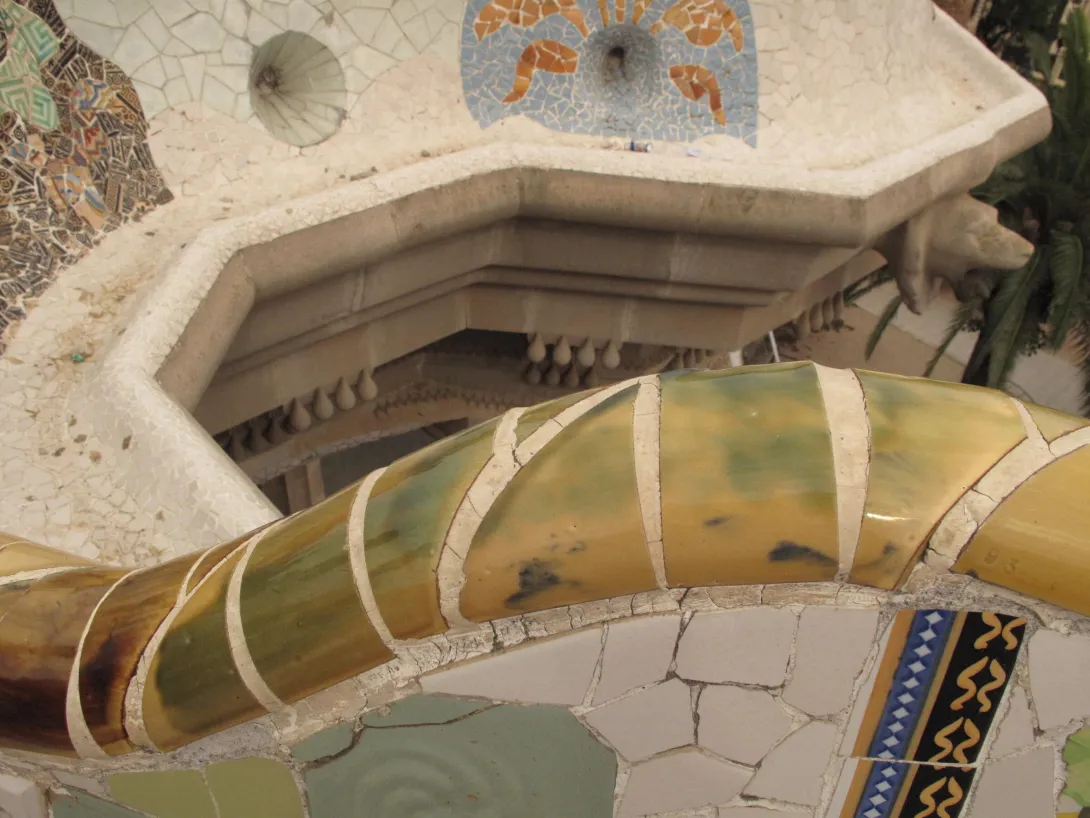
The ochre ceramic edge of the serpentine bench, with a trencadís medallion
© Enfo, CC BY-SA 3.0, via Wikimedia Commons
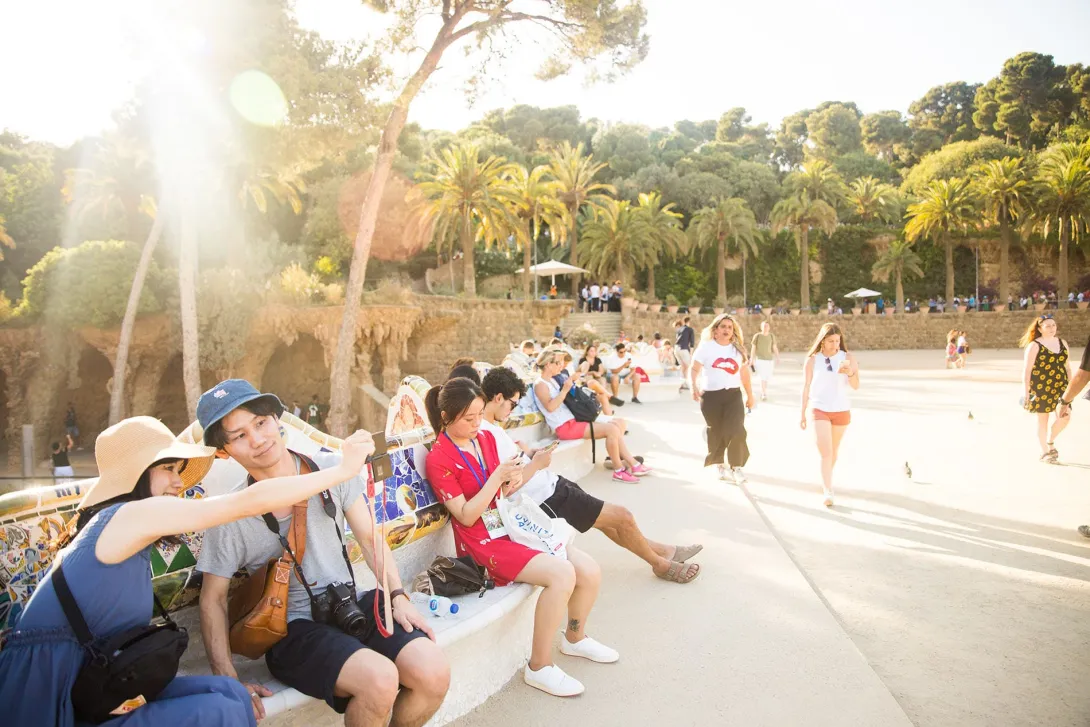
Visitors sitting on the serpentine bench at the Nature Square, in Park Güell
© Barcelona.com
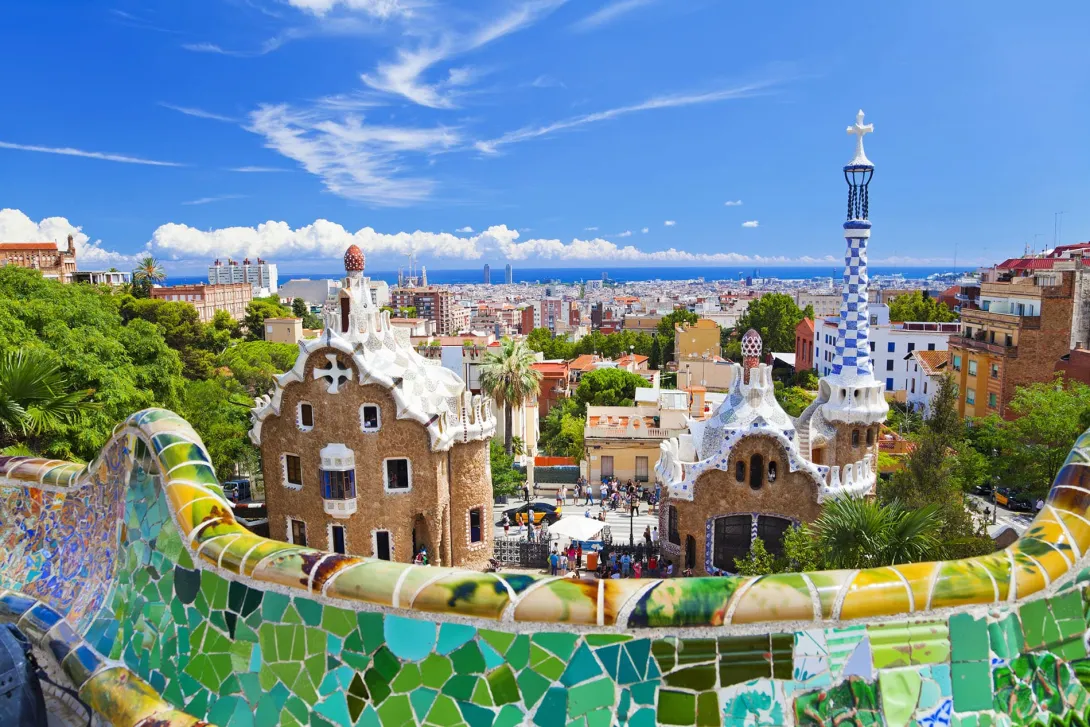
The serpentine bench at the Nature Square and, below, the entrance pavilions of Park Güell
© Barcelona.com
Form and Function
What is the purpose of the wavy bench in Parc Güell?
The bench is not an isolated object: it is part of the architecture of the Nature Square.
The current official guide states that the bench was built between 1909 and 1914. It lines the esplanade on the side of the monumental staircase and functions as a balustrade while forming a continuous decorative element.
Its presence should therefore be understood in relation to the square itself and the Hypostyle Hall, which supports part of the esplanade. It is this relationship between structure, landscape, and decoration that gives the bench its full meaning in the Parc Güell project.
Continue the Tour
Explore Park Güell Beyond the Wavy Bench
The Nature Square, its bench, and the Hypostyle Room located below form a single architectural ensemble at the heart of Park Güell.
Frequently Asked Questions
FAQ about the Wavy Bench in Park Güell
It borders the Nature Square, the large esplanade located partly above the Hypostyle Hall.
About 110 meters, in one continuous stretch, following the edge of the esplanade. This is why it is also known as the serpentine bench.
The bench is part of Gaudí's architectural project, while official sources credit its trencadís treatment to Josep Maria Jujol, a collaborator of Gaudí.
The official guide to Park Güell states that it was built between 1909 and 1914.
The project planned to host large open-air shows visible from the terraces surrounding the esplanade.
Yes. The Nature Square is part of the monumental zone, which requires a ticket. Details about what is free or requires a ticket at Park Güell are explained on the Monumental Zone page.