Practical Information
Flags on balconies, two languages on signs, a police force called Mossos d’Esquadra, and a government palace in the heart of the Gothic Quarter: in Barcelona, you encounter Catalan identity at every turn.
Catalonia is part of Spain, yet it has its own institutions and a high degree of autonomy. A few key facts will help you understand how it works and see the places you visit in a new light.
Catalonia, an autonomous community of Spain
Catalonia is one of the 17 autonomous communities of Spain. Barcelona is its capital. It has a Parliament, a president, and a government that exercise their responsibilities within the framework of the Spanish Constitution and the Statute of Autonomy.
This system allows Catalonia to make numerous decisions regarding daily life, particularly in the areas of health, education, culture, and transportation. Responsibilities are divided among Catalan institutions, the Spanish state, and local authorities.
Autonomy does not mean independence. Catalonia is part of Spain but has its own institutions and powers. This arrangement is not exclusive to Catalonia: other communities, such as Andalusia or the Basque Country, also have autonomous governments.
For travelers, this institutional framework is mainly reflected in a strong cultural identity, the presence of Catalan in daily life, and public services with Catalan names. The Statute of Autonomy of Catalonia defines its organization.
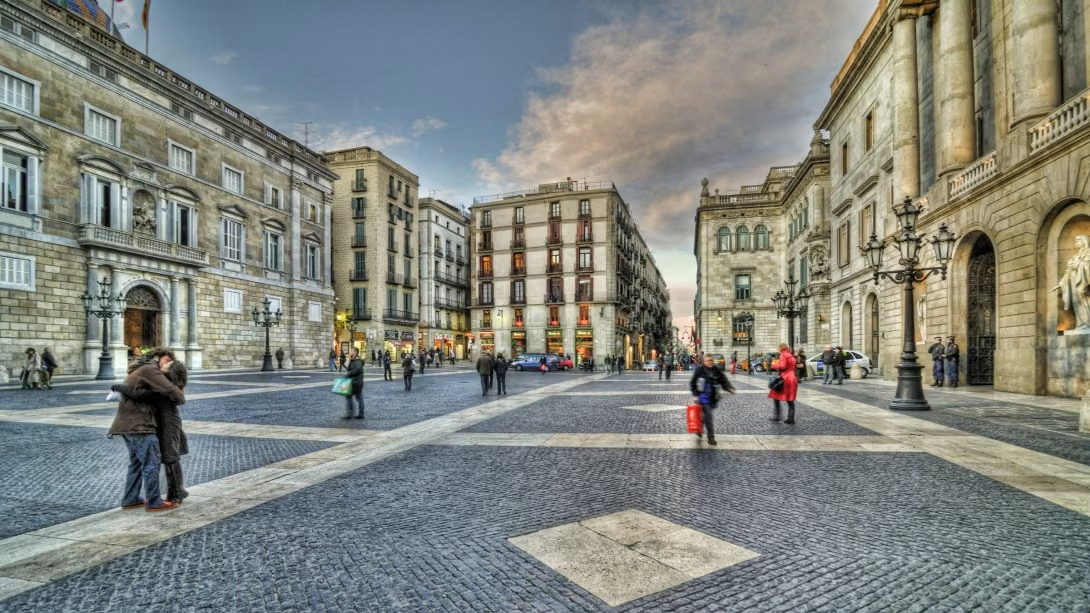
Generalitat, Parliament, and City Hall: Who Does What?
The term Generalitat appears on buildings, documents and official websites. It refers to the institutional system through which Catalonia exercises its autonomy.
It includes the government, Parliament, the presidency and other institutions responsible for oversight or protecting citizens’ rights.
| Parliament of Catalonia · Parlament de Catalunya | Represents the citizens, votes on Catalan laws and the budget, and oversees the government. |
|---|---|
| President of the Generalitat | Elected by the Parliament and then appointed by the King of Spain, the president directs the work of the Catalan government. |
| Government · Govern | Implements public policies in the areas under Catalonia’s responsibility. |
| Barcelona City Hall · Ajuntament de Barcelona | Manages the city: public spaces, street cleaning, urban planning and many local services. |
The Parliament has 135 deputies. You will also hear about the consellers: they are the members of the Catalan government, each responsible for a specific area, similar to ministers.
One detail makes this organization particularly easy to visualize: on the Plaça de Sant Jaume, the Palau de la Generalitat and the City Hall face each other. On one side, the institutions of Catalonia; on the other, those of Barcelona.
Source: official presentation of the institutions. Verified on November 5, 2026.
Languages, Flags, and Police: Key Things to Know
Catalan is Part of the Journey
In the metro, on street signs, or at the entrance of museums, Catalan is everywhere. It is a language in its own right, distinct from Spanish.
Catalan and Spanish (Castilian) are official languages in Catalonia. Occitan, known as Aranese in the Val d'Aran, is also official there. This Pyrenean valley has a unique linguistic identity. The official linguistic framework explains these statuses.
In Barcelona, you can use Spanish to communicate. A few Catalan words can also help you connect with the local culture: bon dia for "hello," gràcies for "thank you," and si us plau for "please."
Not All Catalan Flags Say the Same Thing
The official flag of Catalonia, the senyera, features four red stripes on a yellow background. You will see it especially on public buildings.
The estelada includes these stripes with the addition of a triangle and a star. It is a symbol of the independence movement. Distinguishing between the two helps you understand the symbols present in the streets, without attributing a political opinion to all residents.
Who Are the Mossos d'Esquadra?
The Mossos d'Esquadra are the police of the Generalitat. In Barcelona, you will also encounter the Guàrdia Urbana, the municipal police. These names correspond to different forces, each with its own responsibilities.
To prepare for your stay, also check our pages on useful phone numbers in Barcelona and health and emergencies.
Visit Barcelona’s political landmarks
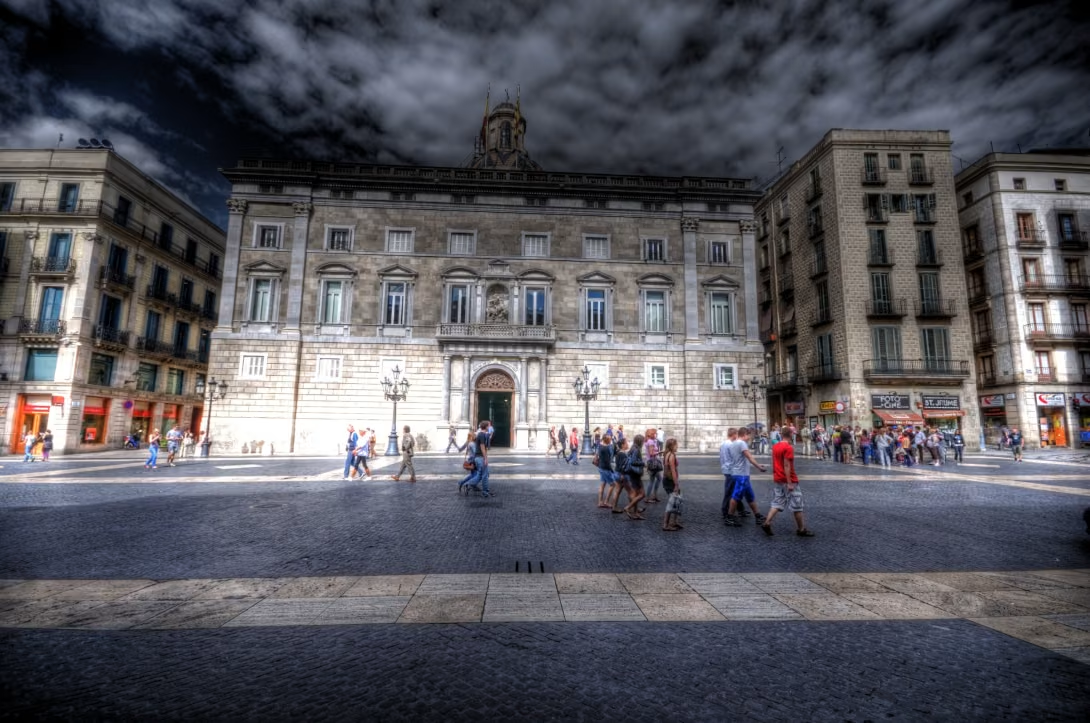
The Palau de la Generalitat in the Gothic Quarter
On the Plaça de Sant Jaume, the Palau de la Generalitat houses the Catalan presidency and government. Behind its Renaissance façade, parts of the building date back to the Middle Ages.
Even without entering, the square is worth a stop during a stroll through the Gothic Quarter. Observing the two facing buildings allows you to connect Barcelona's history with its current institutions.
The palace offers free guided tours by reservation on certain dates, subject to availability. Check the official calendar to choose a session and check the tour language.
Information and reservations for the Palau de la Generalitat.
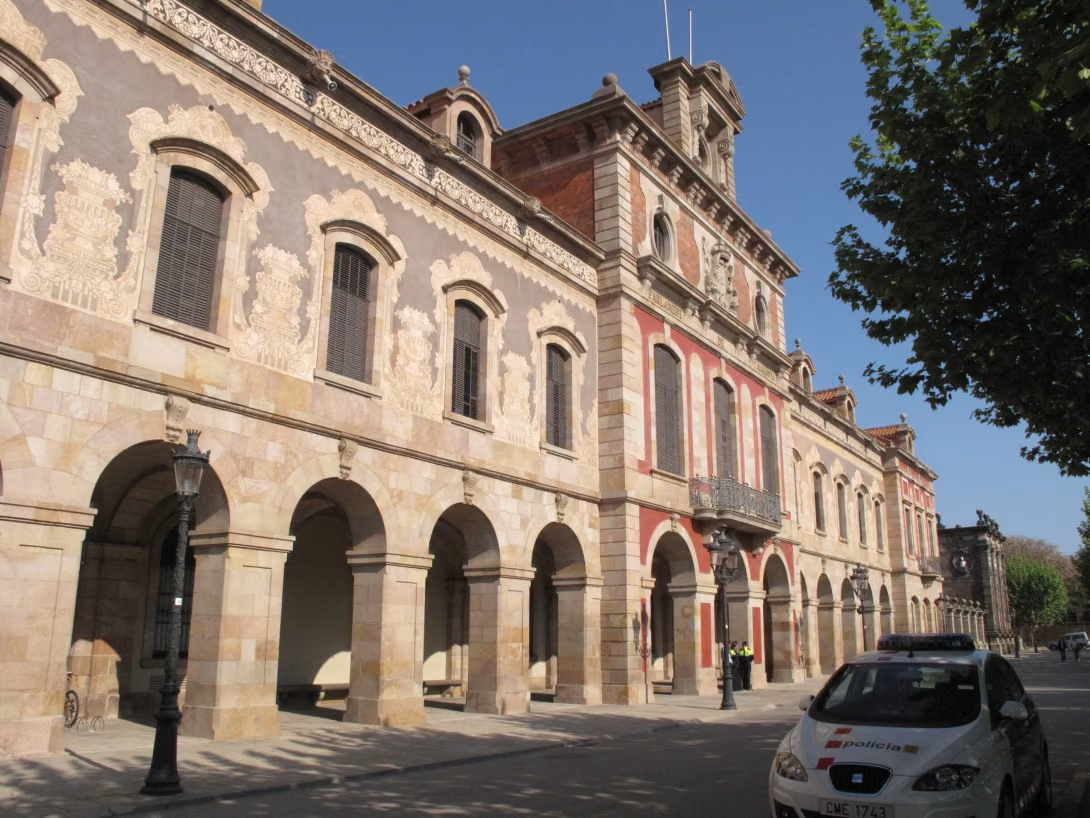
The Parliament, in Ciutadella Park
The Parliament of Catalonia is located in the Parc de la Ciutadella, in a building originally constructed as the arsenal of the military fortress.
The tour takes you through the palace and explains the work of its elected members. It is also a chance to see another side of this popular park, which is home to one of Catalonia’s key democratic institutions.
Tours are free, by reservation, and last about 45 minutes. Check availability and visitor guidelines before you go.
Visit the Parliament of Catalonia.
Autonomy and Independence: Key Points
Catalan identity is built on a rich history, a language, and ancient institutions. The current autonomy was reestablished with the return of democracy in Spain after the Franco dictatorship. The Generalitat was restored in 1977. The Statute of Autonomy followed in 1979, with a new statute adopted in 2006. Discover these milestones in the historical highlights of the Generalitat.
The independence movement wants Catalonia to become a sovereign state. Other political groups support remaining part of Spain, with varying views on autonomy. The opinions of Catalans are diverse: neither the language someone speaks nor their attachment to local culture tells you what they think politically.
One date helps you understand this collective memory: September 11, the day of the Diada, Catalonia's national day. It commemorates the fall of Barcelona in 1714 during the War of the Spanish Succession. Ceremonies and gatherings mark this day, which may also include political demonstrations. The Generalitat's website presents the origins of the Diada.
To plan your visit during this time, check out our page on public holidays and local festivals in Barcelona.
Practical information for visiting Barcelona
Frequently Asked Questions
The autonomous status of Catalonia does not create an international border with other Spanish communities. The travel documents you need depend on your circumstances and the rules for entering Spain.
The currency used is the euro, as in the rest of Spain.
Yes. The Palau de la Generalitat and the Parliament are also worth visiting for their architecture and history. Visiting them offers the opportunity to explore buildings that continue to serve a public function, beyond their heritage value.