The Most Unknown Gaudí
Torre Bellesguard Barcelona: tickets, hours, and visit
The Bellesguard Tower is one of the most unique and lesser-known works of Antoni Gaudí in Barcelona. Inspired by the medieval castle that once stood on this site, it combines modernism, neo-Gothic architecture, and symbols of Catalonia's history. A particularly interesting visit to discover a different and much more serene Gaudí compared to his more famous monuments.
A lesser-known work by Gaudí inspired by a medieval castle, featuring visitable interiors and views over Barcelona.
- Work by Antoni Gaudí
- Approximately 1-hour visit
- Interior and Terraces
- Much Less Crowded

Tickets and Prices
Tickets for Torre Bellesguard: Prices and Visit Types
The Torre Bellesguard can be visited with an audio guide or through a guided tour. Both options allow you to discover one of Gaudí's lesser-known works and explore its interior.

At your own pace
Torre Bellesguard: entry + app with audio guide
The most flexible option
- Entry to Torre Bellesguard
- App with audio guide
- Audio guide in Spanish
- Approximate duration: 1 h

With guide
Torre Bellesguard: entry + guided tour
To delve into its history
- Entry to Torre Bellesguard
- Guided tour of approximately 40 minutes
- Guide in Spanish, Catalan, or English
- Approximate total duration: 1 h
Visit Bellesguard if you're already familiar with Gaudí's major works or if you're looking for a monument that's much more tranquil and surprising. Here, the interest lies not only in the house: the medieval history of the site helps explain why Gaudí designed a building so different from Casa Batlló or La Pedrera.
Practical Information
Bellesguard Tower at a Glance
| Architect | Antoni Gaudí |
|---|---|
| Construction | 1900-1909 |
| Area | Sarrià-Sant Gervasi, in the upper part of Barcelona |
| Address | Carrer de Bellesguard, 20, 08022 Barcelona |
| General Schedule | Tuesday to Sunday, from 10:00 to 15:00 |
| Last entry | 2:00 PM |
| Duration of the Visit | Approximately 1 hour |
| Visit with Audio Guide | Available during opening hours · 12.00 € adult |
| Guided Tour | From Thursday to Sunday, according to schedule and language · 20.00 € adult |
| Audioguide Languages | Catalan, Spanish, English, French, Italian, and Russian |
| Guided Tour Languages | Catalan, Spanish, and English |
| Accessibility | Limited access. To visit the interior, it is necessary to climb up and down stairs. |
Source: official website of Torre Bellesguard Gaudí · Information verified in September 2026. Schedules and prices may vary.
A Unique Work
Why Visit the Bellesguard Tower?
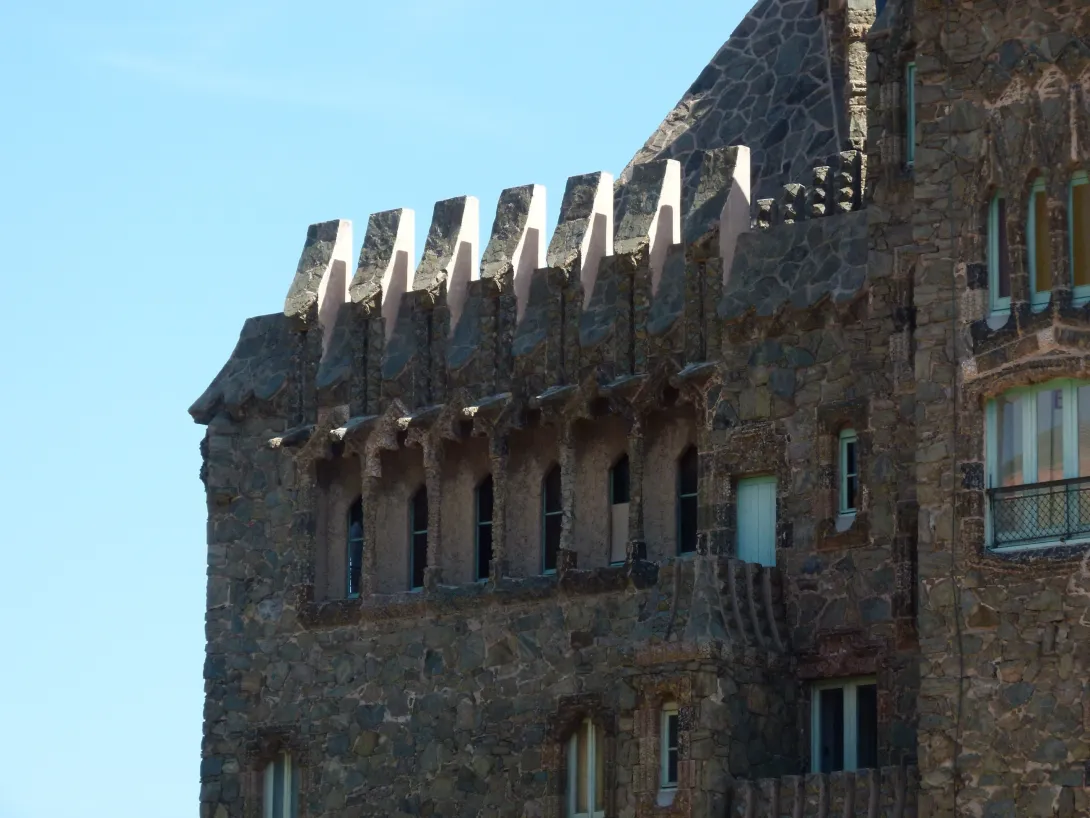
Bellesguard does not resemble Gaudí's more famous houses on Passeig de Gràcia. Its silhouette is reminiscent of a medieval castle, with stone, battlements, Gothic-inspired windows, and a tower topped with the characteristic four-armed cross.
Gaudí designed the house during one of the most creative periods of his career. In Bellesguard, he combines medieval references with very personal structural solutions that he would later develop in other works.
It is also one of Gaudí's less crowded sites in Barcelona, a great alternative for those who are already familiar with the Sagrada Família, Park Güell, Casa Batlló, or La Pedrera.
© Pere López Brosa, CC BY-SA 4.0, via Wikimedia Commons
A Castle Designed by Gaudí
During the visit
What to See at Bellesguard Tower: Interior, Terrace, and Garden
© Canaan, CC BY-SA 4.0, via Wikimedia Commons
The Tower and the Cross
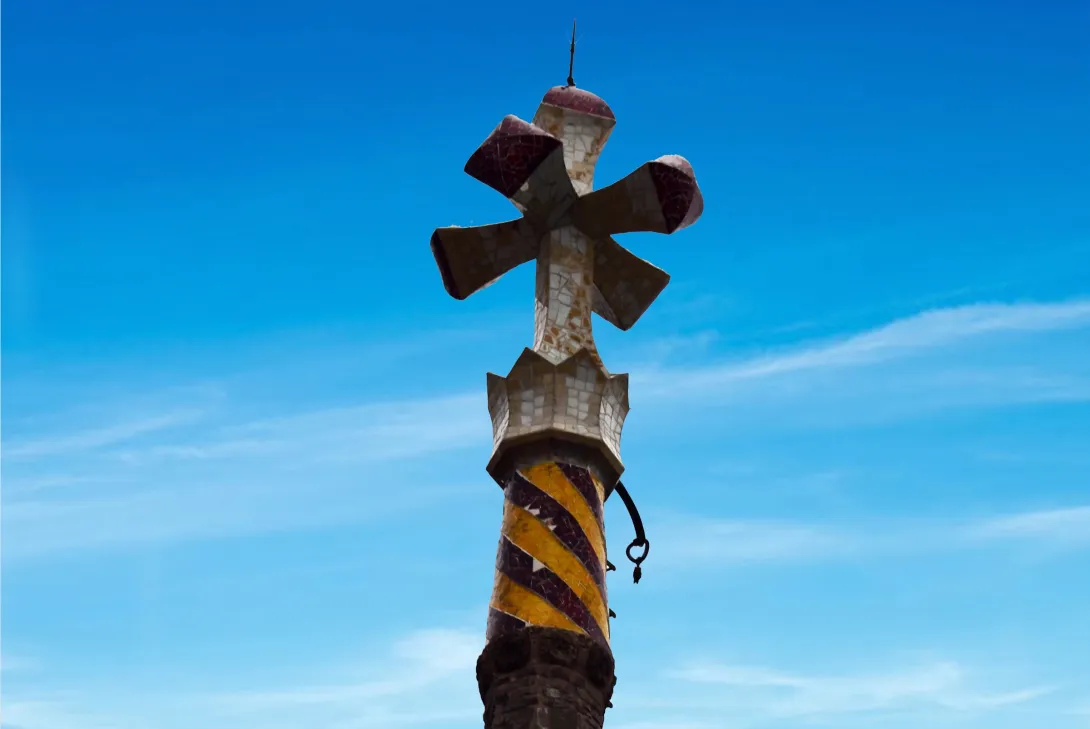
The pinnacle crowned by the four-armed cross and the colors of the Catalan flag is one of the most recognizable elements of Bellesguard.
© Canaan, CC BY-SA 4.0, via Wikimedia Commons
The Facade
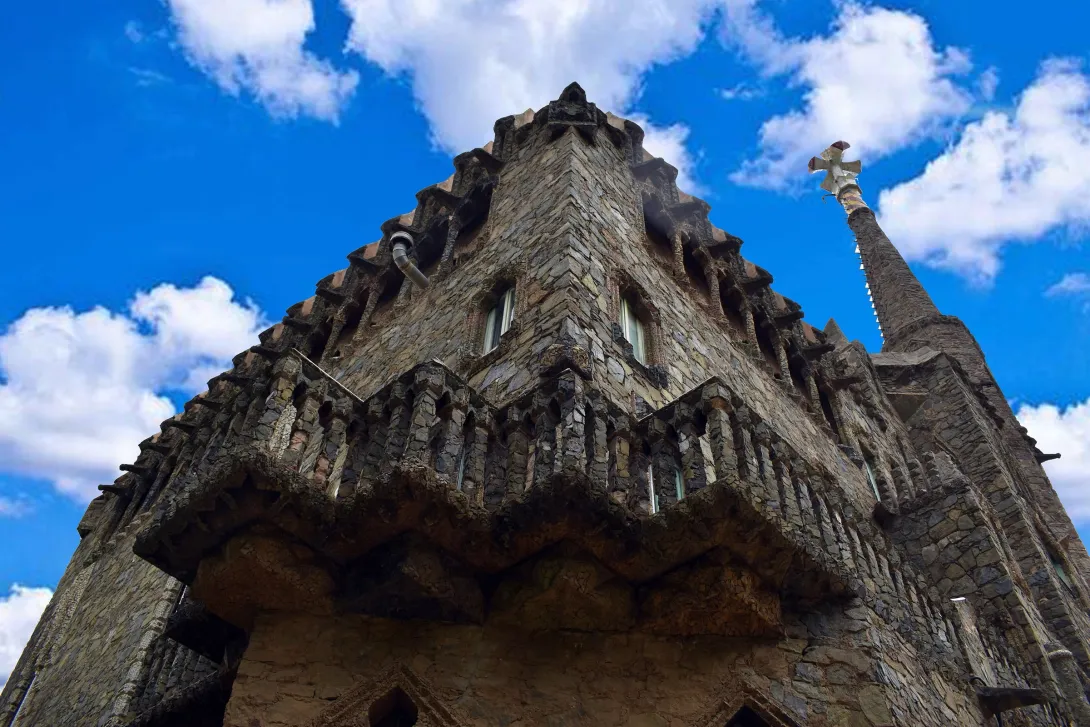
The stone exterior, battlements, and vertical windows give the building the appearance of a medieval fortress, which is quite unusual in Gaudí's work.
© Canaan, CC BY-SA 4.0, via Wikimedia Commons
The Interior of Torre Bellesguard
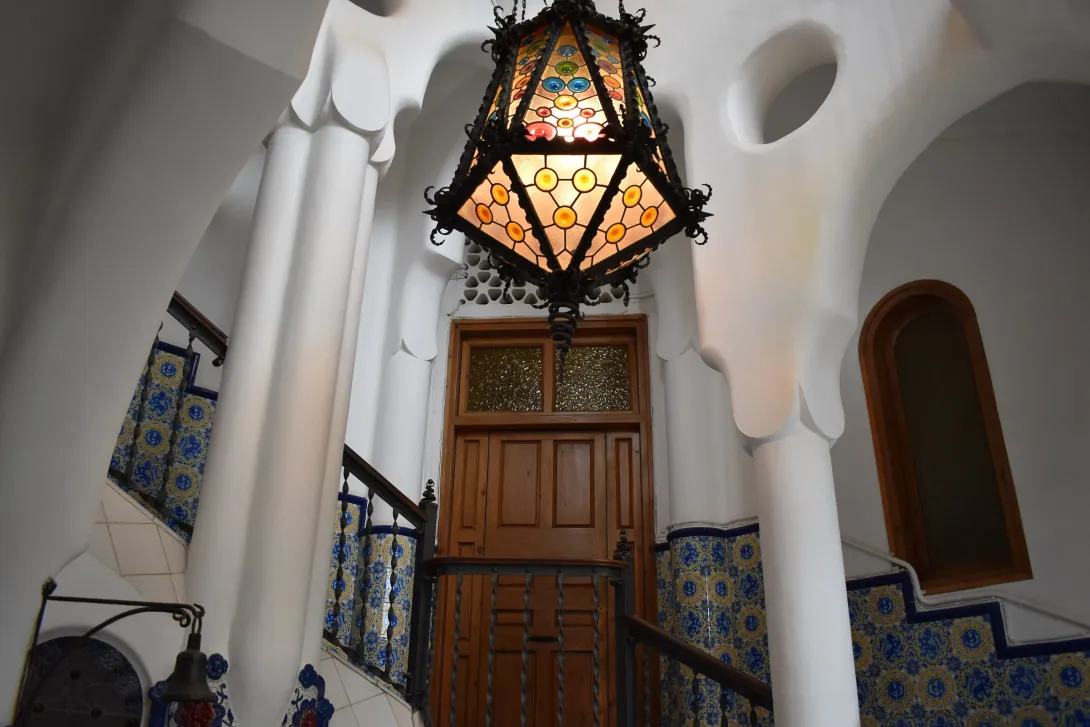
The interior surprises with its brightness and contrasts with the dark facade. The white walls, stained glass, ceramics, and play of light reveal a much more delicate side of the building.
© Canaan, CC BY-SA 4.0, via Wikimedia Commons
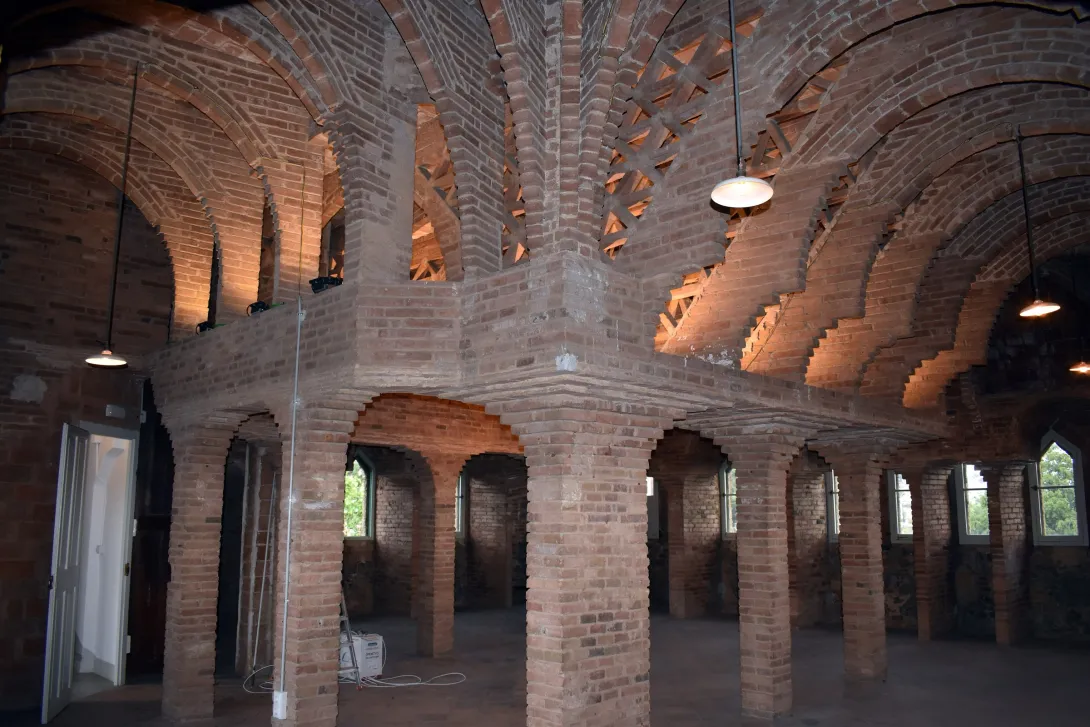
The Attics
The upper spaces, with their brick structures and arches, offer a glimpse into some of the construction innovations that Gaudí would later develop in buildings like Casa Batlló and La Pedrera.
© Canaan, CC BY-SA 4.0, via Wikimedia Commons
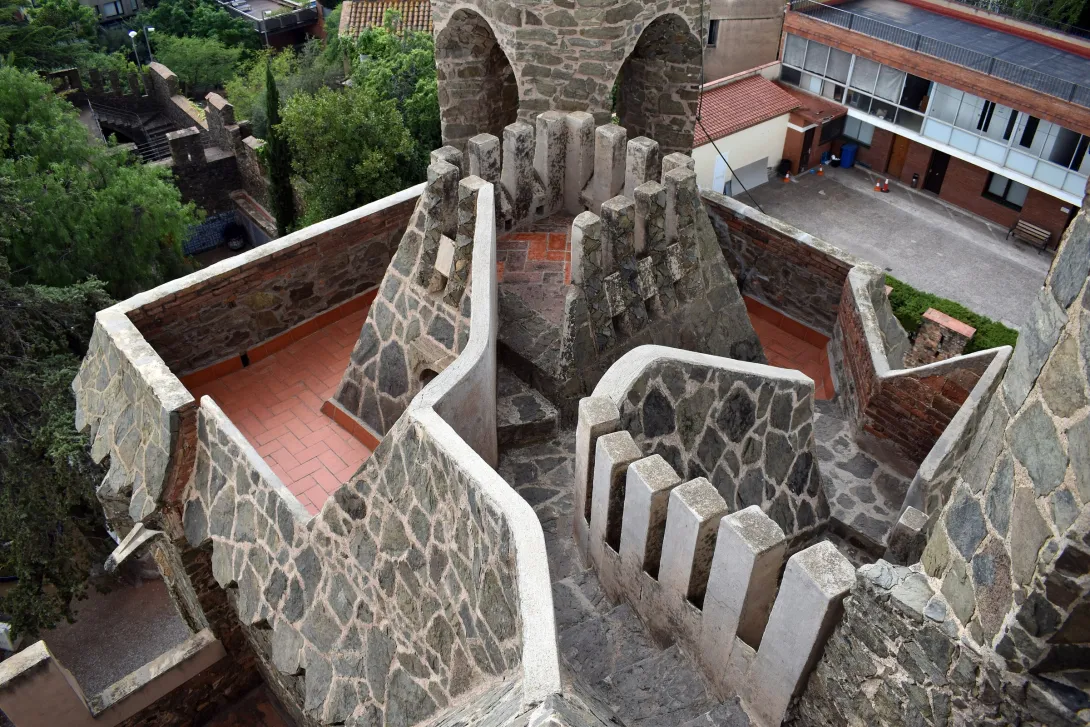
The Terrace and the Tower
The upper part of Bellesguard offers a close-up view of the building's crenellated profile, the pinnacle, and the cross, as well as stunning views over Barcelona.
© Canaan, CC BY-SA 4.0, via Wikimedia Commons
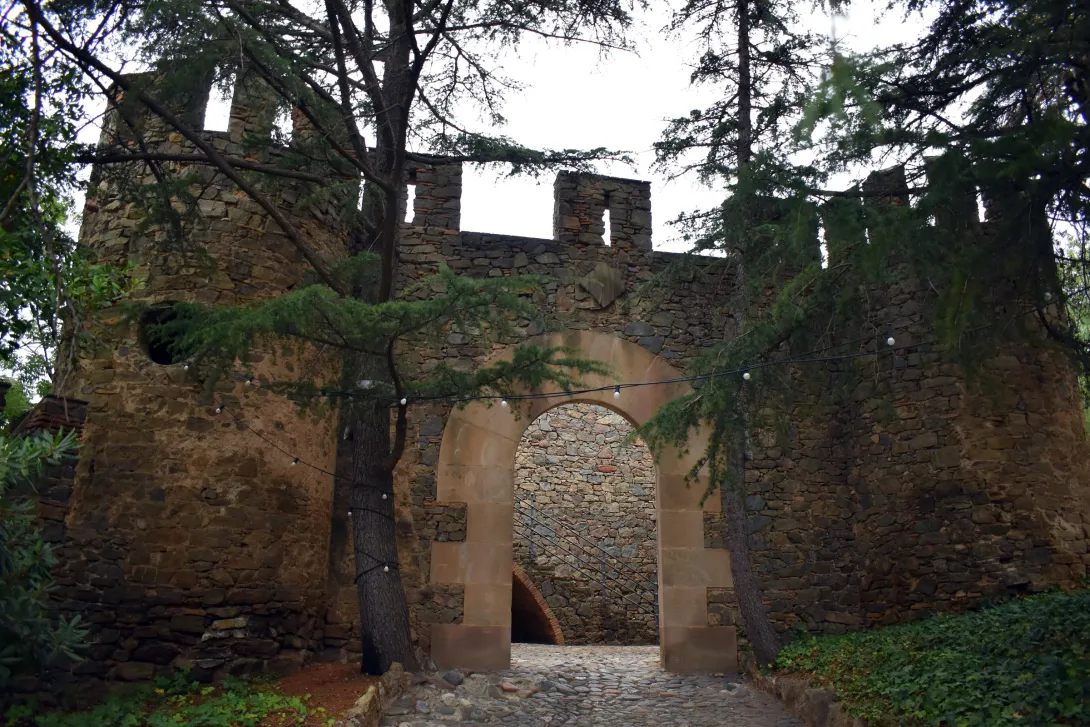
The Garden and Medieval Remains
The estate retains elements related to the former royal palace that once occupied the site. These are essential for understanding the origin of the project and its castle-like appearance.
A Bit of History
History of Torre Bellesguard: From Martin the Humane to Gaudí
The history of Bellesguard begins long before Antoni Gaudí. In the early 15th century, this place was linked to Martin I of Aragon, known as Martin the Humane, the last monarch of the House of Barcelona.
Centuries later, María Sagués, widow of Jaume Figueres, commissioned Gaudí to design a new residence on the estate. The architect worked on Bellesguard between 1900 and 1909.
Instead of erasing the site's past, Gaudí made it an essential part of the project. The castle-like shape, Gothic references, Catalan symbols, and various decorative details all evoke the property's medieval history.
The result is a very unique work within his career: more rectilinear and austere on the exterior than Casa Batlló or Casa Milà, yet filled with architectural and symbolic solutions characteristic of Gaudí.
© Canaan, CC BY-SA 4.0, via Wikimedia Commons
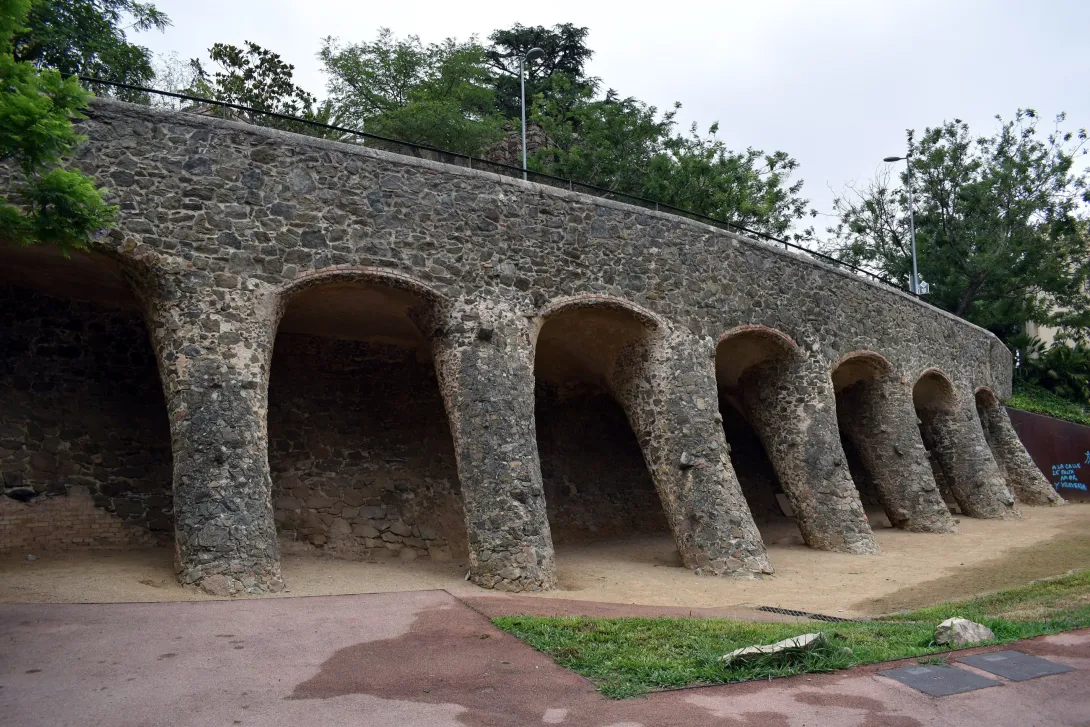
A Place with Six Centuries of History
Another side of the architect
Bellesguard: Between Gaudí and Catalan Modernism
Bellesguard holds a very special place in the career of Antoni Gaudí. Unlike the organic forms of Casa Batlló or Casa Milà, here straight lines, verticality, and references to Catalan Gothic prevail.
The attics, brick structures, natural light entry, and some construction solutions foreshadow research that Gaudí would later develop in other works.

Getting there
Getting to Torre Bellesguard
Torre Bellesguard is located in Sarrià-Sant Gervasi, in the upper part of Barcelona. It is easiest to reach by public transport combined with a short walk, or by taxi.
Getting there
Nearby

CosmoCaixa
CosmoCaixa explores science through interactive exhibits, offering a complete change of theme after Gaudí.

Avinguda del Tibidabo
Avinguda del Tibidabo is lined with early-20th-century villas and recalls the residential Barcelona surrounding Bellesguard.

Tibidabo Amusement Park
Tibidabo combines a historic amusement park with broad views over Barcelona from the Collserola ridge.

Casa Vicens Gaudí
Casa Vicens reveals Gaudí's early style, making an interesting contrast with the later and more austere Bellesguard.

Park Güell
Park Güell shows Gaudí working at landscape scale, contrasting with the private residential character of Bellesguard.
Preguntas frecuentes
FAQ: Torre Bellesguard
From Plaça Catalunya, one of the simplest options is to take the FGC L7 to Avinguda Tibidabo and continue with bus 196. You can also combine the V13 or V15 with the 196.
Yes. The ticket allows you to explore the interior spaces, the attics, and the visitable areas of the house, as well as the exteriors and the garden.
No. The usual visit requires an entry ticket. There are different options available, including the entry with an audio guide and the guided tour.
Gaudí was inspired by the medieval history of the site, where there was once a residence linked to Martin the Humane. This is why he incorporated battlements, neo-Gothic forms, a tower, and numerous historical symbols into the design.